
As energy storage technologies continue to evolve, more and more applications—from portable electronics to wearable devices and electronic vehicles—require systems that can charge rapidly, deliver bursts of power on demand, and withstand millions of charge–discharge cycles.
Supercapacitors have emerged as an attractive complement to conventional energy storage devices because they recharge faster, deliver high power density, and offer long cycle life. Their performance, however, depends largely on the electrode materials that store and release electric charge.
Driven by the growing demand for high-performance, sustainable energy storage, researchers are increasingly turning to biomass-derived carbon materials as renewable alternatives to conventional electrodes.
Network of fibers
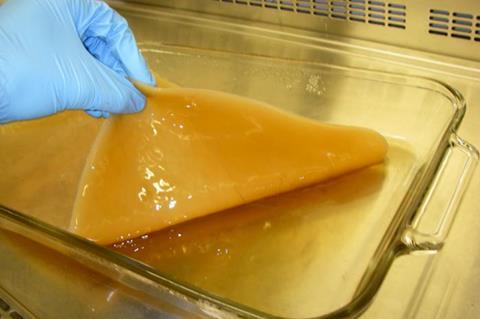
Among the many options available, bacterial cellulose-derived carbon (BCC) has received a lot of attention. Unlike plant cellulose, bacterial cellulose is naturally very pure and forms a network of nanoscale fibers. Through controlled heat treatment, this network can be converted into porous carbon that excels at storing electrical charge.
MICROBIOLOGY NEWS: Register with The Microbiologist for more free articles
Over the past decade, researchers have explored BCC electrodes using different drying techniques, chemical treatments, and composite materials. However, these efforts were scattered across dozens of separate studies reporting different testing conditions and metrics, leaving no clear picture of which methods actually work best or how close this material is to real-world application.
To address this problem, a research team led by Professor Dahlang Tahir from Hasanuddin University, Indonesia, carried out a detailed literature review of BCC electrodes for supercapacitors. Their paper was made available online on June 9, 2026, and will be published in Volume 172 of the Journal of Energy Storage on September 15, 2026. It examines how these materials are fabricated, how their structure changes during processing, and how those changes affect their electrochemical and mechanical performance.
Fabrication strategies
To this end, the team systematically analyzed 49 journal articles selected from the Scopus database. They compared several major fabrication strategies, including direct carbonization of bacterial cellulose, chemical activation to increase pore space, heteroatom doping to alter surface chemistry, and composite formation with other materials.
The review also compared freeze-drying and non-freeze-drying routes, while distinguishing between results from three-electrode tests and two-electrode devices, the latter being more representative of practical supercapacitors.
A key takeaway from this analysis was the importance of preserving bacterial cellulose’s original nanofiber network before carbonization. Freeze-drying was by far the most common pre-carbonization method in the articles surveyed because it helps prevent the wet cellulose structure from collapsing as water is removed. This matters because the final carbon performance depends heavily on pore architecture.
Boosting performance
Across literature, unmodified or pristine BCC showed modest but sometimes competitive capacitance values. On the other hand, activation and heteroatom doping generally improved performance by increasing accessible surface area, changing surface chemistry, and creating additional active sites.
Composite electrodes often reached the highest capacitance values, especially when BCC was combined with pseudocapacitive materials that store charge through fast surface redox reactions. The team also analyzed reports on the mechanical performance and stability of several flexible BCC-based supercapacitors.
MICROBIOLOGY ON TAP: Get full access to all The Microbiologist articles from just £2.17 a month
While research on BCC and BCC-based supercapacitors has grown rapidly in recent years, the review points out several methodological considerations and knowledge gaps that, when combined, have hindered the overall progress in the field. Lack of consistent reporting standards, experimental protocols, and mechanistic research are some of the main issues that should be addressed in the short term.
After that, the field should move on to the next set of challenges, as Prof. Tahir remarks: “In the longer term, approximately over the next 10 years, the field should move toward predictive design of BCC electrodes, data-driven models for structure–performance relationships, scalable carbonization protocols, deformation- and humidity-resistant devices, and prototype demonstrations in flexible, lightweight, or structural supercapacitor systems.”
Untapped potential
Overall, even though most BCC electrodes are still at the laboratory proof-of-concept stage, there is mounting evidence hinting at their untapped potential.
“This review highlights BCC’s potential to outperform commercial activated carbon under comparable conditions, but its practical relevance depends on the ability to reproduce, scale, and maintain these advantages in real operating environments,” concludes Prof. Tahir.
“Therefore, the key direction is not merely to maximize capacitance, but to design BCC electrodes that combine high performance, mechanical durability, environmental stability, scalable fabrication, and practical application value in support of the United Nations Sustainable Development Goals.”







No comments yet