
Fourth year PhD student Charlotte Wilson admits she was sceptical before she embarked on her PIPS internship with Applied Microbiology International’s Communications and Marketing Team - but here’s how it turned out.
Students enrolled on the Midlands Integrative Biosciences Training Partnership (MIBTP) PhD scheme are all told from the very beginning that as part of their 4-year degree they must complete a mandatory 3-month Professional Internship for PhD Students - or ‘PIPS’. This internship must be a “non-academic professional work placement” and evokes a mixed reaction among every year’s cohort.
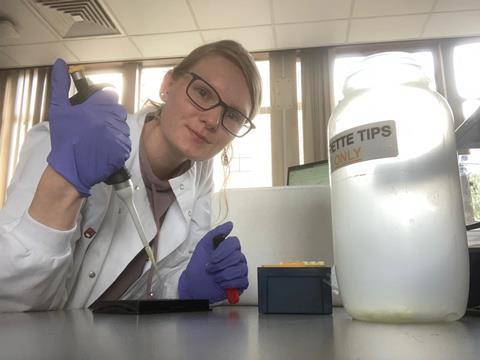
Some students who know they will be moving to an alternative career path post PhD rejoice at the chance to gain some extra experience; other students view PIPS as a chance to learn a new life skill; and finally there are a group of students who view PIPS as an unnecessary hurdle to gain their degree, one that stands in the way of their actual research.
As a PhD student whose life revolves around lab work and who has always known they wish to continue into an academic research career, I am ashamed to admit I was originally one of the latter students, delaying my PIPS for as long as possible. Working with AMI changed my perception entirely with my PIPS project becoming one of the highlights of my PhD journey.
Diversity and inclusion
AMI created one of the most welcoming and supportive work environments I have ever encountered - and I am not just saying that because of the 4-day work weeks! The whole team is passionate about what they do, and this passion feeds into every aspect of work life within AMI.
AMI as an organisation is admirably focused on promoting diversity and inclusion, not only within its own workforce but also in its global ambassadors and members – creating a truly praiseworthy microbiology society.
Part of my internship involved working with a team to review all AMI’s public-facing resources to ensure they were all fully accessible for anyone with any additional needs. Within this project, no avenue was left unexplored and every voice was heard. Any issues found were addressed rapidly and with due regard for the necessity of accessible options.
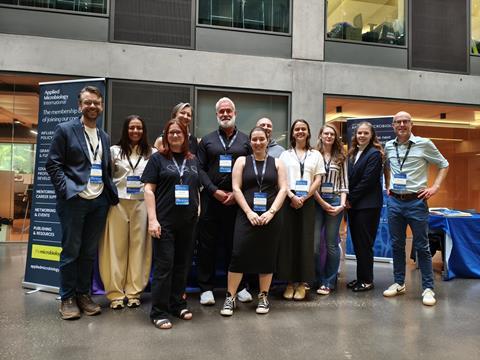
It was a wonderful experience to see an organisation so focused on fostering a diverse and inclusive environment, not for the optics, but rather because they truly understood the need for a diverse community to truly fuel scientific innovation globally.
The Microbiologist magazine
A separate part of my project was working with AMI’s magazine – The Microbiologist. Selfishly, I really enjoyed this element of my internship as it not only helped me develop my own scientific communication skills, but it also highlighted how many avenues of microbiology are expanding every day.
I don’t believe I am alone when I say that as a researcher working in a wet lab the extra reading I plan to do is often pushed to one side- especially when experiments start going wrong! Even when I do get chance to do some extra reading, I find myself focused on my own personal “bubble” of research where I only read papers within the very specific field I work in. As much as its necessary to be informed about your own field, I really was missing out on hearing about truly incredible research!
Part of my work with The Microbiologist involved writing two ’Under the microscope’ articles – one on extremophiles and the other on microbes in fashion. These are subjects I would never have been reading about within my own research bubble but learning about how extremophilic microbes can be used to clean up radioactive sites or how new microbe-based textiles are producing self-repairing, self-colouring clothing was eye-opening.
I am now proud to say I am firmly subscribed to The Microbiologist newsletter as I have no intention of going back to the blinkered way of scientific reading I had before - not when I can now appreciate just how expansive and astonishing the field of microbiology truly is.
Final thoughts
Ending my project with AMI was truly bittersweet. As someone originally sceptical about doing an internship mid-PhD I can firmly say I have learned a lot working with AMI, especially about myself as a researcher.
To anyone looking for a PIPS or other internship that will be inclusive, fulfilling and (most importantly) fun - I cannot recommend AMI enough!
MICROBIOLOGY NEWS: Register with The Microbiologist for more free articles
Charlotte has just started her fourth year on the MIBTP PhD scheme working in the Knowles Lab at Birmingham University within the field of biochemistry/biophysics. She is studying the transport of phospholipids between Gram-negative bacterial membranes.
FInd Charlotte on LinkedIn.



No comments yet