
A new study on maize fields in Jilin Province, China, found adding organic carbon sources on top of straw return increased soil organic carbon in the topsoil, while the subsoil showed a more complex response: under plough tillage, low carbon input improved subsoil carbon storage, but higher carbon input weakened this benefit.
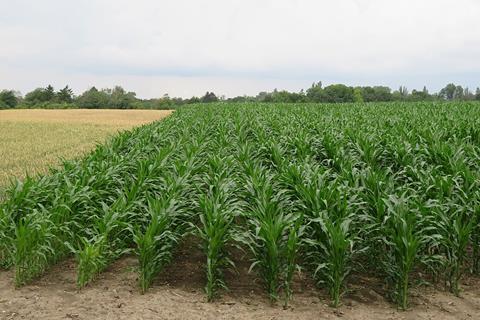
Wei Fan’s & Hongguang Cai’s team from Jilin Agricultural University, showed that microbial necromass carbon helps explain why topsoil and subsoil store carbon differently under contrasting tillage and carbon input practices. This findings of this study were published in Agricultural Ecology and Environment.
Soil organic carbon
Soil organic carbon is central to agricultural productivity, microbial activity, and climate regulation. Returning straw and applying organic amendments such as livestock and poultry manure are widely used to increase carbon inputs and improve soil fertility.
Microorganisms play a critical role in this process by decomposing organic materials and converting part of the input carbon into microbial biomass, residues, and necromass, which can become stable soil carbon. However, most studies have focused on surface soil or on carbon input alone, leaving limited understanding of how topsoil and subsoil respond differently to combined tillage and carbon management.
This gap is important because carbon added to the surface may not behave the same way after being mixed into deeper soil layers.
Field experiments
The researchers established field experiments in four representative maize-growing areas of Jilin Province, using two tillage systems—no-tillage and plough tillage—and four carbon input treatments: straw return alone, straw plus low exogenous carbon input, straw plus medium exogenous carbon input, and straw plus high exogenous carbon input.
After one year, they collected topsoil samples from 0–20 cm and subsoil samples from 20–40 cm. The team measured soil organic carbon, total nitrogen, particulate organic carbon, mineral-associated organic carbon, microbial biomass carbon, enzyme activities, and microbial necromass carbon.
They also used high-throughput sequencing to examine bacterial and fungal communities, and applied partial least squares structural equation modeling to trace the links among tillage, carbon input, microbes, necromass, and soil carbon fractions. The results showed a clear soil-layer contrast.
Topsoil vs subsoil
In the topsoil, increasing carbon input consistently raised soil organic carbon, with the highest carbon input increasing topsoil soil organic carbon by 19.1% under no-tillage and 13.9% under plough tillage compared with straw return alone.
Additional carbon input also increased total nitrogen, microbial biomass carbon, and key carbon-degrading enzymes, promoting the accumulation of fungal and bacterial necromass carbon. Fungal necromass carbon contributed to mineral-associated organic carbon, while fungal and bacterial necromass together supported particulate organic carbon formation.
In the subsoil, however, plough tillage changed the outcome. Low carbon input increased soil organic carbon by 27.0%, but this increase fell to only 0.2% under high carbon input.
The study suggests that improved aeration after ploughing may stimulate microbial respiration and the decomposition of fungal necromass, especially by bacteria such as Proteobacteria, thereby reducing the precursor materials needed for stable mineral-associated carbon formation.
Farmland management
Overall, the study shows that more carbon input does not automatically mean stronger carbon sequestration across the whole soil profile. Topsoil can benefit from higher organic carbon additions, but subsoil carbon storage may require more cautious management, especially under plough tillage.
The authors suggest that carbon sources should be added on the basis of straw return, but tillage practices should be tailored to soil characteristics such as existing soil organic carbon, bulk density, and pH.
Although the short experimental period means that longer-term monitoring is still needed, the study provides practical guidance for designing farmland management strategies that strengthen soil fertility while improving agricultural carbon sinks.






No comments yet