
Tomato bacterial canker, caused by Clavibacter michiganensis (Cm), is a destructive vascular disease threatening global tomato production and seed trade.

Streptomycin, a widely used aminoglycoside antibiotic in both plant disease management and human medicine, inhibits bacterial growth by targeting the ribosome. Known streptomycin resistance mechanisms in Cm primarily involve mutations in ribosomal components, such as rpsL gene, which prevent antibiotic binding.
However, the genetic basis underlying the unusually high-level streptomycin resistance observed in the field-derived strain TX-0702 could not be explained by these mechanisms and remained unknown.
Through transposon insertion mutagenesis and de novo genome sequencing, the authors identified a previously uncharacterized 51,235 bp plasmid, designated pCM3, in TX-0702. Comparative analysis revealed that pCM3 shares high nucleotide identity with plasmid D26b from Curtobacterium species and carries multiple mobile genetic elements, including a MobC-like relaxase and transposases, suggesting that pCM3 was likely acquired from environmental bacteria via horizontal gene transfer (HGT) and has the potential for further dissemination.
Resistance mechanism
Genetic and biochemical analyses further revealed the resistance mechanism mediated by pCM3. The plasmid harbors aph(3), encoding an aminoglycoside 3’-phosphotransferase. Plasmid-curing experiments showed that loss of pCM3 reduced the streptomycin MIC from 128 μg/ml to 4 μg/ml in all cured strains.
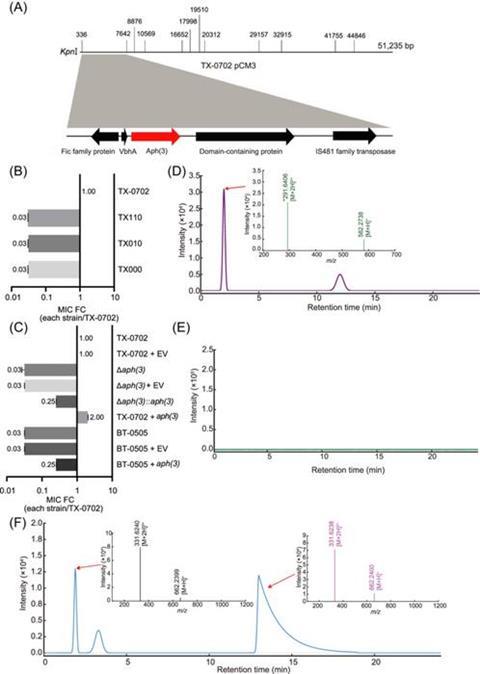
Knockout of aph(3) similarly abolished resistance, while overexpression further elevated the MIC to 256 μg/ml, confirming aph(3) as the core resistance determinant. In vitro phosphorylation assays combined with LC-MS analysis demonstrated that APH(3) phosphorylates streptomycin to yield a monophosphorylated product, completely abolishing its inhibitory activity against Cm. This represents the first demonstration of an APH(3)-dependent phosphorylation-driven resistance mechanism in a Gram-positive plant pathogen.
Novel mechanism
This study reveals a novel streptomycin resistance mechanism in Cm and fills a gap in the understanding of antibiotic resistance in plant pathogens.
MICROBIOLOGY ON TAP: Get full access to all The Microbiologist articles from just £2.17 a month
The high sequence similarity of pCM3 to environmental bacterial plasmids, combined with its mobile genetic elements, suggests that plant pathogens may serve as reservoirs and vectors for resistance genes, bridging soil, plant, and human-associated microbial communities.
These findings carry important implications for resistance gene surveillance under the One Health framework, and underscore the need for strengthened monitoring of resistance gene dissemination in agricultural ecosystems.





No comments yet