
Because of their small size, the significance of microalgae is often underestimated. However, they carry out approximately half of the world’s photosynthesis, easily matching the productivity of all land plants combined. Additionally, microalgae – otherwise known as phytoplankton – form the basis of most ocean food webs.
Each photosynthetically active cell releases a large number of organic substances, which gradually move away from the cell in the surrounding seawater. A small cloud of various substances then forms around each microalga. Researchers call this the phycosphere. It is the place where microalgae and bacteria are most likely to interact. These interactions shape the carbon cycle in the oceans.
The phycosphere contains chemical signals that can be detected by a wide range of bacteria. These bacteria track these substances in order to move towards the microalgae, wherethey exchange carbon-containing organic matter with the microalgae. “The phycosphere is one of the most important marketplaces for organic carbon in the oceans,” says Roman Stocker, Professor at the Institute of Environmental Engineering at ETH Zurich.
Previous research assumed that this marketplace followed the laws of simple diffusion, with all substances dispersing similarly, showing higher concentrations in the immediate surroundings of the microalgae and gradually decreasing as the distance from the photosynthetic cell increases.
MICROBIOLOGY NEWS: Register with The Microbiologist for more free articles
Now the team led by Stocker has for the first time measured the concentrations of such a substance – known as fucoxanthin – in the immediate vicinity of individual living microalgal cells. They used a sophisticated technique called Raman microspectroscopy to accurately map the chemical environment around the phytoplankton. The researchers are presenting their findings in the journal Proceedings of the National Academy of Sciences.
Like an onion
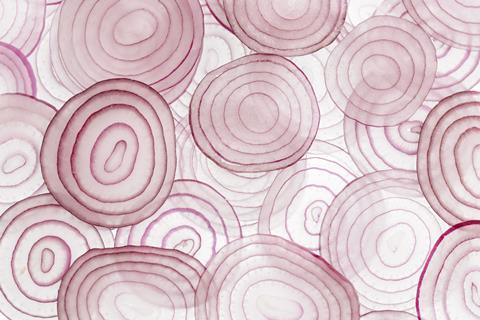
To their surprise, they discovered that the concentration of fucoxanthin increases much more sharply near the phytoplankton cell than expected. This indicates that the phycosphere consists of multiple layers. These layers are wrapped like onion skin around the microalgae at the centre, creating progressively larger spherical shells. The chemical properties of the substances released determine how far each individual layer extends.
The researchers concluded that there were significant differences between the substances: only water-soluble substances such as sugars and amino acids behave as expected from simple diffusion. Their concentration decreases very gradually as the distance from the microalgae increases.
This differs from water-repellent substances such as fucoxanthin, a key photosynthetic pigment in many microalgae. This substance remains highly concentrated close to the microalgae, with its levels dropping very sharply within roughly ten micrometres of the cell surface. How is this possible? Zachary Landry and Riccardo Foffi, the two lead authors of the study, found that a thin layer of mucus surrounding the microalgae may be responsible.
The dual function of mucus
According to the researchers, a mucus-like coating envelops the microalgae and affects the spread of certain substances. “It helps water-repellent substances disperse in the water,” Foffi explains. At the same time, the mucus holds back these molecules, preventing them from drifting away from the cell and resulting in the significantly higher concentrations near the cell surface.
“Much stronger chemical signals are created as a result,” adds Landry. “This makes it easier for the bacteria to locate tiny microalgal cells in the ocean.” This marks a fundamental shift in our understanding of the phycosphere. The researchers highlight that their findings have significant implications for models of the interactions between phytoplankton and bacteria. They also emphasise that thorough experimental research remains crucial, even as the field becomes more reliant on computer-based models.
MICROBIOLOGY ON TAP: Get full access to all The Microbiologist articles from just £2.17 a month
The study reveals that the area immediately surrounding microalgae is far more intricate than previously thought. These new insights could improve our understanding of the interactions between microalgae and bacteria – and thus of a crucial aspect of the oceans’ carbon cycle.





No comments yet