
Scientists investigating fungi colonising the dung of African herbivores, including rhinoceros, giraffe and zebra, have revealed how different groups of fungi succeed one another as dung decomposes.
The study, ’Morphological diversity of saprophytic coprophilous fungi from selected domestic and wild herbivore dung in different terrestrial ecosystems of KwaZulu-Natal Province, South Africa’, published in the South African Journal of Botany, highlights an often-overlooked group of fungi that play important roles in dung decomposition, nutrient recycling and terrestrial ecosystem functioning.
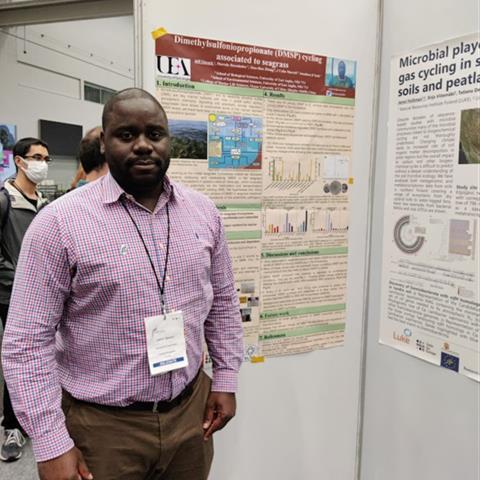
First author Dr Jeff Ojwach, from King’s College London, together with Professors Samson Mukaratirwa and Taurai Mutanda, documented a morphologically diverse community of dung-loving, or coprophilous, fungi associated with domestic and wild herbivore dung in KwaZulu-Natal, South Africa. The study established a regional morphological baseline for two ecologically important fungal genera, Pilobolus and Ascobolus.
“One particularly interesting observation was the clear succession in their appearance: Pilobolus generally colonised and produced fruiting structures earlier, whereas Ascobolus tended to appear later as the dung decomposed. This reflects how different fungi occupy different stages of this small but highly dynamic ecosystem,” Dr Ojwach said.
Coprophilous fungi
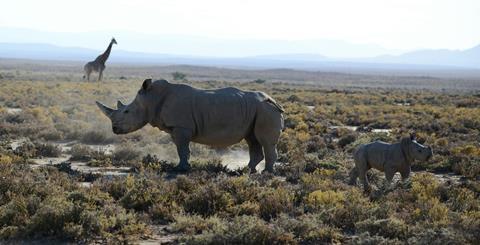
The researchers investigated coprophilous fungi growing on dung from domestic and wild herbivores collected from three contrasting locations in KwaZulu-Natal: Ukulinga Research Farm, Tala Private Game Reserve and Phinda Private Game Reserve.
They examined 27 dung-derived samples representing animals including rhinoceros, buffalo, giraffe, zebra, waterbuck, impala, goats and cattle.
The aim was to document the occurrence and morphological diversity of Pilobolus and Ascobolus and establish baseline information for a region where these fungi remain relatively understudied. The study itself emphasises that the resulting richness measurements concern these focal genera rather than the total fungal diversity of the dung samples.
Rich microhabitat
“Dung is much more than animal waste. It is a nutrient-rich microhabitat supporting complex communities of microorganisms that help break down organic material and return nutrients to the soil. Coprophilous fungi are an important part of this process, yet their diversity remains poorly documented in many African ecosystems,” Dr Ojwach said.
“In KwaZulu-Natal in particular, relatively little baseline information was available on Pilobolus and Ascobolus associated with wildlife and livestock dung. Without such baseline records, it is difficult to understand regional fungal biodiversity or monitor how these communities may respond to changes in land use, wildlife populations, livestock management and environmental conditions.
“Our objective was therefore to document which morphological forms were present, describe their distinguishing structures and establish a reproducible baseline for future ecological and molecular investigations.”
Fruiting bodies
The team collected fresh dung from domestic and wild herbivores across agricultural and protected wildlife environments in KwaZulu-Natal. Dung samples were brought into the laboratory and incubated in moist chambers for up to 25 days. The scientists inspected them regularly for developing fungal fruiting bodies and examined these structures using stereomicroscopy and light microscopy.
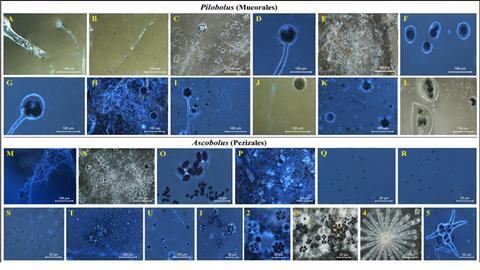
They focused on Pilobolus and Ascobolus because these genera were repeatedly observed and have distinctive reproductive structures that can be recognised morphologically. Pilobolus can be recognised by structures such as its trophocyst, light-responsive sporangiophore, swollen subsporangial vesicle and dark terminal sporangium. Ascobolus, in contrast, produces small apothecioid fruiting bodies containing asci and characteristically pigmented ascospores.
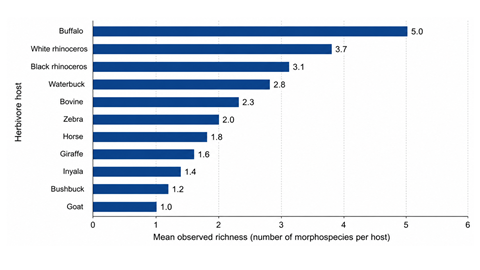
“There was considerable variation among dung samples. Buffalo dung showed the highest observed focal richness in our dataset, with five morphospecies, while some rhinoceros and waterbuck samples supported up to four,” Dr Ojwach said.
“Goat dung consistently contained only one focal morphotype. Because sampling effort differed between host species, however, we treated these patterns descriptively rather than claiming statistically significant differences between animals.”
Differences in richness
The study found that buffalo dung had the highest observed focal richness, while goat dung had the lowest, although the researchers caution against interpreting these observations as statistically significant differences because sampling effort varied between hosts.
“One of the most striking observations was how dynamic dung becomes once you follow it through time. What may appear to be simply decomposing animal waste is a changing microbial habitat in which different fungi emerge at different stages.
“Pilobolus repeatedly appeared early during incubation, while Ascobolus generally appeared later. It was also interesting to see substantial differences in the observed fungal richness between dung types, with buffalo dung supporting the highest focal richness in our dataset. These observations suggest that dung characteristics associated with host diet and digestive physiology may help shape which fungi can colonise and develop.
Fascinating biology
“Another fascinating aspect is the biology of Pilobolus. Its light-responsive sporangiophores orient towards light and can explosively discharge sporangia away from the dung and towards surrounding vegetation.
”This increases the likelihood of spores being eaten by grazing animals and eventually returning to fresh dung, effectively helping the fungus complete its ecological cycle.”

The work shows why dung-associated fungi deserve greater attention in biodiversity and ecosystem research. These organisms contribute to the breakdown and mineralisation of herbivore dung, helping release nutrients back into soils and supporting dung-associated food webs.
Important starting point
Establishing regional baseline information is particularly important in biodiverse landscapes such as KwaZulu-Natal, where wildlife reserves, livestock farming and natural ecosystems exist alongside one another. Knowing which fungi are present provides a starting point for investigating how environmental change, wildlife management, livestock and changing land use may influence these microbial ecosystems.
The study therefore provides one of the first structured morphological baselines for coprophilous fungi across multiple herbivore hosts in KwaZulu-Natal and creates a foundation for longer-term monitoring of these overlooked fungal communities.
Next steps
“The next important step is to combine traditional fungal morphology with molecular approaches. Our study deliberately provides a morphology-based baseline, and we did not generate DNA sequence data. Consequently, some specimens were conservatively classified as morphotypes or cf. taxa rather than making unsupported species-level assignments,” Dr Ojwach said.
“Future studies should use ITS DNA barcoding alongside additional phylogenetic markers such as LSU, RPB2 and TEF1-α to confirm species identities and uncover cryptic fungal diversity that may not be distinguishable from morphology alone.
“It would also be valuable to investigate seasonal changes, host-specific fungal communities and interactions between fungi, dung beetles and other dung-associated organisms. More balanced sampling across herbivore species and locations would allow us to test statistically whether host diet, digestive physiology, habitat or environmental conditions determine fungal diversity.
“Ultimately, integrating microscopy, molecular ecology and environmental data should give us a much more complete understanding of how these fungi contribute to decomposition and nutrient cycling in African terrestrial ecosystems.”
Study background
Dr Ojwach led the study and was responsible for its conceptualisation, methodology, investigation, formal analysis, data curation and writing of the original manuscript. Professor Samson Mukaratirwa contributed supervision, resources, project administration and funding acquisition, while Professor Taurai Mutanda contributed conceptualisation, supervision and resources. Both co-authors also contributed to reviewing and editing the manuscript.
“We are grateful to Ukulinga Research Farm, Tala Game Reserve and Phinda Game Reserve for permission and support in collecting herbivore dung samples. We also acknowledge the University of East Anglia Bioimaging Platform at Norwich Research Park for technical microscopy assistance and support with morphological identification,” Dr Ojwach said.
Topics
- Advisory Group
- Applied Microbiology International
- Ascobolus
- dung communities
- Ecology & Evolution
- Environmental Microbiology
- Fungi
- Healthy Land
- herbivores
- Jeff Ojwach
- Middle East & Africa
- Pilobolus
- Research News
- Samson Mukaratirwa
- Soil & Plant Science
- Taurai Mutanda
- UK & Rest of Europe
- University of East Anglia Bioimaging Platform


No comments yet