
Aquatic fungi are microorganisms that play a key role in the ecological balance of rivers. They help decompose organic matter, degrade contaminants and are part of the nutrient and energy cycle in freshwater ecosystems. Despite their ecological importance, a study published in the journal Freshwater Biology now warns that the biodiversity and biological functions of these microorganisms in these natural environments are at risk due to rising temperatures, prolonged dry periods and the loss of riparian vegetation caused by climate change.
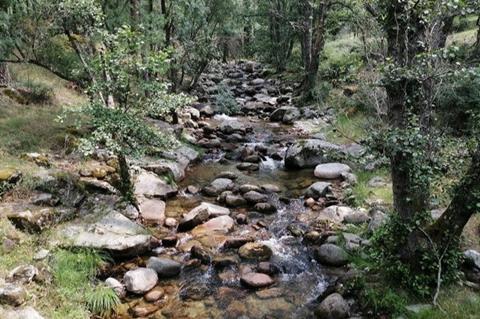
The study is led by the University of Barcelona and the Global Change Research Institute at the Rey Juan Carlos University (IICG-URJC). The study reviews how aquatic fungi and the functions they perform respond to human activity, with the aim of better understanding the functioning of riverine ecosystems and improving their management.
“The loss of riparian forest has negative effects on fungi, as it increases sunlight exposure and temperature on the riverbed,” says Aida Viza, researcher at the Department of Evolutionary Biology, Ecology and Environmental Sciences of the UB’s Faculty of Biology at and of the Institute of Environmental Sciences at the RPTU University Kaiserslautern‑Landau (Germany).
“However, contrary to our expectations, the increase in chemical compounds such as nitrate and phosphate, associated with agriculture and/or urban impacts, had almost no influence on the biodiversity or functions of aquatic fungi. This may be because Iberian rivers have a large supply of nutrients and fungi do not require large amounts to carry out their functions,” the researcher notes.
Microbial activity in sediments
The study describes how microbial activity in the sediments is highly resistant to human impacts, as they provide more stable moisture and temperature conditions that allow rivers to sustain life and function during unfavourable periods. “These results show promising data for rivers. However, we must bear in mind that, with climate change, these unfavourable conditions will become increasingly prolonged and that the refuge capacity offered by sediment is limited,” adds Viza.
The work, framed within the context of the Iberian River Observatory (IberRios), involved 19 researchers from various universities and research institutes in Spain, Portugal, Germany and Switzerland. In total, information was collected from 62 rivers located in seven Iberian regions with a great diversity of soils and climates.
“Our approach allows us to use the rivers of the Iberian Peninsula as a natural experiment to assess how climate change and human impacts can affect the biodiversity of these ecosystems and the benefits they provide to society,” says Cayetano Gutiérrez, researcher at the IICG-URJC.
Improvements in the management and monitoring of rivers
The study’s conclusions have important applications for the management and monitoring of rivers in the context of the climate crisis. Although river management has often focused on reducing nitrate and phosphate concentrations, these measures alone would not be sufficient to preserve the biodiversity and functions provided by aquatic fungi.
“The new study suggests that urgent action is needed and that measures must be adopted to mitigate the impacts of the climate crisis on rivers. One such action could be, for example, increasing shade by restoring riparian woodland or preventing excessive water extraction, especially during the summer,” concludes Gutiérrez.






No comments yet