A research paper titled “The novel effector CREP1 of endophytic Fusarium lateritium regulates host plant immunity through interaction with receptor protein NbEIX2” has been published in the journal Mycology.

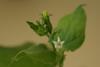
Nicotiana_benthamiana_flower

Source: Charles Andres

Flower of Nicotiana benthamiana

This study employed plant apoplastic proteomics and transcriptomics to identify effector proteins secreted by the fungus, and elucidated at the molecular level a novel mechanism by which the pectinase-like effector CREP1 activates plant immunity.

This study was led by the research team of Professor Ji-Chuan Kang from the Engineering and Research Center for Southwest Biopharmaceutical Resource of the National Education Ministry of China, Guizhou University. By combining bioinformatics with molecular biology techniques, this study successfully screened and identified a novel effector protein, CREP1, which contains a pectin lyase domain.

Plant immune response

It was demonstrated for the first time that CREP1 directly interacts with the pattern recognition receptor NbEIX2 on the plant cell membrane and recruits the co-receptors BAK1 and SOBIR1 to induce plant immune responses, including reactive oxygen species (ROS) burst and cell death. Furthermore, the study innovatively proposes and validates the concept that “activation of a moderately controlled plant immunity by endophytes through effector proteins is a prerequisite for their successful colonization and growth-promoting functions,” thereby greatly expanding our understanding of the evolutionary mechanisms underlying plant–endophyte mutualism.

Low-Res_原图 (2)

Source: Mycology-An International Journal on Fungal Biology

A working model of CREP1-NbEIX2 in fungal-plant interactions. The RLP-type leucine-rich membrane surface pattern receptor NbEIX2 utilizes BAK1 and SOBIR1 to mediate CREP1-induced immune.

By combining bioinformatics with molecular biology techniques, this study successfully screened and identified a novel effector protein, CREP1, which contains a pectin lyase domain. It was demonstrated for the first time that CREP1 directly interacts with the pattern recognition receptor NbEIX2 on the plant cell membrane and recruits the co-receptors BAK1 and SOBIR1 to induce plant immune responses, including reactive oxygen species (ROS) burst and cell death.

Furthermore, the study innovatively proposes and validates the concept that “activation of a moderately controlled plant immunity by endophytes through effector proteins is a prerequisite for their successful colonization and growth-promoting functions,” thereby greatly expanding our understanding of the evolutionary mechanisms underlying plant–endophyte mutualism.