
Global plastic production continues to rise, leading to the widespread accumulation of microplastics in rivers, lakes, and oceans. These particles persist for decades, interact with contaminants, and exert physical, chemical, and biological stress on aquatic organisms.
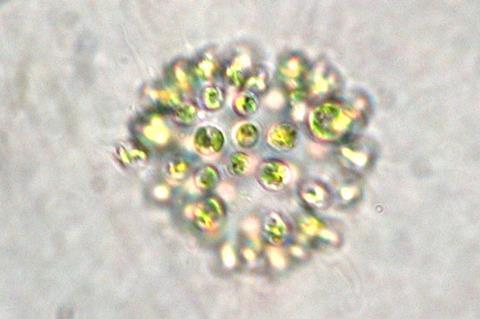
Algae, which form the foundation of aquatic food webs, are among the first organisms to encounter microplastics. Previous studies have mainly focused on the toxic effects of microplastics on algae, such as growth inhibition and photosynthetic disruption.
However, algae also possess unique surface properties, metabolic plasticity, and aggregation behaviors that may influence microplastic fate. Based on these challenges, it is necessary to conduct in-depth research on algae–microplastic interactions as potential tools for aquatic pollution mitigation.
A comprehensive review led by researchers from the State Key Laboratory of Environmental Criteria and Risk Assessment, Chinese Research Academy of Environmental Sciences, together with collaborators from Tongji University, University of Science and Technology Beijing, and the Guangdong Provincial Academy of Environmental Sciences, was published (DOI: 10.1007/s11783-026-2111-2) on January 5, 2026, in Engineering Environment.
Interaction with microplastics
The study systematically examines how algae interact with microplastics in aquatic systems, detailing mechanisms such as surface adsorption, embedment, and cellular internalization. Importantly, it highlights how these biological interactions could be harnessed to mitigate microplastic pollution, offering new perspectives for sustainable aquatic environmental management.
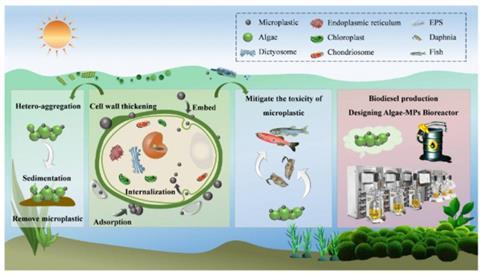
The review identifies algae–microplastic interaction as a multi-stage process involving surface adsorption, embedment within cell walls, and, in some cases, internalization into algal cells. These processes are governed by microplastic properties such as size, surface charge, polymer type, and aging state, as well as algal traits including cell wall composition, extracellular polymeric substances (EPS) production, and growth stage. Smaller, rougher, or positively charged microplastics exhibit stronger affinity for algal surfaces, often forming hetero-aggregates that accelerate particle sedimentation.
Algal paradox
While microplastics can inhibit algal growth by shading light, damaging cell walls, and inducing oxidative stress, the review highlights a paradox: under certain conditions, algae adapt by thickening cell walls, altering metabolism, or forming aggregates that reduce further exposure. These responses can modify microplastic mobility and bioavailability in water bodies. Moreover, algal biofilms may alter the adsorption of co-existing pollutants on microplastics, influencing their toxicity and environmental fate.
By integrating experimental evidence across freshwater and marine systems, the study emphasizes that algae–microplastic interactions are not uniformly harmful but context-dependent, offering exploitable mechanisms for pollution control when carefully managed.
READ MORE: Lab-grown algae removes microplastics from water
READ MORE: Study reveals the microbial battlegrounds within estuaries - and the part played by microplastics
The authors emphasize that understanding algae–microplastic interactions represents a conceptual shift in pollution research. Instead of treating algae solely as indicators of ecological damage, the review frames them as potential biological tools for remediation.
The researchers note that algal aggregation and surface binding can immobilize microplastics and reduce their bioavailability, while certain species may even contribute to plastic degradation or repurposing. They stress that advancing this approach will require standardized experimental methods, species-specific assessments, and integration with ecological risk management frameworks to ensure both effectiveness and environmental safety.
Pollution mitigation
Harnessing algae–microplastic interactions could open new avenues for eco-friendly and cost-effective pollution mitigation. Algae-based systems may be integrated into wastewater treatment plants, constructed wetlands, or natural water bodies to enhance microplastic removal through aggregation and sedimentation.
In addition, algal–microplastic biomass could be repurposed into biofuels or other value-added products, aligning pollution control with circular economy principles.
Beyond technological applications, the findings inform environmental policy by highlighting biological processes that influence microplastic fate. Together, these insights support the development of sustainable, nature-based solutions for mitigating the growing global challenge of aquatic plastic pollution







No comments yet