
All Research News articles – Page 249
-
 News
NewsInsights from patient who cleared hepatitis C could lead to vaccine
By studying individuals who spontaneously clear hepatitis C infections, a team of researchers has identified viable vaccine targets for a disease that infects 70 million worldwide with case numbers increasing every year.
-
 News
NewsBreakthrough antibiotic shows promise against obstinate mycobacterial infections
Researchers assemble a new antibiotic candidate, COE-PNH2, offering a more effective therapeutic option against hard-to-treat mycobacterial lung diseases.
-
 News
NewsMissing puzzle piece discovered that influences sensitivity of gut bacterium to antibiotics
Scientists identify the small RNA that influences the sensitivity of the intestinal pathogen Bacteroides thetaiotaomicron to certain antibiotics.
-
 News
NewsResearchers uncover key biomolecule involved in whooping cough infection
Researchers have identified a new complex-carbohydrate biomolecule, or glycan, that plays a key role in the nasal colonization of the Bordetella bacteria responsible for whooping cough.
-
 News
NewsCancer therapies show promise in combating tuberculosis
A study has identified a combination of medications that may improve blood flow within granulomas, tight clusters of white blood cells formed by the body’s immune system in response to tuberculosis infection, benefiting drug delivery.
-
 News
NewsResearchers discover evolutionary “tipping point” in fungi
Scientists have found a ‘tipping point’ in the evolution of fungi that throttles their growth and sculpts their shapes, demonstrating how small changes in environmental factors can lead to huge changes in evolutionary outcomes.
-
 News
NewsCandida albicans toxin plays a special role in the colonization of the digestive tract
Comparative studies on mice with a complete microbiome and a microbiome reduced by antibiotics now show that the previous assumption that the yeast form of Candida albicans is better suited for colonization needs to be revised.
-
 News
NewsNew vaccine against a highly fatal tropical disease – and potential bioterror weapon – demonstrates efficacy in animal studies
In a mouse study, researchers tested a vaccine against the bacterium that causes melioidosis and found it was highly protective against the disease, which is endemic in many tropical areas.
-
 News
NewsMaize genes control little helpers in the soil
Researchers studying different local varieties of maize have discovered that the genetic makeup of the plants also helps to influence which microorganisms cluster around the roots.
-
 News
NewsScientists close in on TB blood test which could detect millions of silent spreaders
Scientists have taken a major step towards developing a blood test that could identify millions of people who spread tuberculosis unknowingly.
-
 News
NewsNew study provides insights into COVID-19 vaccine uptake among children and young people
COVID-19 vaccine uptake among children and young people was low across all four UK nations, compared to other age groups, according to the first research study to look at data from all four UK nations.
-
 News
NewsNew classification of tuberculosis supports efforts to eliminate the disease
A new way to classify tuberculosis (TB) that aims to improve focus on the early stages of the disease has been presented by an international team.
-
 News
NewsIn Lake Erie, climate change scrambles zooplankton’s seasonal presence
A new analysis of zooplankton in western Lake Erie shows that their biomass and seasonal behavioral patterns have been drastically altered by human-driven changes in water temperature and food webs.
-
 News
NewsHumans pass more viruses to other animals than we catch from them
Humans pass on more viruses to domestic and wild animals than we catch from them, according to a major new analysis of viral genomes.
-
 News
NewsResearchers ask if active screening for tuberculosis among vulnerable populations is cost-effective
Scientists present the findings of their systematic review on active pulmonary TB screening programmes run between 2008 and 2023 in so-called high-risk groups living in low TB incidence countries.
-
 News
NewsNew soil model integrates microbes and large perennial grasses
A new soil model integrates soil microbes and the distinct physiological traits of large perennial grasses into DayCent.
-
 News
NewsResearch uncovers a new path to drug diversity
By exploring protein evolution, scientists have found new “fusion sites” that enable faster and more targeted drug development.
-
 News
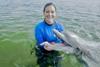
NewsResearchers carry out first peer-reviewed study of fecal microbiota transplants in dolphins
Scientists have successfully carried out pioneering fecal microbiota transplantations on Navy bottlenose dolphins that showed signs of gastrointestinal disease.
-
 News
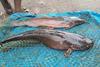
NewsAfrican catfish skin mucus yields promising antibacterial compound
Scientists report they have extracted a compound with powerful antibacterial properties from the skin of farmed African catfish.
-
 News
NewsFor each 10% increase of certain bacteria type in the gut microbiome, the risk of hospitalisation for infections falls by up to a quarter
A study of two large European patient cohorts has found that for every 10% increase in butyrate-producing bacteria in a patient’s gut, the risk of hospitalisation for any infection falls by between 14 and 25% across two large national cohorts. The