
All Research News articles – Page 50
-
 News
NewsAmbient air pollution is associated with respiratory infection burden in the first year of life
Ambient air pollution is associated with respiratory infection burden in the first year of life, according to preliminary findings from the Immune Development in Early Life (IDEaL) Rome Cohort.
-
 News
NewsDetailed map of life-threatening Vibrio bacteria reveals new target for treatment
Scientists have mapped in unprecedented detail the structure of Vibrio bacteria, which can cause life-threatening infections linked to antibiotic resistance. The team behind the study say the finding could provide new targets for life-saving treatment.
-
 News
NewsDrip-irrigated halotolerant PGPB boost jujube yield and quality in saline soils by reshaping soil bacterial communities
A new study demonstrates that applying halotolerant plant growth-promoting bacteria (PGPB) via drip irrigation during the crop growth period can effectively alleviate soil salinity stress, enhance jujube productivity and fruit quality, and restructure rhizosphere bacterial communities in saline agricultural soils.
-
 News
NewsRare orchid Paphiopedilum purpuratum mediates adaptation via a dual-fungal strategy
Paphiopedilum purpuratum, an endangered orchid species with critical conservation value, faces severe challenges in ex situ adaptation despite successful reproductive output. A novel study reveals the integrated physiological and symbiotic adaptation mechanism underlying its ex situ conservation.
-
 News
NewsCOVID-19 and severe heart attack increase mortality by 25% after one year, more than double pre-pandemic rates
Findings from the North American COVID-19 Myocardial Infarction (NACMI) registry demonstrate significantly higher one-year mortality rates in patients with COVID-19 and ST-elevation myocardial infarction (STEMI) compared to patients with STEMI alone.
-
 News
NewsCinnamic acid blocks plasmid conjugation to slow antibiotic resistance spread
A new study reveals that cinnamic acid, a widely used food additive found in cinnamon, can effectively inhibit plasmid‑mediated conjugation, a major route for the global spread of antibiotic resistance genes (ARGs).
-
 News
NewsNew study examines measles vaccination coverage after a postelimination outbreak
In 2022–2023, a large postelimination measles outbreak occurred in central Ohio. A study found that 20 months after the outbreak, MMR coverage across the entire primary care network (PCN) population remained well below herd immunity levels, with minimal gains.
-
 News
NewsIntestinal Candida albicans is associated with subclinical coronary atherosclerosis in metabolic dysfunction-associated steatotic liver disease with cirrhosis
Researchers have published the first report of gut fungal dysbiosis associated with the severity of metabolic dysfunction-associated steatotic liver disease and subclinical coronary atherosclerosis. An increased abundance of fecal C. albicans was observed in patients with cirrhosis and high SCA burden.
-
 News
NewsEight-year results from two randomized phase 3 trials of tenofovir alafenamide for chronic hepatitis B virus infection in China
Tenofovir alafenamide (TAF) has demonstrated comparable efficacy to tenofovir disoproxil fumarate (TDF), with improved renal and bone safety, in Chinese participants with chronic hepatitis B enrolled in two Phase 3 trials.
-
 News
NewsTiny switch controls rare rotary machine in bacteria - and can even reverse direction of spin
Researchers have discovered a tiny molecular switch that can control and reverse the direction of a rare rotary machine linked to motility, surface colonization and protein secretion in bacteria.
-
 News
NewsYellow food coloring changes gut microbiome in early life
Researchers found that the gut microbiotaof young rats changed with exposure to acceptable daily intake levels of the food coloring tartrazine. The males showed increases in bacteria linked to low-grade inflammation and they also did not gain as much weight as was expected.
-
 News
NewsMen and women may differ in how fitness level Is linked to gut microbiome diversity
Aerobic fitness may be influenced by microbes in the gut, but men and women appear to show a different connection, according to a first-of-its-kind study.
-
 News
NewsThat late-night snacking is probably messing up your gut
It’s well known that chronic stress can disrupt bowel function, sending people running to the bathroom or making them constipated. New research suggests that eating late at night amplifies these effects, with implications for both digestive health and the gut microbiome.
-
 News
NewsSARS-CoV-2 does not persist in the placenta after maternal recovery from COVID-19
A new study finds that the virus that causes COVID-19 does not linger in placental tissue weeks to months after a pregnant woman recovers from infection - offering important reassurance for clinicians and patients alike.
-
 News
NewsCosmetics from waste? New microbial discovery could enable more sustainable production of high-value chemical products
Researchers have made a key discovery about how certain bacterial strains produce a set of economically valuable chemicals — opening the door to new, more sustainable production methods. A family of molecules could be made via bacterial fermentation instead of from palm oil, as they are today.
-
 News
NewsMicrobes contribute a surprisingly large array of proteins in fermented foods
A study examining the proteins found in fermented foods like yogurt, cheese and bread found that a surprisingly large number, and percentage, of microbial proteins contribute to their overall protein content.
-
 News
NewsNew insights into how bacteria manage DNA
New analytical methods have enabled researchers to uncover how the sequence, physical shape and flexibility of bacterial DNA guide the activity of an enzyme called DNA gyrase, which previously got all the credit for managing DNA.
-
 News
NewsMalaria shaped distribution of early human populations
Scientists investigated whether Plasmodium falciparum induced malaria shaped human habitat choice between 74,000 and 5,000 years ago, finding that malaria influenced habitat choice by pushing human groups away from high-risk environments and separating populations across the landscape.
-
 News
NewsCOVID antiviral speeds recovery but doesn’t reduce hospitalization in vaccinated patients, trials find
Paxlovid (nirmatrelvir-ritonavir) does not reduce hospital admissions or deaths in vaccinated adults at higher risk of severe COVID-19, despite helping them recover faster, according to results from two national trials.
-
 News
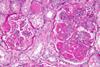
NewsHigh levels of gut bacterial toxin trigger lupus nephritis
Research suggests that using antibiotics to target the Ruminococcus gnavus lipoglycan, or the protein it activates on immune cell surfaces to amplify damaging inflammation, could serve as an alternative to current lupus nephritis therapies that suppress the immune system.