
All Research News articles – Page 49
-
 News
NewsScientists pinpoint the changes that happen when gut bacteria invade the bloodstream
Researchers have pinpointed genotypic and phenotypic changes that take place when colonising bacteria in a patient’s gut invade and infect the bloodstream. The team aimed to determine what changes occur within bacteria in a patient’s gut that enable them to become invasive bloodstream pathogens.
-
 News
NewsScientists uncover how pathogens switch on their virulence
A research team has uncovered how a key protein switches on the machinery that enables Leptospira pathogens to survive and cause disease. The findings provide new insights into how pathogens regulate their virulence and may open new avenues for therapeutic interventions.
-
 News
NewsNew study suggests reduced newborn hepatitis B vaccination coverage may increase infant infections
Researchers found that lower vaccination coverage among infants born to unscreened mothers was associated with a substantial increase in HBV infections.
-
 News
NewsWhere people get their news influences their beliefs about vaccines
People who follow “new right” media outlets are more than twice as likely to be vaccine-hesitant compared to those who never engage with those outlets, a new study finds. Hesitant adults were more likely to rely on non-authoritative sources for health information.
-
 News
NewsResearchers discover new mosquito-specific viruses
A new study looked at mosquitoes’ immune response to discover many more insect viruses. Researchers hope to someday use the mosquitoes’ own immune system to battle some of the most pervasive and antagonistic human viruses.
-
 News
NewsNew cellular target prevents hepatitis E infection
To replicate, a virus must first enter a host cell. In a recent study, the researchers specifically investigated host cell processes required for successful HEV infection. In doing so, they identified the enzyme PIKfyve as a crucial factor for viral entry.
-
 News
NewsImmune cells in the nose slow influenza virus
Memory cells in the nose slow the influenza virus as soon as it enters the body. They reduce viral levels and may help protect against more severe illness, according to a study that may help guide the development of better influenza vaccines.
-
 News
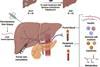
NewsAssociation of changes in portal insulin with immunometabolism during and after hepatitis C virus infection
A new study aims to investigate the relationship between insulin, the gut-liver axis, and immunometabolic changes in patients with hepatitis C virus. Lower portal insulin during HCVi is associated with changes consistent with altered pancreatic insulin secretion and decreased hepatic insulin extraction.
-
 News
NewsSeparating signal from noise: How African biostatisticians are reshaping the fight against malaria
Biostatistics is unlocking smarter malaria solutions, linking parasite diversity, vaccines, and human behaviour to drive more effective prevention and protection.
-
 News
NewsThe brain–gut health initiative: A pioneering effort in psychiatric research
Researchers analyze brain imaging data, microbiome profiles, and clinical assessments to identify biomarkers for precision mental healthcare. The Brain–Gut Health Initiative is an ongoing long-term clinical study designed to investigate how interactions between the brain and gut microbiome contribute to psychiatric disorders.
-
 News
NewsScientists highlight the cost of delaying childhood vaccination
Delaying hepatitis B vaccination after birth increases infections among newborns and decreases their survival rates and quality of life. A new study found that the longer the delay, the higher the cost in human life and health care.
-
 News
NewsCrab shell by-products could help regulate the marine lifetime of biodegradable plastics
Researchers show that crab shell by-products can reduce the breakdown rate of biodegradable plastics in seawater by altering the microbial communities that colonize their surfaces, known as the plastisphere.
-
 News
NewsHow AI can help us count the ‘good’ viruses used in biopharmaceuticals
Researchers have developed a new methodology that uses artificial intelligence (AI) tools to identify and count target viruses more efficiently than previous techniques. The new approach can be used in applications such as pharmaceutical biomanufacturing.
-
 News
NewsFrom precision intervention to a “virtual gut”: how close are we to predicting and steering the human microbiome?
A new review maps how multi-omics and machine learning could turn host-microbiome research from correlation hunting into actionable prediction and personalized therapy.
-
 News
NewsAutomation platform enables high-resolution spatial mapping of microbial communities
Researchers have developed a sequential error-robust FISH spatial mapping platform (SEER-Map) which enables fully automated, high-multiplexity spatial profiling of complex microbial communities at single-cell resolution.
-
 News
NewsResearchers deploy phage therapy in new frontier against antimicrobial resistant infectious diseases
A revelatory treatment for patients with life-threatening infectious diseases is being pioneered in Melbourne. VICPhage, a clinical partnership between The Alfred and Monash, is one of the first in Australia to offer end-to-end capacity in phage therapy to treat some of the most challenging infections.
-
 News
NewsGut microbiota impacts resistance to bacterial pneumonia: Study
A gut-lung connection influences susceptibility to infection by Acinetobacter baumannii, according to a new study. Investigators found that antibiotics disrupt the gut microbiota, suppress protective immune system pathways in the lungs; and increase the severity of pneumonia.
-
 News
NewsStudy of influenza D in human cells and tissue hints at spillover potential
The influenza D virus that researchers say has been flying under the radar since its detection in animals in 2011 can vigorously make copies of itself in human cells and lung tissue samples, a new study shows.
-
 News
NewsGene-sharing myth challenged as bacteria shown to police DNA exchange
A new study reveals that bacteria can actively limit the spread of antibiotic resistance genes, using a newly characterized mechanism that blocks DNA transfer between cells. It focuses on how bacteria exchange genetic material through tiny intercellular bridges known as nanotubes.
-
 News
NewsResearchers develop promising new vaccine against H5N1 bird flu
Researchers have developed a vaccine approach that shows promise in protecting against highly pathogenic bird flu, demonstrating strong efficacy in both mice and cattle. In 2024, the virus spread to dairy cattle and subsequently caused illness in about 70 farm workers with close contact to infected animals.