
A new long-term study reveals that biochar, a carbon-rich material derived from crop residues, can significantly enhance soil carbon storage, but its effectiveness depends strongly on land use and soil type.
Researchers conducted an 11-year controlled experiment to investigate how repeated applications of straw-derived biochar influence soil organic carbon across different agricultural systems. Their findings show that biochar not only increases total carbon storage but also fundamentally alters how carbon is stabilized in soils by reshaping microbial processes.
“Soil is one of the largest carbon reservoirs on Earth, and understanding how to enhance its capacity to store carbon is critical for both climate mitigation and sustainable agriculture,” said the study’s corresponding author. “Our results demonstrate that biochar works differently depending on the environment, particularly the type of soil and how the land is managed.”
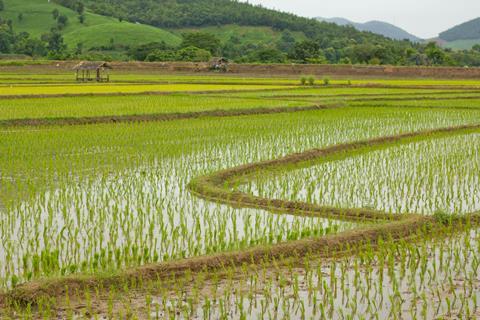
The team compared paddy soils, which are typically flooded, with upland soils under identical conditions. They found that biochar led to dramatically higher carbon sequestration in paddy soils, with increases ranging from 66 percent to over 300 percent compared with upland systems under the same soil parent material. This suggests that waterlogged conditions may slow down carbon decomposition and enhance long-term storage.
Chemical composition
In addition to boosting total carbon levels, biochar changed the chemical composition of soil organic matter. Over time, soils treated with biochar accumulated more stable, resistant forms of carbon while reducing more easily degradable components. This shift toward more persistent carbon forms is important for long-term climate benefits.
A key driver behind these changes is the soil microbial community. The study found that biochar altered the balance between different groups of microorganisms, including bacteria and fungi, which play central roles in carbon cycling. In paddy soils, microbial communities favored pathways that promoted carbon stabilization, while upland soils showed patterns associated with faster carbon turnover.
“Microorganisms act as the engine of soil carbon transformation,” the authors explained. “Biochar changes how these microbial communities function, which in turn determines whether carbon is stored or released.”
Parent material
The research also highlights the importance of soil parent material, which influences properties such as pH, texture, and mineral composition. Soils derived from certain materials, such as clay-rich or alluvial deposits, were more effective at stabilizing carbon after biochar application. These soils also showed greater accumulation of microbial necromass, the remains of dead microorganisms that contribute to long-term carbon storage.
Interestingly, while biochar increased microbial-derived carbon overall, its relative contribution to total soil carbon decreased. This indicates that biochar introduces additional stable carbon while simultaneously modifying natural soil processes.
The study provides new insight into why biochar does not perform uniformly across different environments. Instead, its benefits depend on the interaction between soil type, land use, and microbial activity.
No one-size-fits-all solution
“Our findings emphasize that there is no one-size-fits-all solution,” the authors noted. “To maximize the climate and agricultural benefits of biochar, we need site-specific strategies that consider local soil conditions and management practices.”
As global efforts intensify to reduce atmospheric carbon dioxide, improving soil carbon sequestration is increasingly recognized as a key nature-based solution. This research offers valuable guidance for optimizing biochar use in real-world agricultural systems, helping to balance productivity with long-term environmental sustainability.
Journal Reference: Yang, X., Xu, L. & Zhao, X. Contrasting microbial carbon transformation pathways drive differential SOC sequestration in long-term biochar-amended paddy and upland soils. Biochar 8, 41 (2026).





No comments yet