
All Sustainable Microbiology articles – Page 4
-
 Careers
Meet the Global Ambassadors: our Q&A with Durgesh Kumar Jaiswal
The Microbiologist gets to know our Global Ambassador for India, Dr. Durgesh Kumar Jaiswal, who is Assistant Professor at the Department of Biosciences, Graphic Era University, Dehradun, specializing in microbial biotechnology and sustainable agriculture.
-
 News
NewsAMI to head world-leading committee dedicated to protecting microbial diversity
Applied Microbiology International is to lead a new conservation committee dedicated to the protection of microbial biodiversity. IUCN has approved the creation of the first-ever IUCN Species Survival Commission (SSC) group dedicated to microbial biodiversity.
-
 News
NewsTwo new solutions for coral protection: a conductive biopaste and a natural healing patch
A research group in Italy has developed two new coral protection technologies for healing and restoring coral reefs: a biopaste and a natural patch, both successfully tested on real corals.
-
 News
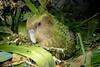
NewsKākāpō decline reveals threat of parasite coextinction
Researchers have discovered that more than 80 per cent of parasites detected in kākāpō poo prior to the 1990s are no longer present in contemporary populations. They used ancient DNA and microscopic techniques to sample faeces dating back more than 1500 years.
-
 News
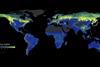
NewsUnderground Atlas: First global map of fungal biodiversity reveals 90% conservation gap
The Underground Atlas is the first digital map predicting Earth’s underground mycorrhizal fungal biodiversity. The work analyzed 2.8 billion DNA sequences from 130 countries revealing that over 90% of mycorrhizal biodiversity hotspots lie outside protected areas.
-
 News
NewsMicrobially synthesized bioplastic may solve marine plastic pollution problem
Researchers have demonstrated a new eco-friendly plastic that decomposes in deep ocean conditions. In a deep-sea experiment, the microbially synthesized poly(d-lactate-co-3-hydroxybutyrate) (LAHB) biodegraded, while conventional plastics persisted.
-
 News
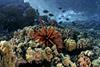
NewsUnprecedented acidification ahead for Hawaiian corals
A new study has revealed that unprecedented levels of ocean acidification are expected around the main Hawaiian Islands within the next three decades.
-
 News
NewsPrairie dogs carry genes linked to surviving plague
A study of the genetic basis of plague immunity in prairie dogs has broad implications for conservation. By comparing whole-genome sequences, the authors identified genetic variants associated with survivorship.
-
 News
NewsResearchers develop superstrong, eco-friendly materials from bacteria
Scientists have developed a scalable approach to engineer bacterial cellulose into high-strength, multifunctional materials. Their biosynthesis technique aligns bacterial cellulose fibers in real-time, resulting in robust biopolymer sheets with exceptional mechanical properties.
-
 News
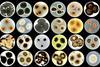
NewsScientists design protective ‘living tattoos’ for buildings
An international research team wants to integrate selected microorganisms into façade coatings to bring building walls to life. The microorganisms are intended to protect surfaces, store CO2 and filter pollutants.
-
 News
NewsBiodiversity in Antarctic soils may be greatly underestimated after surprising discovery
Researchers have shown that previously unknown apparent mutualisms allow biodiversity to flourish to an unexpected degree in an extreme habitat: weathered debris in front of a glacier in Antarctica.
-
 News
NewsBiosynthetic pathway discoveries mean we can halve the price of costly cancer drug
Researchers have identified the enzymes responsible for the two critical final steps in the biosynthetic pathway that makes the chemotherapy drug Taxol active as a drug, potentially opening it up to biotech based production.
-
 News
NewsClimate change is turning coastal lagoons into ‘salty soup’
The impacts of human activity and climate change are coalescing to make coastal lagoons saltier, changing the microbial life they support and the function they play in their ecosystems, according to new research.
-
 News
NewsScientists develop an ink that boosts coral reef settlement by 20 times
With coral reefs in crisis due to climate change, scientists have engineered a bio-ink that could help promote coral larvae settlement and restore these underwater ecosystems before it’s too late.
-
 News
NewsResearchers develop living material from fungi
Researchers have developed a bio-based material that is completely biodegradable, but also tear-resistant and has versatile functional properties. All this with minimal processing steps and without chemicals – you can even eat it. Its secret: It’s alive.
-
 News
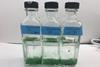
NewsStudy uncovers how the plastisphere can influence growth of harmful algal blooms
A new study published in Sustainable Microbiology delves into how the age and size of microplastics affects the growth of harmful algal blooms.
-
 News
NewsEngineered soil microbiomes may secure future tomato yields
New findings suggest that manipulating rhizosphere microbiomes could be a sustainable strategy to enhance crop performance in fluctuating environments, supporting the development of resilient agricultural systems.
-
 News
NewsAFYREN strengthens its Executive Committee with appointment of Laurent Pou as Industrial Director
AFYREN, a greentech company offering manufacturers biobased, low-carbon ingredients through a unique fermentation technology based on a circular model, has announced the appointment of Laurent Pou as Industrial Director.
-
 News
NewsUK’s first water monitoring center launched to act as early-warning system for disease outbreaks and community health
The University of Bath is launching the UK’s first early-warning public health surveillance system based on detecting tiny traces of chemicals and biological markers found in water.
-
 News
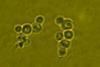
NewsGreen recipe: Engineered yeast boosts D-lactic acid production
An optimal combination of genetic “recipe” in a yeast strain achieves high yields of D-lactic acid production from methanol, advancing eco-friendly and sustainable biomanufacturing.