
All UK & Rest of Europe articles – Page 60
-
 News
NewsBiodiversity in Antarctic soils may be greatly underestimated after surprising discovery
Researchers have shown that previously unknown apparent mutualisms allow biodiversity to flourish to an unexpected degree in an extreme habitat: weathered debris in front of a glacier in Antarctica.
-
 News
NewsWorld Health Assembly adopts historic Pandemic Agreement to make the world more equitable and safer from future pandemics
Member States of the World Health Organization (WHO) today formally adopted by consensus the world’s first Pandemic Agreement, following more than three years of intensive negotiations launched by governments in response to the COVID-19 pandemic.
-
 News
NewsSurvival trick: Pathogen taps iron source in immune cells
The body defends itself against pathogens by depriving them of vital iron. However, researchers have discovered that Salmonella bacteria specifically target iron-rich regions within immune cells to replicate, evading the immune defense.
-
 News
NewsBiosynthetic pathway discoveries mean we can halve the price of costly cancer drug
Researchers have identified the enzymes responsible for the two critical final steps in the biosynthetic pathway that makes the chemotherapy drug Taxol active as a drug, potentially opening it up to biotech based production.
-
 News
NewsCommon drugs can help viruses spread
JAK inhibitors are often prescribed for autoimmune diseases and inflammatory conditions such as rheumatoid arthritis, but scientists have found they also weaken the body’s natural defences against viruses.
-
 News
NewsHow the Epstein-Barr virus promotes its spread within the body
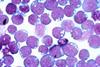
Researchers have discovered that the Epstein-Barr virus (EBV) increases the ability of infected immune cells to migrate. In this way, the pathogen promotes its spread in the body – a discovery that may have therapeutic implications.
-
 News
NewsA turning point in medicine: phage therapy moves from promise to practice
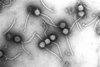
From June 10–11, 2025, the international scientific and medical community will gather in Berlin for Targeting Phage Therapy 2025, the leading global event focused on translating phage research into clinical reality.
-
 News
NewsRising temperatures lead to unexpectedly rapid carbon release from soils
Scientists investigate the sensitivity of soil carbon, which is directly related to the release of CO2 from soils, under a changing climate, such as rising temperatures and/or variations in the hydrological cycle.
-
 News
NewsLight-to-electricity nanodevice reveals how Earth’s oldest surviving cyanobacteria worked
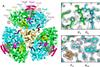
An international team of scientists have unlocked a key piece of Earth’s evolutionary puzzle by decoding the structure of a light-harvesting “nanodevice” in one of the planet’s most ancient lineages of cyanobacteria.
-
 News
NewsDual associations with two fungi improve tree fitness
Many tree species have formed a concurrent symbiosis with two different groups of mycorrhizal fungi. Those trees cope better with water and nutrient scarcity, which is an important trait for forestry in the face of climate warming.
-
 News
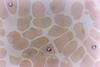
NewsFamily of parasite proteins presents new potential malaria treatment target
Researchers from the Francis Crick Institute and the Gulbenkian Institute for Molecular Medicine (GIMM) have shown that the evolution of a family of exported proteins in the malaria-causing parasite Plasmodium falciparum enabled it to infect humans. Source: Ernst Hempelmann Ring stage of Plasmodium falciparum in human red blood ...
-
 News
NewsAI predicts bacterial resistance to cleaning agents
With the help of artificial intelligence and DNA decoding, a new method can predict how well disease-causing bacteria such as Listeria tolerate disinfectants. This research may become a valuable weapon in the fight against harmful bacteria.
-
 News
NewsThe Global Fund to fight AIDS, Tuberculosis and Malaria ‘should step up efforts’
The international community must protect global responses to HIV, tuberculosis (TB), and malaria to serve humanity’s collective interests, according to a new opinion article.
-
 News
NewsResearchers and students transform Milan into outdoor lab for ambitious citizen science urban microbiome study
Researchers and students from the University of Milano-Bicocca - including AMI student member Giulia Ghisleni - teamed up for an ambitious citizen science project, collecting more than 2,400 samples of the urban microbiome over four seasons.
-
 News
NewsProof of concept for HIV vaccination that deploys germline-targeting
For a preventative HIV-vaccine to work it should induce broadly neutralising antibodies against all the diverse strains of the virus. The first in-human assessment of germline-targeting strategy with a trimer displays positive results.
-
 News
NewsYellow fever vaccination: how strong immune responses are triggered
Researchers have shown how specific immune cells are activated by the vaccine – an important starting point for the development of new vaccines.
-
 News
NewsNew hope against superbugs: Promising antibiotic candidate discovered
An international team of researchers has discovered saarvienin A, a new type of glycopeptide antibiotic. Their findings introduce a compound with strong activity against highly resistant bacterial strains.
-
 News
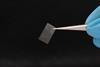
NewsResearchers develop living material from fungi
Researchers have developed a bio-based material that is completely biodegradable, but also tear-resistant and has versatile functional properties. All this with minimal processing steps and without chemicals – you can even eat it. Its secret: It’s alive.
-
 News
News New study reveals our skin’s own bacteria can help protect us from the bad effects of sunlight
Researchers have substantiated that certain skin bacteria can protect us from the sun’s ultraviolet (UV) radiation specifically by metabolizing cis-urocanic acid using an enzyme called urocanase. This enables the skin’s ability to fine-tune how it responds to UV radiation.
-
 News
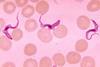
NewsFirst all-oral treatment for a rare but deadly strain of sleeping sickness now available
A handful of patients in Ethiopia, Malawi, Tanzania, Zambia, and Zimbabwe, as well as foreign travellers, have now been treated with a medicine that is revolutionizing care for patients with rhodesiense sleeping sickness.