
All UK & Rest of Europe articles – Page 57
-
 News
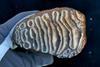
Ancient mammoth remains yield the world’s oldest host-associated bacterial DNA
An international team has uncovered microbial DNA preserved in woolly and steppe mammoth remains dating back more than one million years. The analyses reveal some of the world’s oldest microbial DNA ever recovered, as well as the identification of bacteria that possibly caused disease in mammoths.
-
 News
Microalgae are more significant for carbon dioxide absorption in the Southern Ocean than previously thought
14,000 years ago, algal blooms in the Southern Ocean helped to massively reduce the global carbon dioxide content of the atmosphere – as has now been revealed by new analyses of ancient DNA. Declines in sea ice pose a serious threat to these algae.
-
 News
Tiny ocean partnership between algae and bacteria reveals secrets of evolution
The microscopic alliance between algae and bacteria offers rare, step-by-step snapshots of how bacteria lose genes and adapt to increasing host dependence, a new study shows.
-
 News
Chronic wound infection model is much closer to real life - and cuts back on animal testing
Thousands of lab animals are used every year to test wound treatments. But one lab in Wales is pointing the way towards a more humane model of research, with the work it is carrying out on in vitro/animal replacement models.
-
 News
Microbiologists uncover bacteria that remove toxic sulfide and use iron minerals for growth
An international team of scientists has discovered a new microbial metabolism: so-called MISO bacteria “breathe” iron minerals by oxidizing toxic sulfide. The previously unknown biological process sees versatile microbes remove toxic sulfide and use it for their growth.
-
 News
Broad-specificity enzyme targets glycans from across the kingdoms of life
Researchers have found a new enzyme that has a much broader specificity than the leading alternatives. This analysis resulted in the identification of the PNGaseL enzyme taken from Flavobacterium akiainvivens, which is a microbe isolated from decaying wood of a Hawai’ian plant.
-
 News
New sepsis diagnostic could reduce critical time to save patients
A new diagnostic method would confirm sepsis infections earlier, cutting critical hours in the “race against time” to save patients’ lives. The process uses a centrifuge to separate bacteria from blood cells, and automatic microscopy for detection.
-
 News
How plants rot: New method decodes hidden decomposers of wood and leaves
Researchers have developed a new method to identify the molecular tools that different species use to decompose dead plant material. Their analysis of over 18,000 species found that some invertebrates also evidently have a whole range of such tools at their disposal.
-
 News
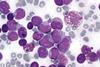
Guideline on respiratory infections in leukemia revised
People with leukemia have a weakened immune system due to the disease itself and treatment, which leads to an increased susceptibility to infections. In a revised guideline, experts summarize the findings of the past ten years on all viruses that cause respiratory infections.
-
 News
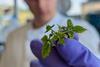
Pioneering raspberry genome editing technique could be the future of fruit and farming
Researchers have published a new method to edit the DNA of raspberries, with the goal of creating more sustainable raspberry production and less food waste. Protoplasts were gene edited with CRISPR-Cas9, which can be programmed to target any region of the genome.
-
 News
Pertussis resurgence in Tuscany outlines importance of timely vaccination in Italy
Research analysing 2016-2024 data from all pertussis-related hospitalisations in Tuscany, Italy, finds a ninefold increase in pertussis cases in 2024 among children and adolescents.
-
 News
Welsh mine microbes mapped to help heat homes
Welsh scientists have mapped the hidden microbes thriving in south Wales’s abandoned coal mines, helping to overcome obstacles to using mine water to heat Britain’s homes.
-
 News
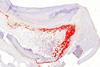
Myocardial infarction may be an infectious disease
A pioneering study has demonstrated for the first time that myocardial infarction may be an infectious disease. This discovery challenges the conventional understanding of the pathogenesis of myocardial infarction and opens new avenues for treatment.
-
 News
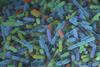
Researchers uncover sensory abilities of bacteria in the gut
An international team has shown that commensal bacteria can perceive and respond to diverse chemical stimuli in their environment. They focused on Clostridia, motile bacteria that play an important role in gut health.
-
 News
Scientists reveal the first structure of the complete botulinum neurotoxin complex
Researchers have succeeded in creating a molecular blueprint of how one of the world’s most dangerous toxins, botulinum toxin, is structured, stabilised, delivered and released. The research paves the way for more effective drugs.
-
 News
Kiss goodbye to deadly disease – new research finds ‘Pac-Man’ antibodies for killer parasite
Researchers have successfully produced antibodies that kill the parasite carried by the ‘kissing bug’ that causes the potentially deadly Chagas disease. The research is a vital step towards the development of the first effective vaccine.
-
 Opinion
Safety and nutritional claims for raw milk
Robert F Kennedy Jr. famously advocates drinking raw milk and promotes its benefits. But how safe is unpasteurised milk? Nicola Holden and Gil Domingue, who sit on Applied Microbiology International’s Food Security Scientific Advisory Group, take a deep dive into the science.
-
 News
Gut bacteria can reveal colorectal cancer
Researchers identified all human gut bacteria to a level of detail that uncovers the physiological importance of the different microbial subgroups. This inventory was then used to detect the presence of colorectal cancer according to the bacteria present in simple stool samples.
-
 News
Unicellular cyanobacterium UCYN-B significantly contributes to global oceanic nitrogen fixation
Researchers report that the cyanobacterium UCYN-B drives high N2 fixation rates in previously unrecognized hotspots accross the global ocean, making a significant contribution to the ocean’s nitrogen supply and productivity.
-
 News
Study reveals the microbial battlegrounds within estuaries - and the part played by microplastics
Estuaries are known hotspots for biodiversity and are turbulent mixing zones where freshwater and seawater microbes confront one another. Source: Jeff Schmaltz, MODIS Land Rapid Response Team, NASA GSFC The Moderate Resolution Imaging Spectroradiometer (MODIS) aboard NASA’s Aqua satellite captured this true-color image of the Baltic Sea ...