
All UK & Rest of Europe articles – Page 96
-
 News
NewsLong-standing marine mystery solved: How algae get nitrogen to grow
In a new study, scientists have shed light on an unexpected partnership: a marine diatom and a bacterium that can account for a large share of nitrogen fixation in vast regions of the ocean.
-
 News
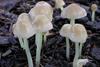
NewsMycena mushrooms have ’massively expanded’ genomes to make them more adaptable
A study of multiple Mycena mushroom species, also known as ‘bonnets’, reported in the journal Cell Genomics on June 27 has found that they have unexpectedly large genomes. Source: Arne Aronsen Mycena epipterygia While the mushrooms had been thought to live by degrading dead organic material alone, ...
-
 News
NewsResearchers unlock gateway to open up more bacterial species for research
Researchers have introduced a novel approach that can make many more bacteria amenable to genetic engineering. Their method, called IMPRINT, uses cell-free systems to enhance DNA transformation across various bacterial strains.
-
 News
NewsSpecific bacteria in your gut are involved in compulsive eating and obesity
Researchers have identified specific bacteria in the gut that are associated with both mice and humans developing an addiction to food that can lead to obesity. They have also identified bacteria that play a beneficial role in preventing food addiction.
-
 News
NewsResearchers describe a new hybrid antibody that fights streptococcus and Covid-19
Scientists who developed antibodies targeting both SARS-CoV-2 and streptococcal bacteria, from patients infected with these diseases, have described a new hybrid antibody created by combining parts from two IgG subgroups.
-
 News
NewsOlympics: how many days does it take for mosquitoes in Greater Paris to transmit arboviruses?
In the run-up to the Olympic Games, scientists have demonstrated that the tiger mosquito, now present in Greater Paris, is capable of transmitting five viruses - West Nile, chikungunya, Usutu, Zika and dengue - within different time frames.
-
 News
NewsDietary fibers make our gut bacteria behave healthily
Researchers have discovered that dietary fibres play a crucial role in determining the balance between the production of healthy and harmful substances by influencing the behaviour of bacteria in the colon.
-
 News
NewsModel shows how plankton survive in a turbulent world
A researcher studying how particles move in turbulent fluids has created a model including various hydrodynamic factors to study how these particles handle and even utilise turbulence.
-
 Careers
Mike Goodfellow: a passion for Actinobacteria and an outstanding mentor
Applied Microbiology International has paid tribute to Professor Mike Goodfellow, who died on March 8 2024 at the age of 83 following a short illness.
-
 News
NewsScientists can now detect antibiotics in your fingerprints – aiding the fight against drug-resistant TB
A fingerprint may soon be all a doctor needs to check whether tuberculosis patients are taking their antibiotics – thanks to a new study. Scientists successfully detected the drugs in finger sweat – and with almost the same accuracy as a blood test.
-
 News
NewsResearchers develop novel AI algorithm for analyzing microfossils
Microfossil analysis allows us to map the subsurface and understand past geological times. In research labs all over the world geologists spend countless hours looking through the microscope identifying and counting microfossils extracted from sedimentary rock below the seabed. Source: ZooFari Photo of an unidentified 10 million year ...
-
 News
NewsHighly pathogenic avian influenza A(H5N1) outbreak in Finnish fur farms
Highly pathogenic avian influenza (HPAI) A(H5N1) has been detected in animals on 27 fur farms in Finland. The outbreak, traced to wild birds, revealed significant virus adaptation to mammals and caused severe inflammation in the lungs, brains and livers.
-
 News
NewsCold climate wheat varieties could provide answers to blast threat
New research unexpectedly reveals that wheat varieties with resistance to another pathogen, powdery mildew, also confer protection against wheat blast.
-
 News
NewsWild chimpanzees seek out medicinal plants to treat illness and injuries
The study combined behavioral observations of wild chimpanzees (Pan troglodytes) with pharmacological testing of the potentially medicinal plants they eat.
-
 News
NewsE. coli sends out SOS when antibiotics attack, sparking emergency mode
Antibiotics damage E. coli DNA, including by causing formation of single strands of incomplete DNA inside the cell. When that happens, it’s like lighting a match under a smoke detector, according to a new study.
-
 News
NewsFewer good gut bacteria increase the risk of serious infection
Researchers followed more than 10,000 people for 6 years. More than 600 people who had less healthy intestinal flora developed a serious infection, with this leading in some cases to death.
-
 News
NewsSKAN Research Trust and Quadram Institute Bioscience to develop novel microbial therapies
SKAN Research Trust and Quadram Institute Bioscience will apply the TraDIS-Xpress platform to study the action of traditional medical compounds on bacteria, aiding in the reformulation and development of novel antibacterial regimens.
-
 News
NewsRapid test for UTI wins $10m Longitude Prize on AMR to transform fight against superbugs
Sysmex Astrego’s PA-100 AST System has won the $10m (£8m) Longitude Prize on AMR. The winning test provides accurate antibiotic susceptibility results in 45 minutes – compared to the 2-3 day wait patients currently face.
-
 News
NewsHidden partners: Symbiodolus bacteria found in various insect orders
Scientists have reported the discovery of the endosymbiont Symbiodolus, which is found in at least six different insect orders. They were able to show that Symbiodolus is present in all life stages and tissues of infected insects.
-
 News
NewsWooden surfaces may have natural antiviral properties - and the species matters
Wood has natural antiviral properties that can reduce the time viruses persist on its surface — and some species of wood are more effective than others at reducing infectivity.