
All Viruses articles – Page 29
-
 News
News4 million euros for study with personalized phage therapy
UMC Utrecht has received a grant of 4 million euros for the first clinical study in the Netherlands involving a customized therapy with bacteriophages for patients with recurrent urinary tract infections.
-
 News
NewsA ‘one-pot’ assay of or rapid portable identification of genotypes I and II African swine fever viruses
Researchers in search of an African swine fever virus genotyping method developed an isothermal ‘one-pot’ CRISPR-Cas12i3/Cas13d-based assay, designated OBServe.v2, to detect two amplified targets from multiplex recombinase polymerase amplification (RPA) in a single tube.
-
 News
NewsCOVID-19 leaves a lasting mark on the human brain
COVID-19 does not just affect the respiratory system, but also significantly alters the brain in people who have fully recovered from the infectious disease, highlighting the long-term neurological impact of the virus.
-
 News
NewsHidden viruses in wastewater treatment may shape public health risks, study finds
A new study reveals that viral communities in wastewater treatment plants are far more complex and influential than previously recognized, with implications for water safety, antibiotic resistance, and how treatment performance is monitored.
-
 News
NewsWho is more likely to get long COVID?
Scientists have identified the key genetic drivers behind long COVID, revealing why some people continue to experience debilitating symptoms long after their initial infection.
-
 News
NewsStudy uncovers new drug target for huge class of viruses
A study reveals how enteroviruses—including pathogens that cause polio, encephalitis, myocarditis, and the common cold—initiate replication by hijacking host-cell machinery.
-
 News
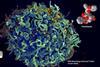
NewsResearchers see dramatic drop in HIV-infected immune cells in patient after cancer treatment received
Researchers report they may have taken an early step toward a more practical HIV cure. They focused on a patient undergoing cancer treatment and also living with HIV, who after receiving chemotherapy, had a significant reduction in the number of CD4+ T immune cells that contained an HIV provirus.
-
 News
NewsCOVID-19 vaccination significantly reduces risk to pregnant women and baby
Pregnant women who received a COVID-19 vaccine were far less likely to experience severe illness or deliver their babies prematurely, according to a major new study.
-
 News
NewsModulating key interaction prevents virus from entering cells
Researchers have found a way to modulate a common virus protein to prevent viruses from entering cells where it can cause illness. They were able to find and block an important interaction at the molecular level that allows the herpes virus to enter cells.
-
 News
NewsNovel kirkovirus may be associated with colitis in horses
In a pilot study, researchers have found a novel kirkovirus that may be associated with colitis – and potentially small colon impactions – in horses. The study could offer a route to new therapies for horses with colitis symptoms from unknown causes.
-
 News
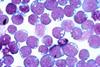
NewsCould hidden infections be fueling long COVID?
For millions suffering from long COVID, their persistent breathlessness, brain fog and fatigue remain a maddening mystery, but microbiologists think they may have cracked the case. The review argues that co-infections acquired before or during COVID could cause symptoms to persist indefinitely for many people.
-
 News
NewsGlobal Virus Network announces appointment of new board members
The Global Virus Network (GVN), a worldwide coalition of leading human and animal virologists, has announced the appointment of eight distinguished leaders to its Board of Directors.
-
 News
NewsUnique bond identified as key to viral infection speed
Viruses are typically described as tiny, perfectly geometric shells that pack genetic material with mathematical precision, but new research reveals a deliberate imbalance in their shape that helps them infect their hosts.
-
 News
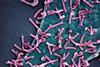
NewsResearchers discover how Ebola and Marburg disrupt the gastrointestinal tract
A new study sheds light on the mechanisms behind the damage caused by Ebola (EBOV) and Marburg virus (MARV) to the gastrointenstinal tract. TIt found that both viruses are capable of infecting and replicating within human gut epithelial cells and that the viruses interfere with the cells’ ability to regulate fluid secretion, mirroring the severe symptoms observed in patients.
-
 News
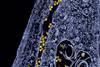
NewsOlder age, chronic kidney disease and cerebrovascular disease linked with increased risk for paralysis and death after West Nile virus infection
Older people with a history of chronic kidney disease or conditions affecting blood flow to the brain such as stroke face about double the risk for developing neuroinvasive disease that can lead to paralysis and death following infection with West Nile virus, new research finds.
-
 News
NewsNew 15-minute hepatitis C test paves the way for same-day treatment
Scientists have developed the fastest test yet for diagnosing hepatitis C virus (HCV). The highly accurate diagnostic delivers results to patients in just 15 minutes - crucial for kickstarting patients’ treatment before they leave their appointment.
-
 News
NewsRice resists change: Study reveals viral tools for probing gene function fall short
Researchers tested two popular viral vectors - barley stripe mosaic virus (BSMV) and foxtail mosaic virus (FoMV) - to see if they could temporarily switch genes on or off in rice (Oryza sativa). They found no evidence that these virus-enabled reverse genetics (VERG) techniques work in rice.
-
 News
NewsHuman ‘mini-noses’ help understand why RSV infections are more severe in children than in adults
Why does RSV affect babies more severely? To better understand the cellular reasons behind this age-related difference, researchers compared infant and adult human nose organoids, also called mini-noses, regarding their susceptibility and response to infection.
-
 News
NewsNew method to accelerate vaccine and drug development for norovirus
Researchers have developed a simple and efficient system for understanding the functions of specific norovirus genes, providing new avenues for developing antivirals and vaccines.
-
 News
NewsReceptors in mammary glands make livestock and humans inviting hosts for avian flu
A new study shows that the mammary glands of several other production animals besides cows – including pigs, sheep, goats, beef cattle and alpacas – are biologically suitable to harbor avian influenza, due to high levels of sialic acids.