
All The Microbiologist articles in Web Issue – Page 316
-
 News
NewsHepatitis E virus from rats can also infect humans in individual cases – a new zoonotic pathogen?
It has only been known for a few years that humans can also be infected with a variant of the hepatitis E virus that is usually prevalent in rats. Following reports of individual cases, mainly from Hong Kong and Spain, the first infection with ratHEV has now also been described in a patient from Germany.
-
 News
NewsWastewater from most countries favours non-resistant bacteria
Municipal wastewater contains a large range of excreted antibiotics and has therefore long been suspected to be a spawning ground for antibiotic-resistant bacteria. By testing the potential of untreated municipal wastewater from 47 countries to select for resistant E. coli, researchers show that while some samples indeed do so, most instead suppress them.
-
 News
NewsMedications change our gut microbiome in predictable ways
A study shows that many of the changes to the gut microbiome are driven by competition for nutrients – medications reduce certain bacterial populations and change the availability of nutrients, and the bacteria most able to capitalize on those changes are the ones to survive.
-
 News
NewsApriori Bio and A*STAR Infectious Diseases Labs Announce strategic partnership to advance next generation influenza vaccines
Apriori Bio and the Agency for Science, Technology and Research Infectious Diseases Labs (A*STAR IDL) announced a strategic research partnership to co-develop and evaluate next generation self-amplifying RNA (saRNA) vaccines targeting seasonal and pandemic influenza.
-
 News
NewsTime to act and not react: how can the European Union turn the tide of antimicrobial resistance?
Despite determined efforts by countries and healthcare professionals, Europe is not on track to meet four of the five AMR targets set by the EU Council for 2030*, according to data released on EAAD.
-
 News
NewsMicropores pave the way for infection research
Organ-on-a-chip technology often contains gels that imitate the 3D environment of our tissues - however, many of these gels are too dense, hindering the passage of microbes and immune cells, and movement is essential to recreate how infections really develop. In this study, the research team developed a new type of porous gel that solves this problem.
-
 News
NewsVaccine skepticism on social media can predict public health crises
Researchers have developed a new approach that could help public health officials predict where outbreaks might occur. By analyzing social media posts, the method identifies early signs of increasing vaccine skepticism — a warning signal that could emerge before any disease begins to spread.
-
 News
NewsGreen chemistry for sustainable personal care
A recent review examined microbial biosurfactants as sustainable alternatives to synthetic surfactants in shampoo formulations. The authors addressed the growing demand for environmentally friendly and dermatologically safe cleansing agents, and emphasized the need to transition from petrochemical-based ingredients such as sodium lauryl sulfate (SLS) to biodegradable biosurfactants.
-
 News
NewsA microbial blueprint for climate-smart cows
Recent research has shown that feeding cows red seaweed can dramatically cut the amount of methane that is produced and released into the environment. A new study sheds light on that process and reveals which microbes in the cow’s gut might help reduce methane.
-
 News
NewsDid US cities’ indoor vaccine mandates affect COVID-19 vaccination rates and outcomes?
New research reveals that despite widespread adoption of indoor vaccine mandates in major US cities during the COVID-19 pandemic, there is no consistent evidence that these policies significantly increased vaccination rates or reduced COVID-19–related outcomes. The findings contrast with those from other countries, as national mandates abroad boosted vaccine uptake.
-
 News
NewsPhase 2 clinical trial results show potential to shorten TB treatment time
New clinical trial results show that the novel antibiotic candidate sorfequiline (TBAJ-876), a next-generation diarylquinoline, has the potential to improve tuberculosis (TB) treatment when combined with pretomanid and linezolid in a treatment regimen known as “SPaL.”
-
 News
News$3.7 million awarded for research into sand flies, vectors of parasitic disease leishmaniasis
Professor Gideon Wasserberg at UNC Greensboro has been awarded a prestigious $3.7 million National Institutes of Health R01 grant to advance his research on controlling sand flies, the vectors of the parasitic disease leishmaniasis.
-
 News
NewsScientist who harnesses bacteria to deliver green solutions is winner in 2025 Tata Transformation Prize
A scientist who harnesses bacteria to deliver green solutions has been named as one of the winners of the 2025 Tata Transformation Prize. Balasubramanian Gopal, PhD, Indian Institute of Science, has been named Sustainability Winner in the awards.
-
 News
NewsScripps Research scientists receive $1.1 million to advance AI modeling for HIV vaccine development
Scripps Research scientists will purchase high-performance computing equipment to accelerate the identification of more effective HIV vaccine candidates through enhanced computational infrastructure, reduced data-processing bottlenecks, and state-of-the-art artificial intelligence (AI) technology.
-
 News
NewsManure digesters on farms carry limited benefits and potential harms
Manure digesters, touted as eco-friendly solutions for managing agricultural waste and reducing greenhouse gases, have limited capacity to reduce livestock-related greenhouse gas emissions, and entail potential hazards that may outweigh their benefits.
-
 News
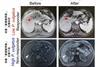
NewsGut bacterium impairs liver cancer treatment, inducing immunotherapy resistance
Researchers discovered that transplanting the gut bacterium Phocaeicola vulgatus into mouse models of liver cancer induced immunotherapy resistance. The finding is consistent with clinical observations in patients, showing that patients with low levels of P. vulgatus responded better to treatment.
-
 News
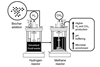
NewsBiochar boosts clean energy output from food waste in novel two-stage digestion system
A new study from researchers at the University of Western Australia and Universitas Brawijaya has found that adding biochar to advanced food waste recycling systems can significantly increase the clean energy yields of hydrogen and methane. This breakthrough offers promising strategies for municipalities and industries aiming to turn food scraps ...
-
 News
NewsFlower to fruit: tracking the changing fungal community on blueberry plants
A study identifies how fungal diversity changes over time and across tissue types in highbush blueberry, revealing dynamic transitions in the phyllosphere from buds to ripe fruits. Early-season buds and flowers harbor the highest fungal diversity, while unripe green fruits display the lowest.
-
 News
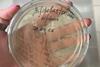
NewsProbiotic bifidobacterium may boost cancer treatment and suppress tumors
A new review explores how bifidobacterium, a common probiotic found in the gut, may contribute to cancer prevention and therapy. The authors highlight the growing importance of gut health in cancer treatment and shed light on how bifidobacterium could complement standard cancer therapies.
-
 News
NewsMachine learning tool can scan for signs of extraterrestrial life
A machine learning framework can distinguish molecules made by biological processes from those formed through non-biological processes and could be used to analyze samples returned by current and future planetary missions.