
All The Microbiologist articles in Web Issue – Page 315
-
 News
NewsEveryday levels of antibiotics in the environment may accelerate the global spread of resistance, new study finds
A new study shows that even very small amounts of antibiotics that commonly appear in soil, rivers, wastewater, and agricultural runoff may significantly accelerate the spread of antibiotic resistance genes among bacteria.
-
 News
NewsWomen are three times more likely than men to get severe long COVID: Here’s why
Researchers have identified a distinct immune signature in female long Covid patients versus male patients. They found evidence of ’gut leakiness’ in the women patients, including elevated blood levels of intestinal fatty acid binding protein, lipopolysaccharide, and the soluble protein CD14 — all signs of gut inflammation that can then trigger further systemic inflammation.
-
 News
NewsBacterial scents behind oak tree decline may be luring deadly beetles
The deadly decline of Britain’s native oak trees may be driven by an unexpected accomplice: their own smell. Scientists have discovered that trees affected by Acute Oak Decline (AOD) emit distinct odours that are highly attractive to the beetle Agrilus biguttatus, a key contributor to the decline.
-
 News
NewsNew bioelectroceutical platform triggers dual cell death, reverses immunosuppression in colorectal cancer
Scientists have developed a new “microbial fuel cell” platform that integrates electrogenic bacteria with piezoelectric nanoparticles to cooperatively eradicate colorectal tumors, reverse immunosuppression, and remodel the gut microbiome.
-
 News
NewsWild birds are driving the current U.S. bird flu outbreak
Researchers traced the introduction and spread of highly pathogenic H5N1 viruses during the first 18 months in North America using genomic sequencing and migratory flyway analysis, discovering that the viruses were spread primarily by wild migrating birds.
-
 News
NewsStudy in Europe: monoclonal antibodies effectively prevent respiratory syncytial virus in infants
Data from Belgium, Portugal and Spain show that immunisation of children after birth reduced the risk of hospitalization due to RSV infection by almost 80%.
-
 News
NewsNext-generation microbiome medicine may revolutionize the treatment of Parkinson’s and similar disorders
Scientists have engineered the probiotic bacterium Escherichia coli Nissle 1917 as a drug-delivery system that continuously produces and delivers the gold-standard Parkinson’s drug Levodopa, which is converted to dopamine in the brain. E. coli Nissle strain was chosen for its century-long record of safely treating gastrointestinal disorders in humans.
-
 News
NewsResearchers identify mangrove tree stems as previously underestimated methane source offsetting blue carbon benefits
A new study reveals that mangrove tree stems represent a significant yet previously underestimated source of methane. Additionally, stem emissions showed a strong correlation with soil methane fluxes, indicating that methane produced by anaerobic microbial activity in mangrove soils is transported upward through specialized aerenchyma tissues within the trees.
-
 News
NewsTraces of bacteria inside brain tumors may affect tumor behavior
Scientists have uncovered unexpected traces of bacteria within brain tumors. This discovery offers new insights into the environment in which brain tumors grow and sets the stage for future studies seeking to improve treatment outcomes.
-
 News
NewsAncient chemical clues reveal Earth’s earliest life 3.3 billion years ago
A new study uncovered fresh chemical evidence of life in rocks more than 3.3 billion years old, along with molecular traces showing that oxygen-producing photosynthesis emerged nearly a billion years earlier than previously thought. Researchers paired cutting-edge chemistry with artificial intelligence to reveal faint chemical “whispers” of biology locked inside ancient rocks.
-
 News
NewsAMI warns that the threat of antimicrobial resistance in viruses and other pathogens cannot be underestimated
Applied Microbiology International (AMI) has urged global policymakers to strengthen the revised Global Action Plan on Antimicrobial Resistance (GAP-AMR), calling for a more inclusive, clear and equitable approach to tackling one of the world’s most urgent health challenges.
-
 Careers
Summer studentship: Megan investigates the mobile gene element that gives MRSA its clout
Megan Stenton reports back on her AMI-sponsored summer studentship which investigated the frequency of the SCCmec gene - a mobile gene element that houses the methicillin resistance gene - across members of the same species of Staphylococcus aureus.
-
 Opinion
Pride in Microbiology Network: the road so far
Bruno Francesco Rodrigues de Oliveira, a founding member of the Pride in Microbiology Network, reveals how it has developed since it was launched three years ago - and what needs to happen next.
-
 News
NewsThe leading causes of mass mortality events in sea urchins are pathogens, storms, and extreme temperatures
Researchers have identified the primary drivers of sea urchin mass mortality events over recent decades: pathogens, storms, and extreme temperatures. The team have developed an innovative method for genetic sampling in marine environments - using a swab similar to a COVID-19 test, to enable rapid and non-invasive monitoring of marine animals and underwater disease outbreaks.
-
 News
NewsMicrobial teamwork slashes uranium pollution in just 48 hours
A research team has developed a synthetic microbial consortium that completely reduces soluble uranium [U(VI)] to insoluble U(IV) within 48 hours, showing nearly twice the efficiency of a single-strain system. The study reveals how Shewanella oneidensis MR-1 and Pseudomonas aeruginosa LXZ1 cooperate to accelerate extracellular electron transfer (EET).
-
 News
NewsA new gateway to global antimicrobial resistance data
To support global AMR research, EMBL’s European Bioinformatics Institute (EMBL-EBI) has launched the AMR portal, a central hub that connects bacterial genomes, resistance phenotypes, and functional annotations, all in one place. The AMR portal ensures long-term availability, standardisation, and reusability of AMR data.
-
 News
NewsSingle-celled organisms found to have a more complex DNA epigenetic code than multicellular life
Researchers discovered that in more ‘primitive’ unicellular organisms, both the adenine and the cytosine bases are methylated. This would suggest that in some ways, these unicellular organisms are more complex than their multicellular peers.
-
 News
NewsEmerging pollutants threaten efficiency of wastewater treatment: New review highlights urgent research needs
A new scientific review has shed light on how emerging pollutants commonly found in wastewater are disrupting biological phosphorus removal processes, posing risks to water quality and ecological health. The study examines how pharmaceuticals, microplastics, and industrial chemicals interfere with the key microorganisms responsible for phosphorus removal in wastewater treatment plants.
-
 News
NewsSugar transporter discovery offers promising avenue for improving antibiotic efficacy
Scientists have recently demonstrated that aminoglycosides enter bacteria by using sugar transporters. They have also successfully doubled the number of transporters, even in the most resistant Escherichia coli strains, thus improving antibiotics’ penetration rate and efficacy.
-
 News
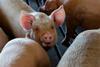
NewsPig disease vaccine effectiveness linked to T cell response
A new study shows that the effectiveness of current vaccines against porcine reproductive and respiratory syndrome virus (PRRSV) is due to the response of T cells against the disease, rather than the production of antibodies. The work is an important step in identifying specific targets for vaccines on a rapidly mutating virus.