
All The Microbiologist articles in Web Issue – Page 320
-
 News
NewsExpanding seasonal immunization access could minimize off-season RSV epidemics
Researchers found differences in how respiratory syncytial virus spreads among children in rural versus urban communities and concluded that year-round immunizations would minimize risks of large seasonal outbreaks.
-
 News
NewsMichigan cherry farmers find a surprising food safety ally: falcons
By shooing cherry-pecking birds away, kestrels also keep them from contaminating crops with their droppings, a new study shows. Kestrels were associated with a 3-fold reduction in droppings spotted on branches.
-
 News
NewsResearch into zoonotic disease risks requires a One Health approach
A new evidence brief, based on a study by the Juno Evidence Alliance conducted in collaboration with CABI’s One Health Hub, has highlighted that a One Health approach is needed in research into zoonotic disease risks around the world.
-
 News
NewsResearchers warn: Climate change could expand habitats for malaria mosquitoes
A new study shows that future climate change could create more favourable conditions for malaria mosquitoes, exposing millions of people across large parts of Africa to more dangerous mosquito bites.
-
 News
News‘Smart wrap that breathes and warns’ - cellulose film cuts oxygen 99% and changes color when shrimp goes bad
Researchers have revealed how one-step dual-engineering turns plant nanofibers into a transparent cellulose that keeps food fresh and tells consumers when it is not.
-
 News
NewsParkinson’s drug offers basis for new hospital bacterium anti-infectives
Researchers have discovered a promising starting point for the development of new active substances against the hospital germ Pseudomonas aeruginosa.
-
 News
NewsCuring hepatitis C can rebalance immunity in Indonesians living with HIV
A new study provides the first longitudinal immunological data on HIV/HCV-coinfected individuals in Southeast Asia, underscoring the importance of early hepatitis C treatment to prevent long-term immune and liver complications.
-
 News
NewsAcid rain may be training soil bacteria to become more deadly
Acid rain from fossil fuel pollution may be quietly training soil bacteria to become longer-lived, more transmissible, and more deadly, according to a new study that tracks how a notorious foodborne pathogen rapidly evolved under simulated acid deposition.
-
 News
NewsFractional-dose vaccines can save millions during shortages
New research shows that using smaller, fractional doses of vaccines can significantly reduce infections during epidemics, especially when vaccine supply, delivery, or administration capacity is limited.
-
 News
NewsGlobal Virus Network issues warning on the Marburg virus outbreak in Ethiopia
The Global Virus Network (GVN) has issued a statement on the newly confirmed outbreak of Marburg virus disease (MVD) in southern Ethiopia. This represents the country’s first documented outbreak of Marburg virus and raises urgent public health, research, and surveillance imperatives.
-
 Features
When movies teach us to love microbes
I have been teaching microbiology for more than 25 years. During that time, I have seen it all – students who arrive eager to learn and others who attend because they have no other choice. Over the years, I have also taught various subjects at different times of day: sometimes ...
-
 News
NewsResearchers develop novel sensor-integrated wrapper for food quality monitoring and preservation
A research team has developed a two-in-one nanostructured SERS sensor integrated into a stretchable and antimicrobial wrapper (NSSAW) that not only monitors food directly on the surface but also actively preserves it.
-
 News
NewsMetabolites produced in the intestine play a central role in controlling obesity and diabetes
A study has identified a group of metabolites that travel from the intestine to the liver and then to the heart, where they are pumped throughout the body. These metabolites play an important role in controlling metabolic pathways in the liver and insulin sensitivity.
-
 News
NewsUS- & Argentina startup Michroma wins €250k investment with The Future is Fungi Award 2025
A new frontier in biotechnology just crowned its next pioneer. Out of 187 groundbreaking startups from 59 countries, Michroma wins the The Future is Fungi Award 2025, taking home €250,000 / USD 289 000 in investment.
-
 News
NewsMicroplastics disrupt gut microbiome and fermentation in farm animals
Microplastics, tiny plastic particles pervasive in agricultural environments, interact with and disrupt the microbial ecosystem in the rumen – the first stomach chamber of cattle, reveals an international study.
-
 News
NewsBird flu viruses are resistant to fever, making them a major threat to humans
Bird flu viruses are a particular threat to humans because they can replicate at temperatures higher than a typical fever, one of the body’s ways of stopping viruses in their tracks, according to new research.
-
 Careers
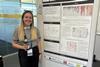
Scientific Event Travel Grant: Hannah returns with renewed motivation and new ideas
Dr Hannah Trivett, University of Birmingham, reports back from EMBL Human Microbiome Conference held in Heidelberg, Germany, where she presented her research with the support of AMI’s Scientific Event Travel Grant.
-
 News
NewsNew guideline on pre-exposure and postexposure HIV prevention
Multiple pre-exposure (PrEP) and postexposure (PEP) treatments are now available to prevent HIV infection. An updated Canadian guideline contains 31 recommendations and 10 good practice statements to help clinicians and other health care professionals offer these options to patients.
-
 News
NewsHalf of all people living with HIV in Europe are diagnosed late
Europe is failing to test and treat HIV early, with over half of all diagnoses in 2024 being made too late for optimal treatment, according to new data from ECDC and WHO/Europe.
-
 News
NewsNobel Prize-awarded material that punctures and kills bacteria
Bacteria that multiply on surfaces are a major headache in healthcare. Researchers have found a new weapon to fight these hotbeds of bacterial growth – metal-organic frameworks. These materials can physically impale, puncture and kill bacteria before they have time to attach to the surface.