
All Young Innovators articles – Page 2
-
 News
NewsSimple new system keeps microscopes in focus automatically
Anyone who has ever used a microscope knows that it takes time to bring a sample into sharp focus. Now a team of scientists has developed an inexpensive robust fix for this problem that involves little more than a couple of LED lights and some physics-based processing.
-
 News
NewsStick-on gel offers new way to treat and monitor plants
Scientists have developed an adhesive gel that can be loaded with substances, such as small molecule drugs or nanoparticles, and applied directly onto a plant to deliver those materials into its tissues. In tests, a gel loaded with antibiotics cleared a bacterial infection in a plant within about 48 hours.
-
 News
NewsA universal toolkit for editing bacterial DNA
A major collaboration involving nine labs has transferred a particularly useful DNA editing system from E. coli into 14 new species of bacteria, spanning three major branches of the bacterial family tree.
-
 News
NewsCosmetics from waste? New microbial discovery could enable more sustainable production of high-value chemical products
Researchers have made a key discovery about how certain bacterial strains produce a set of economically valuable chemicals — opening the door to new, more sustainable production methods. A family of molecules could be made via bacterial fermentation instead of from palm oil, as they are today.
-
 News
NewsPlastic texturing kills viruses when they land
Researchers have developed a thin plastic film that tears apart viruses on contact, offering a promising new way to keep high touch surfaces such as smartphones and hospital equipment from spreading disease.
-
 News
NewsBiocodex Microbiota Foundation announces open call for projects for $50,000 2026 USA Microbiome Research Grant
The Biocodex Microbiota Foundation, an independent organization founded by Biocodex, has opened applications for its 2026 USA research grant. The $50,000 grant will be awarded to a U.S.-based investigator studying the gut microbiota and its relationship to human health and disease.
-
 News
NewsRhododendron-derived drugs now made by bacteria
Bioengineered E. coli bacteria can now produce a group of compounds with anticancer, anti-HIV, antidiabetic and anti-inflammatory activities. The compounds, orsellinic acid-derived meroterpenoids, are produced by Rhododendron species.
-
 News
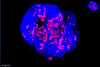
NewsImmunity against common virus leveraged against pancreatic cancer
Researchers have discovered a promising new treatment approach for pancreatic cancer. The approach leverages the body’s natural immune response to cytomegalovirus (CMV), a common but typically harmless virus that most people are infected with at some point in their lives.
-
 News
NewsA rapid test using a mobile phone will be able to identify the most severe cases of imported malaria within minutes
A new malaria tool uses a mobile phone to combine rapid diagnostic tests with video analysis and is capable not only of detecting the infection in under six minutes but also of predicting which patients may develop severe forms of malaria.
-
 News
NewsGlowing bacterial sensors detect gut illness in mice before symptoms emerge
Researchers have engineered gut bacteria that dim their fluorescent glow in the presence of illness. Their findings could improve how we diagnose problems in the gut by using bacteria that already live there.
-
 News
NewsScientists use AI to uncover the secret lives of fungi
Scientists have developed an automated workflow that assesses scientific abstracts and accurately identifies whether a fungus has a single lifestyle or a dual, flexible one. Understanding this flexibility is vital for predicting how forests and farms will react to climate change.
-
 News
NewsEarly warning for wine spoilage glows in the dark
Researchers have built a living biosensor made of bacteria that lights up when it detects acetic acid, the main chemical signal that wine is starting to spoil. It works in real time, even in high-alcohol conditions, so wineries can catch problems early, before flavor and quality are damaged.
-
 News
NewsNew global guidelines streamline environmental microbiome research
A team of nearly 250 researchers from 28 countries has developed a new set of reporting guidelines for environmental microbiomes called STREAMS. The guidelines are organized by the structure of a scientific manuscript and help ensure that important details aren’t overlooked.
-
 News
NewsDiphtheria toxin fragment harnessed to fuse lipid vesicles at neutral pH
Researchers have discovered a novel way to fuse lipid vesicles at neutral pH. By harnessing a fragment of the diphtheria toxin, the team achieved vesicle membrane fusion without the need for pre-treatment or harsh conditions, opening the door to new applications.
-
 News
NewsScientists develop world’s first modular co-culture platform for the one-pot production of rainbow-colored bacterial cellulose
The team engineered Komagataeibacter xylinus for bacterial cellulose synthesis and Escherichia coli for natural colorant overproduction. A co-culture of these engineered strains enabled the in situ coloration of bacterial cellulose.
-
 News
NewsResearchers diagnose disease with a drop of blood, a microscope and AI
Scientists have developed an automated, high-throughput system that relies on imaging droplets of biofluids for disease diagnosis in an attempt to reduce the number of consumables and equipment needed for biomedical testing.
-
 News
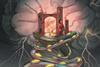
NewsNext-generation microbiome medicine may revolutionize the treatment of Parkinson’s and similar disorders
Scientists have engineered the probiotic bacterium Escherichia coli Nissle 1917 as a drug-delivery system that continuously produces and delivers the gold-standard Parkinson’s drug Levodopa, which is converted to dopamine in the brain. E. coli Nissle strain was chosen for its century-long record of safely treating gastrointestinal disorders in humans.
-
 News
NewsNew approach expands possibilities for studying viruses in the environment
A new method vastly improves on the existing approach for single-cell genetic sequencing, enabling scientists to read the genomes of individual cells and viral particles in the environment more quickly, efficiently, and cost-effectively.
-
 News
NewsLighting up life: scientists develop glowing sensors to track cellular changes as they happen
Researchers have engineered living cells to use a 21st amino acid that illuminates protein changes in real time, providing a new method for observing changes within cells. The technique is effective in bacteria, human cells and live tumor models, making it possible to study complex diseases like cancer more ethically.
-
 News
NewsNew herpes virus–based vaccine could cure cancer in the future without side effects
The Herpes simplex virus is a widespread virus that often causes cold sores, and most people carry it. By removing a virulence gene, i.e. a gene that makes the virus harmful to humans, the herpes virus can be repurposed as a cancer vaccine.