
All Young Innovators articles – Page 3
-
 News
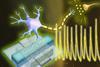
NewsEngineers use bacterial nanowires to create first artificial neurons that could directly communicate with living cells
Engineers have created an artificial neuron with electrical functions that closely mirror those of biological ones. Using protein nanowires synthesized from electricity-generating bacteria, the discovery could herald immensely efficient computers built on biological principles.
-
 News
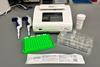
NewsNew one-hour, low-cost HPV test could transform cervical cancer screening in Africa and beyond
A team of researchers has developed a simple, affordable human papillomavirus (HPV) test that delivers results in less than an hour with no specialized laboratory required.
-
 News
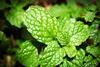
NewsHerbs hit the sweet spot to extend shelf life of popular global drink
A team of food scientists has discovered a natural way to significantly extend the shelf life of sugarcane juice. By adding microwave-dried extracts of mint and coriander to the juice in the production process, its shelf life can be extended from three days up to 14 days.
-
 News
NewsEurope’s only conference for minoritised life scientists heads to Edinburgh in 2026
Europe’s only conference for minoritised life scientists is heading to Scotland for spring 2026. The Minoritised Life Scientists Future Forum (MLSFF) will be held at Edinburgh International Conference Centre (EICC) from March 23 to 26.
-
 News
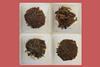
NewsMethod probing dark matter uncovers hundreds of new bacteria, and two potential antibiotics
A new approach to exploring untapped soil resources circumvents the need to grow bacteria in the lab by extracting very large DNA fragments directly from soil to piece together the genomes of previously hidden microbes, and then mines resulting genomes for bioactive molecules.
-
 News
NewsPretreatment methods deploying microbes bring second-gen biofuels from oilcane closer to commercialization
In collaboration with other Bioenergy Research Centers (BRCs), researchers at the Center for Advanced Bioenergy and Bioproducts Innovation (CABBI) are developing industrially feasible techniques for second-generation biofuel production from oilcane, an oil-rich variety of sugarcane, to help meet our growing societal demand for fuels. Source: April Wendling/CABBI CABBI ...
-
 News
NewsGut bacteria can reveal colorectal cancer
Researchers identified all human gut bacteria to a level of detail that uncovers the physiological importance of the different microbial subgroups. This inventory was then used to detect the presence of colorectal cancer according to the bacteria present in simple stool samples.
-
 News
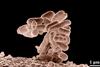
News‘Controlled evolution’ dramatically boosts pDNA production for biomedical manufacturing
Researchers have controlled the evolution of E. coli bacteria in the lab in order to dramatically increase the amount of plasmid DNA (pDNA) these modified bacteria produce. pDNA is an essential – and expensive – ingredient in many gene therapies.
-
 News
NewsNanoparticles that self-assemble at room temperature could transform vaccine delivery
Researchers have engineered polymer-based nanoparticles that form with a simple temperature shift—no harsh chemicals, no specialized equipment, and no processing needed. They can self-assemble at room temperature and deliver RNA to living cells.
-
 News
NewsAnti-neuroinflammatory natural products from isopod-related fungus now accessible via chemical synthesis
Herpotrichone is valued for its ability to suppress inflammation in the brain and protect nerve cells, but could only be obtained in minute quantities from fungi that are symbiotic with isopods. Researchers have succeeded in chemically synthesizing this rare natural product.
-
 News
NewsNew imaging approach transforms study of bacterial biofilms
Scientists have reimagined the capabilities of atomic force microscopy, transforming it into a tool that captures large-scale biological architecture. This advance offers an unprecedented view of biofilm organization.
-
 News
NewsTwo new solutions for coral protection: a conductive biopaste and a natural healing patch
A research group in Italy has developed two new coral protection technologies for healing and restoring coral reefs: a biopaste and a natural patch, both successfully tested on real corals.
-
 News
NewsHow AI can enhance early detection of emerging viruses: study
Coupling wastewater surveillance and a newly developed AI algorithm can help public health organizations more quickly predict potential outbreaks, a new study suggests.
-
 News
NewsResearchers develop process to turn food waste into biodegradable plastic
Researchers have developed a process to turn food waste into biodegradable plastic. Their new study offers fundamental findings for any company interested in scaling up the process.
-
 News
NewsBacterial genomes hold clues for creating personalized probiotics
A new study demonstrates the ability to predict the nutritional adaptations of Bifidobacterium strains by analyzing the distribution of hundreds of metabolic genes in thousands of Bifidobacterium genomes.
-
 News
NewsResearchers engineer a microbial platform for efficient lutein production
The application of systems metabolic engineering strategies, and construction of an electron channeling system, has enabled the first gram-per-liter scale production of lutein from Corynebacterium glutamicum, providing a viable alternative to plant-derived lutein production.
-
 News
NewsNovel open-source diagnostic tool offers affordable, reliable pathogen detection for resource-limited settings
Researchers have developed an open-source reverse transcription loop-mediated isothermal amplification (RT-LAMP) assay that is lyophilized for heat stability and uses non-proprietary components, making it an affordable tool for pathogen detection in diverse settings.
-
 News
NewsTiny chip speeds up antibody mapping for faster vaccine design
By analyzing just a drop of blood, this microchip gives researchers quicker-than-ever insight into how a person’s antibodies are interacting with a virus or other pathogen.
-
 News
NewsResearchers develop superstrong, eco-friendly materials from bacteria
Scientists have developed a scalable approach to engineer bacterial cellulose into high-strength, multifunctional materials. Their biosynthesis technique aligns bacterial cellulose fibers in real-time, resulting in robust biopolymer sheets with exceptional mechanical properties.
-
 News
NewsEngineers develop electrochemical sensors for cheap, disposable diagnostics
Electrodes coated with DNA could enable inexpensive tests with a long shelf-life, which could detect many diseases and be deployed in the doctor’s office or at home.