
All Archaea articles
-
 News
NewsResearchers find evidence for two independent origins of life
Researchers retraced the origin of enzymes during life’s earliest divergence into bacteria and archaea, and found evidence for two independent origins of life for free-living cells.
-
 News
NewsThe Great Barrier Reef has a microbiome too
A study documents over 800,000 microbial genomes, identifying over 500 new bacterial species and over 300,000 distinct viruses in the waters of the Great Barrier Reef.
-
 News
NewsResearchers find CRISPR-Cas coordinates layered bacterial defense network
A new study reveals that CRISPR-Cas plays a broader role in bacterial immunity. Rather than acting alone like a solitary sniper shooting at phages, it also serves as a central command center, directing a network of diverse innate immune systems.
-
 News
NewsUnique symbiosis bestows magnetic sense to single-celled organism
An international team has discovered a previously unknown magnetotactic ciliate that pursues an unusual strategy: partnership with two other organisms inside its cell.
-
 News
NewsEvo 2 brings artificial intelligence closer to reading and writing the language of life
A new artificial intelligence model called Evo 2 can analyze and generate DNA sequences across bacteria, archaea, plants, animals, and other forms of life, marking a major step toward a unified AI system for biology.
-
 News
NewsFood waste treatment can boost renewable energy, but a hidden brown byproduct may be holding it back
Researchers have identified a key chemical obstacle in turning food waste into renewable methane, offering a new semi-quantitative way to track melanoidins and showing that higher doses can severely damage the microbial system.
-
 News
NewsDeep-sea extremophile yields protein that forms super stable biofilm
Scientists have discovered a protein secreted by a deep-sea extremophile — an organism adapted to extreme environmental conditions — that self-assembles into a biofilm and is highly stable, boosting its potential for biomedical applications.
-
 News
NewsSoil moisture tips the balance of nitrogen cycling
A new study reveals that nitrite accumulation is not simply a chemical outcome, but the result of mismatched microbial activities between ammonia oxidizers and nitrite oxidizers.
-
 News
NewsNative litter jump-starts microbial recovery in mine soils
By applying litter collected from nearby native woodland to rehabilitated mine land, a study has shown increases in microbial diversity, enrichment of carbon- and nitrogen-cycling microorganisms, and stronger biochemical potential for soil organic matter decomposition and nitrogen mobilization.
-
 News
NewsTracking melanoidins to improve food-waste biogas recovery
Higher pretreatment temperatures in food-waste biogas recovery can promote Maillard reactions, generating melanoidins. A study shows that melanoidins increase with hydrothermal temperature and inhibit methane production by disrupting methanogenic microbial communities.
-
 News
NewsCaught in the act: A gene jumps into the void
Self-splicing introns are a special group of jumping genes. It is more difficult for a gene to jump into another cell or another species. Until now, it had been assumed that, for this to happen, the jumping genes travelled as ‘hitchhiker’ in the genomes of plasmids or viruses, but researchers have made a surprising observation.
-
 Features
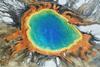
Under the microscope: extremophiles of the Earth
Extremophiles are microbial organisms that live in extreme environments normally considered uninhabitable. Over the past few decades, extremophiles have been discovered in increasingly bizarre and unexpected environments around the globe, including within acid lakes, plastic recycling centres and even in radioactive sites such as Chernobyl.
-
 News
NewsGenomic analysis redefines the origin of eukaryotic cells
A new genetics study using the MareNostrum supercomputer redefines the genetic origin of the last common ancestor of all eukaryotes, highlighting the contribution of novel bacteria and even giant viruses in the emergence of eukaryotic cells.
-
 News
NewsWhat dental calculus can tell us about the oral microbiomes of ancient Japan
Microbe DNA from ancient dental calculus offers insights into the past oral microbiomes of the Japanese people, including the phylogeny of the periodontal disease-associated archaeon, Methanobrevibacter oralis.
-
 News
NewsExtreme adaptation helps Dead Sea single-celled organisms to swim
Researchers have described in detail a structural adaptation supporting one of the Dead Sea’s few hardy inhabitants — a single-celled archaea called Haloarcula marismortui (H. marismortui). They characterized the proteins that form the archaeal filament, a long tail-like structure essential for movement.
-
 News
NewsFrom Asgard to Earth: tiny discoveries hold clues to life’s greatest leap
Stromatolites may hold insights into how complex life began. Researchers have identified a previously unknown microbe living in close partnership with another organism inside these ‘living fossils’.
-
 News
NewsNew study finds deep ocean microbes already prepared to tackle climate change
A new study demonstrates that the microbe Nitrosopumilus maritimus may already be adapting well to warmer, nutrient-poor waters. Researchers predict that these adaptable iron-dependent ammonia-oxidizing archaea will play an important role in reshaping ocean-nutrient distribution in a changing climate.
-
 News
NewsProlonged drought linked to instability in key nitrogen-cycling microbes in Connecticut salt marsh
A prolonged drought in southeastern Connecticut reduced the stability of microorganisms responsible for a critical step in the nitrogen cycle in a coastal salt marsh, according to new research.
-
 News
NewsSource or sink? Trees with heart rot disease emit more methane, upending forest carbon models
New research suggests that upland forests harboring trees with a common and incurable fungal disease known as heart rot could actually be emitting more methane than they take in, therefore releasing more greenhouse gases than previously thought.
-
 News
NewsScientists identify endangered natural pharmacy hidden in coral reefs
The magnitude of the potential loss of the “natural pharmacy” found in the coral microbiome is demonstrated by a new study which identified new microbial species in corals which have the ability to produce novel substances.