
A new artificial intelligence model called Evo 2 can analyze and generate DNA sequences across bacteria, archaea, plants, animals, and other forms of life, marking a major step toward a unified AI system for biology.
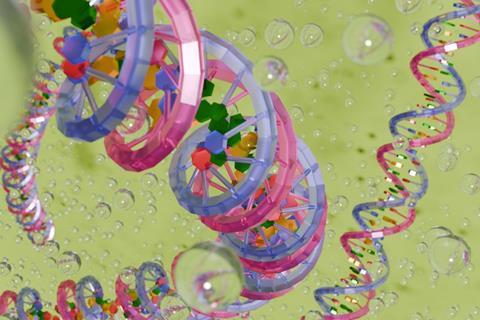
“Evo 2 shows how artificial intelligence can move beyond analyzing individual genes to understanding the broader rules that organize entire genomes,” said Guang-Guo Ying of South China Normal University. “Its ability to connect genetic patterns across species could support future research in disease, evolution, and synthetic biology.”
Developed by researchers from the Arc Institute, Stanford University, NVIDIA, and collaborating institutions, Evo 2 was trained on nearly 9 trillion DNA base pairs. Its context window can process up to 1 million base pairs at once, allowing the model to identify relationships across unusually long regions of a genome.
MICROBIOLOGY NEWS: Register with The Microbiologist for more free articles
Evo 2 can predict whether genetic variants may be harmful without being specifically trained for each task. It performed strongly when evaluating mutations in coding and noncoding DNA, including variants associated with BRCA1 and cancer risk.
Biologically realistic DNA
The model can also generate biologically realistic DNA. In tests, it produced sequences resembling mitochondrial genomes, bacterial genomes, and large regions of yeast chromosomes. Researchers further used Evo 2 to design DNA sequences with predetermined patterns of chromatin accessibility, an important factor controlling whether genes can be activated. These patterns were successfully reproduced in mouse and human cells.
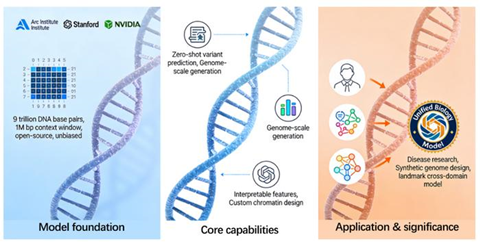
Evo 2 is fully open source, including its model weights, code, and training resources. Its developers also incorporated safeguards by excluding viruses that infect eukaryotic organisms from the training data.
Important challenges remain. Generated genomes still require extensive experimental validation, and the computational cost of designing long DNA sequences is high. Even so, Evo 2 represents a landmark advance toward AI systems that can read, interpret, and eventually help design genomic blueprints across the tree of life.







No comments yet