
All Bacillus subtilis articles – Page 3
-
 News
NewsMaking probiotics more widely applicable through ‘CRISPR’ engineering
Scientists review the recent progress and challenges in the production and use of genetically modified probiotics.
-
 News
NewsStudy reveals how bacteria use snot to swarm and spread infection
New research shows how thicker mucus supercharges bacteria’s ability to self-organize into swarms to spread infection.
-
 News
NewsSophisticated swarming: bacteria support each other across generations
When bacteria build communities, they cooperate and share nutrients across generations. Researchers have demonstrated this for the first time using a newly developed method that enables the tracking of gene expression.
-
 Careers
Adam probes biofilm formation by Bacillus subtilis in his Summer Placement
Adam Bryson (21), from Dunblane, reveals what happened during his Applied Microbiology International-sponsored Summer Placement at the University of Dundee investigating biofilm formation by soil bacterium Bacillus subtilis.
-
 News
NewsBacterial circadian clocks show astonishing complexity
An international collaboration has discovered bacterial circadian clocks are widely found in the soil bacterium Bacillus subtilis.
-
 News
NewsEngineered microbe targets fungal scourge of golf courses
A patented beneficial microbe is found to be promising for disarming fungal pathogens that affect turfgrass.
-
 News
NewsStudy sheds fresh light on how wet heat kills bacterial spores
Researchers have shed new light on a possible mechanism whereby bacterial spores are killed by wet heat, potentially paving the way to more effective ways of killing spores.
-
 News
NewsProbiotic markedly reduces staph colonisation in phase 2 trial
A approach to control Staphylococcus aureus bacterial colonization in people—using a probiotic instead of antibiotics—was found to be safe and highly effective in a Phase 2 clinical trial.
-
 News
NewsResearchers develop ingestible biobatteries that could allow new view of digestive system
Biobattery researchers have created a solution based on microbial fuel cells that would allow cameras to target the hard-to-reach small intestine, which winds around the human gut for an average of 22 feet.
-
 News
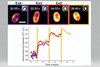
NewsSpores emit potassium ions to monitor their environment while in deep lethargy
A team of scientists have discovered how cells in deep lethargy decide while they sleep whether or not to return to life.
- Previous Page
- Page1
- Page2
- Page3
- Next Page