
All Bacteria articles – Page 22
-
 News
NewsStudy uncovers new kind of cold sensor
Investigators studying a bacterial protein have identified a new mechanism of sensing cold temperatures. The finding points to the possibility that this same type of mechanism exists in other organisms, including humans, and may have relevance for disorders involving faulty temperature regulation.
-
 News
NewsResearchers flip the CRISPR script to develop world’s first DNA-guided gene editing tool for precise infectious disease diagnosis
A research team has successfully developed the world’s first DNA-guided CRISPR-Cas system capable of programmable RNA targeting and cleavage. This breakthrough overturns the conventional CRISPR paradigm, which uses RNA as a guide to target DNA.
-
 News
NewsEvolutionary processes shape bacterial populations in the human gut
Researchers used the ‘reverse ecology’ analytical approach to demonstrate that many known gut bacterial species consist of several evolutionarily distinct groups that have adapted to different conditions in the gut.
-
 News
NewsGenetic ‘bonus material’ makes the gut bacterium Segatella copri oxygen-tolerant
Researchers have found that some strains of the gut bacterium Segatella copri possess bonus material that makes them more oxygen tolerant. The presence of the molecular regulator OxyR is crucial for this. The team discovered that strains carrying OxyR are particularly prevalent in industrialized regions of the world.
-
 News
NewsResearchers uncover hidden health risks from urban airborne microbes
Researchers have discovered that seemingly insignificant microbial components in the air, including bacteria, fungi, viruses and cellular debris, pose a long-overlooked health hazard. Bacterial endotoxins can trigger inflammatory responses in the human respiratory system in nearly 20% of cases.
-
 News
NewsPolymer ‘bristles’ could help repel proteins — and germs — from surfaces in medical settings
A non-toxic coating made of polydimethylsiloxane prevents proteins from sticking to surfaces — potentially offering a new tool in the fight against hospital-acquired infections.
-
 News
NewsEarly life on Earth relied on a surprisingly scarce metal
A new study shows that 3.4 billion years ago, life on Earth relied on a metal called molybdenum, despite its limited availability at the time. It is the first to trace molybdenum’s use this far back in time.
-
 News
NewsJ. Craig Venter, genomics pioneer and founder of JCVI and Diploid Genomics, Inc., dies at 79
The J. Craig Venter Institute (JCVI) has announced that J. Craig Venter, Ph.D., the Institute’s founder, board chair, and chief executive officer, died in San Diego following a brief hospitalization for unexpected side effects that arose from treatment of recently diagnosed cancer.
-
 News
NewsNew study shows cranberry juice may boost UTI antibiotics
Researchers recently exposed lab-grown strains of pathogenic Escherichia coli to cranberry juice. Preliminary findings suggest that compounds in the juice re-sensitize resistant strains to antibiotic treatment.
-
 News
NewsResearchers advance phage therapy in fight against antimicrobial resistance
Scientists have uncovered how Mycobacterium abscessus can evade bacteriophage therapy, and demonstrated a combination strategy to overcome this resistance, offering a pathway towards more effective and durable treatments.
-
 News
NewsWhy feeling sick may be important for surviving infection
In a new perspective, scientists propose a different way of thinking about sickness symptoms: what if these behaviors are part of an integrated immune strategy that operates across scales — from individual cells to tissues and organs, to the whole organism — and helps promote survival?
-
 News
NewsProviding food baskets to people with tuberculosis is cost-effective and could avert over 100,000 deaths annually in India
Undernutrition is the single greatest modifiable risk factor for tuberculosis (TB). Researchers found that providing food baskets to people with TB and their households may save tens of thousands of lives annually in India if implemented at scale.
-
 News
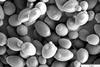
NewsWith large DNA fragment assembly, scientists can design microbes that produce countless complex products
A review demonstrates that scientists can now reliably build and combine very large pieces of DNA, making it much easier to redesign microbes such as yeast and bacteria to act as efficient “cell factories.”
-
 News
NewsAI speeds chemists’ search for better disinfectants
Scientists published their computational-experimental framework for developing quaternary ammonium compounds, or QACs, to kill bacteria. The method yielded 11 new QACs that show activity against antimicrobial-resistant bacteria.
-
 News
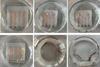
News‘Living plastic’ activates and self-destructs on command
Living plastics that self-destruct on command incorporate activatable, plastic-degrading microbes alongside the polymers. The latest study used two bacterial strains that worked together and completely broke down the material within just six days, without making microplastics.
-
 News
NewsResearchers identify natural compound that disarms drug-resistant bacteria
Scientists studying MRSA discovered that geranylgeranoic acid (GGA) – a naturally occurring fatty acid found in plants like ginger and turmeric – interferes with the bacteria’s virulence, its ability to infect, spread, defend itself, and cause disease.
-
 News
NewsDisease-causing pathogen rewires gut metabolism to secure nutrients for growth
Enterotoxigenic Bacteroides fragilis (ETBF), which causes diarrhea and has been implicated in colitis and colorectal cancer, uses a toxin it produces to reprogram intestinal cell metabolism and generate conditions that support its growth.
-
 News
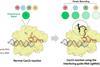
NewsStudy identifies multiple viruses and variants simultaneously by controlling the “speed” of CRISPR gene scissors
Scientists have developed a new diagnostic technology that simultaneously identifies various viruses and variants by controlling the “speed” of gene scissors.
-
 News
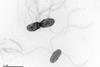
NewsWhy antibiotics may soon fail to curb the plague bacterium - and where we can find new strategies
A new review shows that while most infections caused by the Yersinia plague bacterium can currently be treated with antibiotics, concerns about rising antimicrobial resistance mean that we need to come up with new ways to disarm the bacteria instead of killing them.
-
 News
NewsAncient, insect-targeting bacterial toxin may have implications for human health, agriculture, and drug discovery
Scientists have identified and characterized a new class of Streptomyces-produced toxins that are very distantly related to the deadly toxin that causes diphtheria, a serious and contagious infection, in humans.