
All Bacteria articles – Page 18
-
 News
NewsDog daycare leptospirosis outbreak in Los Angeles reveals broader public health risks
A 2021 outbreak of leptospirosis that sickened more than 200 dogs in Los Angeles County reveals critical gaps in vaccination practices and raises broader concerns about the spread of the disease between animals and people.
-
 News
NewsScientists determine how mysterious acids give bacteria their shape
Researchers have discovered how acids on the surface of bacteria give these microscopic organisms their characteristic “rod” shape—by keeping an enzyme at bay that would otherwise turn the cylindrical cells into shape-shifting blobs.
-
 News
NewsInternational leaders in probiotic and prebiotic science to gather in Tokyo for one-day symposium
To help strengthen global collaboration and showcase innovative biotics research, The International Scientific Association for Probiotics and Prebiotics (ISAPP) is organizing a scientific symposium on October 6, 2026 in Tokyo, Japan in conjunction with its annual meeting.
-
 News
NewsCheese bacteria could offer health benefits
Scientists identified the microbial and biochemical profiles of three artisan cheeses made locally in Oxfordshire across their maturation process, and found that the bacteria responsible for a cheese’s character could also benefit the people who eat it.
-
 News
NewsStudents develop milk pathogen test kit and win TED Youth Startup Grant
Inspired by the widely used and user-friendly COVID-19 strip test kits, a team of science students has developed a test kit for detecting pathogens in milk and dairy products. They combined the LAMP technique with strip test technology to create a simple screening tool for harmful bacteria.
-
 News
NewsResearchers investigate soil microbes from around the world for new antibacterial drugs
A team of researchers is looking to nature to find microbes that can be used to create new antibiotics to treat the growing threat of drug-resistant bacteria. They will screen soil microbes from around the world to hunt for sources of new antibacterial drugs.
-
 News
NewsNew study links gut bacteria to immunotherapy success in melanoma patients
Researchers have identified specific gut bacteria linked to better responses to cancer immunotherapy in patients with advanced melanoma. Patients who responded well to treatment were more likely to have a specific type of gut bacteria called Faecalibacterium.
-
 News
NewsIs organic farming the solution to enhance natural drought resilience in crops?
New research confirms that soils treated organically for decades favor the increase of bacteria, especially the genus Bacillus, which are characterized by being highly resilient to survive in extreme conditions and act as a ‘protective shield’ of plants.
-
 News
NewsSurvey highlights persistent uncertainty on STI vaccines
A nationally representative survey of empaneled adults finds that while most Americans understand how STIs spread, there are significant gaps in public knowledge about which infections can be prevented through vaccination.
-
 News
NewsThe ocean’s pharmacy: scientists chart a new path for marine peptide drug discovery
A review surveys how new extraction, chromatography, and bioinformatics tools are accelerating the discovery of bioactive peptides from the sea. Researchers provide an integrated overview of how marine bioactive peptides are produced, purified, and evaluated, and how bioinformatics is reshaping the discovery pipeline.
-
 News
NewsSpraying leaves with carbon dots boosts rice yield and blocks toxic cadmium
In a full-season field test, a nanoscale spray activated a two-part defense system in rice, slashing grain cadmium content by nearly 50% while improving the harvest.
-
 News
NewsScientists make groundbreaking discovery – and find a possible new ally – in the opioid crisis
Scientists analyzed used hypodermic needles from a needle exchange program to better understand what narcotics actually were in the needles and determine if any non-viral pathogens were present.
-
 News
NewsChemists use sea sponge bacteria to create new molecules for drug discovery
Chemists have synthesized new molecules derived from bacteria found in a Pacific Ocean sea sponge. They are the first to successfully synthesize two new marine natural products: tetradehydrohalicyclamine B and epi-tetradehydrohalicyclamine B.
-
 News
NewsNew clinical study shows pasteurized Akkermansia muciniphila MucT supports weight loss maintenance
A clinical trial demonstrates that supplementation with pasteurized Akkermansia muciniphila MucT® significantly improved weight loss maintenance in adults with overweight or obesity following an initial weight loss intervention.
-
 News
NewsPatent targets viruses with a breakthrough from linseed oil
A common vegetable oil may hold the key to fighting some of the world’s most dangerous viruses. Scientists have patented a linseed oil polyol-derived compound shown to inhibit viral infections including HIV and SARS-CoV-2 as well as bacterial infections causing strep and staph.
-
 News
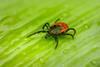
NewsTicks are ‘spreading like wildfire’ - and more of them are carrying Lyme
Not only are tick numbers growing in the US, but today’s ticks are more likely to carry Lyme disease bacteria and other dangerous pathogens. Researchers have noticed a greater diversity of ticks, suggesting a complex pattern of movement and perhaps the introduction or reintroduction of animals, including birds.
-
 News
NewsBacterial STIs reach record highs in Europe, and congenital syphilis cases nearly double
New figures indicate a surge in bacterial sexually transmitted infections (STIs) across Europe. In 2024, notifications of gonorrhoea and syphilis, alongside congenital syphilis, reached their highest levels in over a decade, reflecting sustained transmission across multiple countries.
-
 News
NewsAsteroid impact site reveals possible traces of early life
Scientists have uncovered new evidence that could help explain how Earth’s atmosphere became rich in oxygen, one of the most transformative events in the planet’s history. Researchers report finding stromatolites, layered structures formed by microbial communities, within the only confirmed impact crater on the Korean Peninsula.
-
 News
NewsNew ‘permanently wet’ coating method could transform wastewater treatment by helping bacteria survive better
Living bacteria embedded in coatings could clean wastewater, capture carbon and generate biofuels – if they survive the manufacturing process. Researchers have developed a method that keeps bacteria submerged throughout coating formation, increasing the number of surviving cells by around 500 times compared to conventional approaches.
-
 News
NewsScientists establish ‘eco-friendly bio-platform’ to replace petroleum-derived naphtha
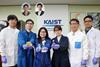
KAIST announced on May 19th that the KAIST-Hanwha Solutions Future Technology Research Institute has secured bio-technology capable of mass-producing eco-friendly raw materials for plastics and textiles using waste resources, offering an alternative to petroleum-derived naphtha. Source: KAIST From Left: Hyun Bae Bang, Cheon Woo Moon, Cindy Pricilia Surya ...