
All Bioengineering articles – Page 3
-
 News
NewsGenetic engineering of cyanobacteria for the production of sulfated polysaccharide
Researchers have developed a novel strategy to genetically engineer bacteria for the production of sulfated polysaccharides. They demonstrated the successful transfer and functional integration of an entire gene cluster responsible for producing a sulfated polysaccharide known as “synechan.”
-
 News
NewsAs day turns to night, blue-green algae undergo a molecular rewiring
Traditionally, biotechnology researchers have modified genes when engineering microbes. But researchers are using predictive phenomics to uncover additional layers of biological control, tracking how environmental changes reshape molecular activity inside a cell and how those shifts translate to function.
-
 News
NewsProtein engineering and testing condensed to a single day
Engineered proteins must be created in the real world and tested for performance - a labor-intensive process that involves constructing the DNA instructions for each protein in yeast or bacteria and growing individual clones for protein production and testing. Researchers say they have condensed the time-intensive protein building and testing process to just 24 hours.
-
 News
NewsMarine-inspired sunscreen ingredient made by E. coli
Researchers have engineered microbial “cell factories” to sustainably produce the UV-protective compound gadusol, which could eventually serve as a sunscreen ingredient and an antioxidant additive. Gadusol, found in the eggs of various fish and other marine organisms, helps protect against ultraviolet damage.
-
 News
NewsResearchers develop realistic ‘mock’ samples to speed cervical cancer test development
A team of bioengineers has developed a new way to create highly realistic “mock” patient samples that could help accelerate the development of faster, more accessible cervical cancer screening tests for low-resource settings.
-
 News
NewsNo refrigeration needed for killer disease vaccine
Malaria kills more than half a million people every year, but a new vaccine is showing promise as it not only offers long-lasting strong protection but also inhibits transmission of malaria by mosquitos. The vaccine is predicted to be low cost and its cold-chain independence strongly enhances its deployability.
-
 News
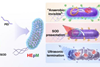
NewsInvisible smart bug fights gum disease
Current treatments for periodontitis often fail because they cannot simultaneously eliminate stubborn bacterial biofilms and calm the runaway inflammation that follows. Now researchers have engineered a living bacterium that does both, in the right order.
-
 News
NewsAnti-CRISPR stops the protein assembly line in bacteria
Bacteria fend off invading viruses with molecular scissors that slice up viral DNA, but viruses can fight back with a molecular trick that stops the scissors from ever being made. A viral “anti-CRISPR” protein sits on the ribosome and jams it as a CRISPR protein named Cas12 begins to form.
-
 News
NewsResearchers flip the CRISPR script to develop world’s first DNA-guided gene editing tool for precise infectious disease diagnosis
A research team has successfully developed the world’s first DNA-guided CRISPR-Cas system capable of programmable RNA targeting and cleavage. This breakthrough overturns the conventional CRISPR paradigm, which uses RNA as a guide to target DNA.
-
 News
NewsWith large DNA fragment assembly, scientists can design microbes that produce countless complex products
A review demonstrates that scientists can now reliably build and combine very large pieces of DNA, making it much easier to redesign microbes such as yeast and bacteria to act as efficient “cell factories.”
-
 News
NewsFrom gut to brain: scientists engineer bacteria to treat severe liver-related brain dysfunction
In vivo studies showed that programmable “living medicines” could reduce brain toxins and prevent neurological symptoms of hepatic encephalopathy, offering distinct advantages over a widely prescribed antibiotic.
-
 News
NewsA universal toolkit for editing bacterial DNA
A major collaboration involving nine labs has transferred a particularly useful DNA editing system from E. coli into 14 new species of bacteria, spanning three major branches of the bacterial family tree.
-
 News
NewsHow AI can help us count the ‘good’ viruses used in biopharmaceuticals
Researchers have developed a new methodology that uses artificial intelligence (AI) tools to identify and count target viruses more efficiently than previous techniques. The new approach can be used in applications such as pharmaceutical biomanufacturing.
-
 News
NewsResearchers fight oral cancer with bioengineered chewing gum
Research shows that antiviral and antibacterial chewing gums reduce the levels of three microbes linked to worse outcomes in oral cancers, paving the way for more effective and affordable therapies.
-
 News
NewsEngineered dual-bacterial sensors turn chemical signals into electricity
Most bacterial information transmission is done via electricity. While electricity-emitting bacteria exist, manipulating them into useful sensors has been quite challenging. Researchers recently developed a flexible bioelectrical sensor system called electroactive co-culture sensing system.
-
 News
NewsDon’t build the engine, grow it: biohybrid miniature robots using living organisms
By fusing living organisms like bacteria, algae, and insects with synthetic payloads, researchers are creating living biohybrid miniature robots that self-fuel, self-repair, and navigate environments that would paralyze a rigid silicon chip.
-
 News
NewsResearchers synthesize photosynthetic molecule found in bacteria
Researchers have successfully synthesized bacteriochlorophyll a, a photosynthetic pigment found in bacteria which absorbs infrared light. The work represents the first chemical synthesis of this molecule and could give scientists deeper insights into photosynthetic function and photosynthetic energy.
-
 News
NewsA built-in ‘hairpin’ prevents rogue CRISPR RNAs
A new study reveals that many CRISPR-Cas13 systems utilize an RNA to prevent the formation of extraneous CRISPR RNA. With the first repeat, this protective RNA forms a stable structure resembling a hairpin. It points to a remarkable case of convergent evolution.
-
 News
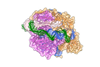
NewsNew bite-sized CRISPR molecule may open doors for therapeutic genome editing
The safest, most accurate gene-editing tools don’t fit inside viral delivery mechanisms that could target them to specific cell types or tissues inside the human body. Researchers have developed a smaller pair of “molecular scissors” for gene editing that could make site-specific delivery within the body possible.
-
 News
NewsEngineered bacteria unlock seaweed potential: dual enzyme system enables complete alginate depolymerization
A research team has heterologously expressed alyB and alyD genes from the marine bacterium Vibrio algivorus in C. glutamicum, an industrial workhorse traditionally used for amino acid production.