
All Cancer Microbiology articles – Page 18
-
 News
NewsMicrobial signature of colorectal cancer-associated mutations identified in new study
Researchers have identified microbiota signatures associated with KRAS mutations in people diagnosed with colorectal cancer, suggesting that gut microbes may serve as a kind of non-invasive biomarker for identifying subtypes of CRC.
-
 News
NewsStudy finds association between TB infection and increased risk of various cancers
A population-wide observational study shows an association between tuberculosis (TB) and cancer, with those with current or previous TB more likely to have a diagnosis of a variety of cancers.
-
 News
NewsOral bacteria accelerate pancreatic cancer development in mice: research reveals key findings
A new study unveils a significant connection between oral bacteria and pancreatic cancer development in mice and sheds light on a previously recognized link between oral health and pancreatic cancer, one of the deadliest forms of cancer.
-
 News
NewsEpstein-Barr virus hijacks host genome boosting nasopharyngeal carcinoma
Researchers unravel the mechanisms of Epstein-Barr virus (EBV) and host chromatin interactions in nasopharyngeal cancer cells.
-
 News
NewsCancer therapies show promise in combating tuberculosis
A study has identified a combination of medications that may improve blood flow within granulomas, tight clusters of white blood cells formed by the body’s immune system in response to tuberculosis infection, benefiting drug delivery.
-
 News
NewsBacteria subtype linked to growth in up to 50% of human colorectal cancers
A new study suggests that a subtype of Fusobacterium nucleatum underlies colorectal cancer growth in humans and could be useful in screening and treatments.
-
 News
NewsBacteria commonly found in the body contribute to stomach cancer, finds study
A new study has discovered that a type of bacteria commonly found in the body, which usually does not pose problems for healthy people, plays a significant role in causing stomach cancer, the fifth most common cancer in the world.
-
 News
NewsZika virus vaccine emerges as an unlikely hero in battling brain cancer
Scientists have developed a new approach using the Zika virus to destroy brain cancer cells and inhibit tumour growth, while sparing healthy cells.
-
 Long Reads
Helicobacter pylori, Cancer and AMR
I’ll begin this article with a question that we’ll return to. Do microorganisms exhibit intelligence? Whilst it might not be able to gauge intelligence in single-celled organisms, a certain intelligent behaviour can be perceived. They possess the simplest chemical signalling pathways, yet are sophisticated enough to evade potential harm.
-
 News
NewsResearchers uncover how virus causes cancer, point to potential treatment
Kaposi sarcoma-associated herpesvirus activates a specific pathway to drive viral persistent infection and cell growth, paving the way for tumors to form.
-
 Opinion
Bacterial pathogens are like cancer, and should be treated as such – with precision
What lessons can be learned about AMR from the development of cancer treatments?
-
 News
NewsUnique tumor-related bacteria tied to young-onset colorectal cancer, study reveals
New research has mapped changes in tumor-related bacteria to uncover potential new strategies to combat the rise of young-onset colorectal cancer (CRC) in people under the age of 50.
-
 News
NewsViruses can cause multiple myeloma cancer, case study finds, offering hope for treatment
An unusual clinical case has led to the discovery that hepatitis B and C viruses are one of the causes of multiple myeloma, and that eliminating infection with antivirals is often the way to fight this type of cancer.
-
 News
NewsZika virus is effective when used to treat a type of childhood cancer in mice
Injecting neuroblastoma tumors with Zika virus shrank or eliminated those tumors in studies with mice, suggesting that the virus could someday serve as an effective cancer therapy, according to a new study.
-
 News
NewsResearchers identify why cancer immunotherapy can cause colitis
Studies in mice reveal the mechanism that induces this severe side effect and point to a solution that kills the cancer without causing gastrointestinal issues.
-
 News
NewsViral enhancement of nanomaterial cancer sensor improves early detection
Researchers have developed an advanced system of breast cancer cell detection with improved speed and sensitivity, using a viral mechanism to enhance the tool’s sensing accuracy.
-
 News
NewsManipulation of gut microbiota with flaxseed could reduce breast cancer risk
Flaxseed components called lignans have been shown to influence the relationship between gut microorganisms and the expression of mammary gland microRNAs.
-
 News
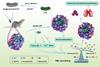
NewsBiomineralized bacterium acts as in-situ vaccine producer
A new type of bacteria-based autologous cancer vaccine uses calcium carbonate (CaCO3) biomineralized Salmonella (Sal) as an in-situ cancer vaccine producer and systematical ITM regulator.
-
 News
NewsMetastasis to be fought with bacteria, hypertension drugs and neuroscience
Results presented by world leaders in metastasis research at CNIO change the very concept of this disease, and lead to new ways to fight it, including using bacteria to activate the immune response against tumours.
-
 News
NewsLactate-producing bacteria inside tumors promote resistance to radiation therapy
Researchers have discovered that lactate-producing intratumoral bacteria drives resistance to radiation therapy, suggesting that lactic acid-producing bacteria present in various cancers may serve as novel therapeutic targets.