
All cholera articles
-
 News
NewsWHO reports latest global trends in cholera, meningitis and plague
Cholera deaths increased by 30% in 2025, despite fewer cases being reported to the World Health Organization (WHO). In 2025, 47 countries reported 451 499 cholera cases and 7870 deaths to WHO, the highest number of annual cholera deaths reported to WHO since 1999.
-
 News
NewsCurious by Nature: Professor Romain Glèlè Kakaï – Can we predict the next epidemic?
Professor Romain Glèlè Kakaï believes combining traditional mathematical models with artificial intelligence will improve the accuracy of epidemic forecasting and help public health leaders respond more quickly to future cholera and malaria outbreaks.
-
 News
NewsScripps Research scientists awarded $2M to advance global disease surveillance
Two Gates Foundation grants will expand wastewater surveillance and AI-driven disease monitoring to support faster public health responses worldwide.
-
 News
NewsHidden small RNA determines if cholera bacterium can infect humans
Scientists have uncovered what gives Vibrio cholerae, the bacterium that causes cholera, the ability to colonize the human gut. They found that a small RNA embedded within another gene controls where cholera thrives, a discovery that could improve prediction and prevention strategies.
-
 News
NewsAI and supercomputer simulations reveal how a bacterial energy-converting enzyme pumps sodium ions
The Na+-NQR enzyme is vital for energy production in pathogenic bacteria, making it a highly promising target for new antibiotics. Researchers combined modified artificial intelligence techniques with extensive supercomputer simulations to visualize the hidden, dynamic movements of this enzyme during sodium transport.
-
 News
NewsOne of cholera’s great enemies is found in the human gut
Cholera-causing bacteria are locked in an evolutionary arms race with a viral nemesis, according to a new genomic study. Researchers found that in the Ganges Delta, cholera bacteria rapidly gain and lose special armour that protects against attacks from the virus, known as bacteriophage ICP1.
-
 News
NewsDigital early warning systems essential as old diseases like cholera resurge in global crisis zones
A new critical analysis examines how the convergence of climate change, economic collapse, and conflict is bringing back a preventable disease once thought to be under control.
-
 News
NewsA bacterial toxin can counteract colorectal cancer growth
A toxin secreted by cholera bacteria can inhibit the growth of colorectal cancer without causing any measurable damage to the body. Systemic administration of the purified bacterial substance changes the immune microenvironment in tumours.
-
 News
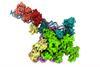
NewsA new study reveals how cholera virulence is activated
A new study provides a long-sought structural explanation of the regulatory cascade that allows Vibrio cholerae to colonize the human gut and produce the cholera toxin that causes life-threatening diarrhea.
-
 News
NewsA high-protein diet can defeat cholera infection
A new study has found that diets high in casein, the main protein in milk and cheese, as well as wheat gluten, could make a dramatic difference in the amount of cholera bacteria able to infect the gut.
-
 News
NewsCholera vaccine completes phase 1 trial
A clinical trial shows promising results for PanChol, a single-dose oral vaccine aimed at the up to 4 million annual cholera cases worldwide.
-
 News
NewsCholera vaccination campaign launched in Darfur to protect over 1.8 million people
A cholera vaccination campaign kicked off on 21 September 2025 in South Darfur, marking the start of a campaign that aims to reach 1.86 million people aged one year and older with oral vaccines in response to the ongoing outbreak.
-
 News
NewsGut punch: $2 million to decode bacteria’s role in fighting disease
A $2 million grant to UC Riverside will explore how gut bacteria shape human health. The NIH award will support Ansel Hsiao’s lab in its quest to answer questions about how gut microbes communicate with each other and with their human hosts to influence health.
-
 News
NewsCholera kills more people for second consecutive year, while prevention and treatment available
The World Health Organization (WHO) has published its global cholera statistics for 2024, showing an increase in both the number of people who fell sick and died from the disease. Reported cholera cases rose by 5% and deaths by 50% in 2024 compared to 2023.
-
 News
NewsAn oral cholera vaccination campaign aims to reach more than 2.6 million people in Sudan’s Khartoum State
A 10-day reactive oral cholera vaccination campaign, launched on 10 June in 5 localities in Sudan’s Khartoum State, aims to protect more than 2.6 million people aged 1 year and above from cholera infection, interrupt transmission and help contain the cholera outbreak.
-
 News
NewsScientists uncover how certain cholera strains are so successful at evading phage attacks
A new study shows that a virulent lineage of cholera acquired multiple distinct bacterial immune systems that have protected it from diverse types of phages. This defense may have contributed to the massive scale of the Latin American epidemic.
-
 News
NewsBroader antibiotic use could change the course of cholera outbreaks, research suggests
Disease modeling research suggests that, for some cholera outbreaks, prescribing antibiotics more aggressively could slow or stop the spread of the disease and even reduce the likelihood of antibiotic resistance.
-
 News
NewsFrom Yemen to Mayotte, the spread of a highly drug-resistant cholera strain
Scientists have revealed the spread of a highly drug-resistant cholera strain. The strain is resistant to ten antibiotics – including azithromycin and ciprofloxacin, two of the three recommended for treating cholera – and was identified for the first time in Yemen in 2018-2019.
-
 News
NewsWHO in Lebanon working to stop cholera spread amid conflict
On 16 October, the Ministry of Public Health of Lebanon confirmed a cholera case. Authorities are investigating the extent of the disease’s spread, gathering samples from the patient’s contacts, and assessing potential water contamination.
-
 News
NewsExperts discover the deadly genetics of cholera, which could be key to its prevention
Experts have used a cutting-edge computational approach to discover the genetic factors that make the bacteria behind cholera so dangerous - which could be key to preventing this deadly disease.