All COVID-19 articles – Page 3
-
 News
NewsHidden protein linked to severe COVID-19 and lung disease risk
A genetic difference carried by nearly one in three people may increase the risk of severe COVID-19 and lung fibrosis by disrupting the function of a previously unknown protein, according to a new study.
-
 Opinion
Why cruise ships remain vulnerable to viral outbreaks - and how new technologies could help
A dream holiday can quickly become a public health challenge when thousands of people share the same dining rooms, elevators and living spaces. Recent viral outbreaks on cruise ships have shown just how vulnerable these floating cities remain to infectious diseases.
-
 News
NewsMetformin given during acute COVID-19 infection reduced risk of clinician-diagnosed long Covid by 50%
New findings from the ACTIV-6 randomized clinical trial provide important confirmation of prior clinical trial results that metformin, a widely available and inexpensive medication with an established safety record, reduced the risk of clinician-diagnosed long COVID when started during acute COVID-19 infection.
-
 News
NewsAntibody clues could improve long Covid care and prognosis
Researchers have found that SARS-CoV-2 antibody patterns may help assess infection history, symptom severity, and cognitive complications in long Covid.
-
 News
NewsData from patients hospitalised with COVID-19 made available to the scientific community
The DIVINE study database has been published. The cohort includes clinical information from 5,813 patients hospitalised with COVID-19 during four waves of the pandemic, between March 2020 and August 2021, across five hospitals in the southern metropolitan area of Barcelona.
-
 News
NewsFever and chills can make respiratory diseases more contagious
A new study reveals that when the difference between body temperature and the ambient temperature is greater, the clouds of particles generated by coughing or sneezing disperse more and maintain a higher concentration.
-
 News
NewsStudy reveals core values that drive Black and Hispanic parents’ decisions on vaccinating their kids against COVID-19
Persistently low rates of COVID-19 vaccination in Black and Hispanic children suggest that parents in these communities tend to be hesitant about the vaccine for their kids, even when they have received it themselves. A new study sheds light on the factors influencing decisions about vaccination.
-
 News
NewsResearchers aim to improve access to high-quality research and biomanufacturing tools in resource-limited settings
Researchers have demonstrated the effectiveness of a suite of low-cost, portable biotechnology tools designed to improve access to laboratory research and diagnostics in resource-limited settings.
-
 News
NewsScientists validate a link between autoimmunity in a subset of people with long COVID
A research team has demonstrated that autoimmunity, where the body’s immune system attacks its own tissues, is responsible for the often-debilitating and confounding symptoms of long COVID in a subset of people.
-
 News
NewsLong Covid burden continues to grow, doubling current surveillance estimates, multi-hospital study shows
Investigators using a novel AI algorithm to comb through medical records of patients with COVID-19 in U.S. hospitals, found around one in six developed long COVID. These rates are twofold higher than current estimates.
-
 News
NewsCommon illnesses, not hantavirus, pose greatest cruise and travel risk
Travelers booked on cruises this summer, or considering booking, shouldn’t change their plans out of fear of hantavirus, one researcher says. They should be aware of more common viral illnesses that occur in cruise settings such as norovirus, seasonal respiratory viruses, COVID-19 and influenza.
-
 News
NewsHeart health may have impacted the risk of severe COVID-19 infection during the pandemic
Adults with highest heart health scores at the beginning of the pandemic were nearly half as likely to be hospitalized or die from COVID-19 when compared to those with the lowest scores, according to new research.
-
 Features
Equity and the response to Covid 19 - Preparing for the next pandemic in Aotearoa New Zealand
Aotearoa New Zealand enacted an effective response to the Covid-19 pandemic. The government approach to the first few cases in March 2020 was to implement a swift ‘go hard and go early’ response. Borders were closed to non-residents, lockdowns were enforced, and infection was effectively eliminated within 76 days of ...
-
 News
NewsNP14 aptamer: A novel biosensing recognition element for mutation-resilient SARS-CoV-2 detection
New research investigated a novel DNA aptamer, NP14, and developed an innovative dual-mode biosensing platform to achieve highly sensitive, mutation-resilient viral detection.
-
 News
NewsNew immune system enhancer extends COVID-19 vaccine protection reducing need for repeated boosters
Researchers demonstrated that pairing the original COVID-19 mRNA vaccine with an adjuvant extended the duration of the vaccine’s protection in mice from a few months up to two years. The combo also showed a more pronounced response against omicron viral components than the vaccine alone.
-
 News
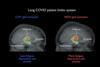
NewsBrain inflammation is unlikely to explain persistent long COVID symptoms
A new brain imaging study has found no evidence of widespread brain inflammation in patients suffering from prolonged symptoms after COVID-19 infection. Instead, the most severe long COVID symptoms were associated with increased brain activity in regions involved in mood and emotion.
-
 News
NewsHealthcare utilization disruptions continue in post-COVID China
Although China’s stringent public health policy, Dynamic Zero-Covid, was lifted in late 2022, researchers have discovered substantial, long-term declines in outpatient clinic visits and hospitalizations compared to expected levels from 2020 to 2024 in China.
-
 News
NewsCOVID racism driven by more than fear of infection
Anti-Asian discrimination and violence increased during COVID, and new research has revealed one key psychological driver. Rather than being driven by a fear of infection, aggressive forms of discrimination appeared to be more strongly associated with anger.
-
 News
NewsSweeping up dust to detect emerging viruses
Gathering dust from buildings may hold promise as a more efficient way to track viral outbreaks in indoor settings, according to a new study. After collecting nearly 30 vacuumed dust samples from different buildings, researchers simultaneously identified the presence of 54 distinct viruses.
-