
Creepy Crawlies
-
 News
Rattlesnakes among most vulnerable to fungal disease and parasitic lung infection
Disease in snakes could pile up following a first infection, with some species in the US particularly affected by certain pathogens, a study of wild snakes shows.
-
 News
Snakebites: COVID vaccine tech could limit venom damage
The same technology used in COVID-19 vaccines could help prevent muscle damage from snakebites, according to scientists who say it could be even more useful for other conditions where toxins cause harm gradually, such as blocking harmful toxins produced by bacteria during infections.
-
 News
Tiny marine worms shop around for bacterial partners
Like shoppers wandering between market stalls, tiny gutless marine worms appear to pick and change the bacterial partners they depend on for survival. A new study suggests this flexibility may help the worms tap into different sources of food and energy and adapt to changing environments.
-
 News
Texas A&M Engineering leads work on rapid screwworm treatment
A multidisciplinary team is developing three novel wound treatments that quickly kill larvae while reducing chemical residues, offering ranchers and veterinarians a rapid response tool that current screwworm eradication methods cannot provide.
-
 News
Research on foul odors and open wounds targets flesh-eating screwworm
Scientists are studying foul-smelling substances to figure out what attracts the New World screwworm to its favorite meal – open wounds – to develop better lures for trapping this serious threat to the livestock industry.
-
 News
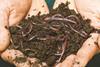
Earthworms turn manure into a powerful tool against antibiotic resistance
Earthworms could become unexpected allies in the global fight against antibiotic resistance, by helping farmers turn manure into safer, high-value organic fertilizer through vermicomposting. Researchers report it can remove antibiotic resistance genes far more consistently than conventional composting.
-
 Features
Parasitic worms: an unexplored source of novel antimicrobials?
Novel antimicrobials are desperately needed to combat the AMR crisis, however, the clinical and preclinical pipeline for novel antimicrobials is virtually stagnant. This article will shed light on parasitic worms as an unexplored and underappreciated source of antimicrobial peptides.
-
 News
Parasitic fungus may have emerged 18 million years before the ants with which it lives today
An analysis of 309 strains indicates that the genus Escovopsis emerged 56.9 million years ago, but only began interacting with today’s mutualistic ants 38 million years ago, challenging the theory that they all emerged at the same time.
-
 News
Scientists propose an endosymbiont-mediated framework for cryptic speciation in insects
Endosymbionts drive ecological divergence by conferring different physiological capabilities on hosts, providing the impetus for population differentiation under natural selection, a new paper suggests.
-
 News
The broader a fungus’s diet, the better it kills insects and helps plants
Entomologists have discovered that a single underlying trait—metabolic breadth, or the range of nutrients a fungus can use—links its ability to kill insects, partner with plants and thrive in different ecological roles.
-
 News
Ancient, insect-targeting bacterial toxin may have implications for human health, agriculture, and drug discovery
Scientists have identified and characterized a new class of Streptomyces-produced toxins that are very distantly related to the deadly toxin that causes diphtheria, a serious and contagious infection, in humans.
-
 News
Warm temperatures disrupt spider sex-changing bacteria in dwarf-spiders across generations
A new study reveals that exposing dwarf spiders to a brief period of warm temperatures can disrupt a phenomenon where internal bacteria normally force genetic males to develop as females.
-
 News
From spider silk to science: a new way to access hidden fungal diversity
A new study suggests that spider webs - particularly those incorporating environmental debris - can serve as natural, non-destructive collectors of fungal material in agricultural ecosystems. The findings show that viable fungi can be recovered from these structures, including lineages that may represent previously undocumented diversity.
-
 News
AI finds hundreds of potential antibiotics in snake and spider venom
Researchers used a deep-learning system to sift through a database of more than 40 million venom encrypted peptides (VEPs). In a matter of hours, the algorithm flagged 386 compounds with the molecular hallmarks of next-generation antibiotics.
-
 News
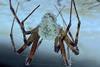
New fungal species named in honour of Sir David Attenborough making zombies of cave spiders
A study to investigate the identity of a fungus found on a spider during filming of the BBC Winterwatch series in Northern Ireland has confirmed it as a novel species that manipulates its host by compelling it to migrate and die in exposed situations.
-
 News
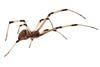
Invasive brown widow spiders host novel bacteria related to chlamydia
Invasive brown widow spiders across three continents were highly infected with a single strain of Rhabdochlamydia, a bacterium that is related to major pathogens of humans and animals, including chlamydia.
-
 News
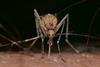
New purpose-built insectary will tackle spread of deadly diseases
Keele University is to create a new purpose-built insect research laboratory on its campus – where scientists will carry out vital research to tackle the spread of deadly diseases and reduce crop losses to pests.
-
 News
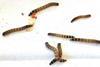
Beetle juice leads to discovery of a virus and solves the mystery of a superworm die-off
Scientists have discovered a virus that caused a nationwide die-off of superworms, a common food for pets. In doing so, they pioneered a different way to search for and identify emerging viruses and pathogens in humans, plants and animals.
-
 News
Naturally occurring pathogenic fungi recruited to control Eucalyptus snout beetle
Scientists have found naturally occurring pathogenic fungi infecting the Eucalyptus snout beetle in Eucalyptus forest plantations, and characterised them to develop a bio-pesticide for controlling the beetle.
-
 News
Bacterial duo feed cuticle in wood-eating beetles
Two bacterial symbionts supply auger beetles with the vital nutrients for the synthesis of a sturdy exoskeleton.