
All Ecology articles – Page 7
-
 News
NewsResearchers uncover the invisible worlds beneath our feet
An analysis of a natural aquifer revealed that despite their close spatial contact and possible interactions, the microorganisms in the water and on the rock form two strongly contrasting ecological communities.
-
 News
NewsOne of Earth’s most abundant organisms is surprisingly fragile
A group of ocean bacteria long considered perfectly adapted to life in nutrient-poor waters may be more vulnerable to environmental change than scientists realized. The bacteria, known as SAR11, dominate surface seawater worldwide and can make up as much as 40% of marine bacterial cells.
-
 News
NewsResearchers uncover hidden toxin risks during nutrient-starved algal blooms
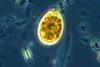
Researchers have shown that extended nutrient deprivation can significantly increase toxin content per cell in the benthic dinoflagellate Prorocentrum lima, even when cell numbers remain relatively stable. Toxin risk may increase quietly under nutrient-poor conditions without obvious bloom expansion.
-
 News
NewsMineral dust accelerating melting of Greenland ice sheet
Scientists have found that airborne mineral dust and other aerosols are directly connected to how much algae grows on the ice. The algae interfere with albedo, or the reflection of the sun’s rays, exacerbating melting.
-
 News
NewsScientists use AI to uncover the secret lives of fungi
Scientists have developed an automated workflow that assesses scientific abstracts and accurately identifies whether a fungus has a single lifestyle or a dual, flexible one. Understanding this flexibility is vital for predicting how forests and farms will react to climate change.
-
 News
NewsIn polar regions, microbes are influencing climate change as frozen ecosystems thaw, review finds
Microbes across Earth’s coldest regions are becoming more active as glaciers, permafrost and sea ice thaw, accelerating carbon release and potentially amplifying climate change, according to a new international review.
-
 News
NewsSourdough starters reveal a recipe for predicting microbial species survival
Scientists used microbes in bread dough to test a simple way to understand how species live together in nature.
-
 News
NewsPositive interactions dominate among marine microbes, six-year study reveals
Researchers have found that marine microbes interact in ways that benefit one another more often than they eat each other or compete. Periods of elevated ocean temperatures, usually times of stress for these microbes because of a dearth of nutrients, resulted in even more of these positive interactions.
-
 News
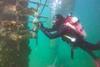
News£3.7 million project aims to provide unprecedented analysis of mesophotic coral reefs
Scientists are to carry out an unprecedented assessment of the response and resilience of mesophotic coral ecosystems – coral reef communities found at depths of between 30m and 150m in tropical regions – to the temperature shifts predicted under future climate change.
-
 News
NewsBat virome evolution reveals cross-species origins of porcine epidemic diarrhea virus and regional surveillance gaps
A study has unveiled the Indochina Peninsula’s bat virome diversity, offering key insights into the origins of porcine epidemic diarrhea virus (PEDV) and critical surveillance priorities.
-
 News
NewsBacterial energy model reveals how antimicrobial resistance (AMR) spreads in environment
Researchers analyzed how bacteria in aquatic environments distribute energy across diverse functions such as growth, biofilm formation, conjugative transfer of antimicrobial resistance genes and heavy‑metal tolerance, to clarify bacterial energy investment strategies.
-
 News
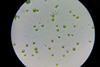
NewsEarly intervention of cyanobacterial risks starting from the genome?
A new study proposes using “~3 Mbp” as a threshold to establish a genome size-oriented proxy indicator for cyanobacterial risk early warning.
-
 News
NewsSame moves, different terrain: How bacteria navigate complex environments without changing their playbook
New research shows that a diverse group of bacteria has learned how to use the same basic movements to move through a wide range of environments no matter how complex, from unconstrained fluids to densely packed soil and tissues.
-
 News
NewsCorday Selden selected for the Oceanography Society Early Career Award
The Oceanography Society (TOS) has selected Dr. Corday Selden, an Assistant Professor at Rutgers University, as a recipient of the TOS Early Career Award, recognizing her outstanding early-career research contributions, leadership in ocean sciences, and exceptional promise for future impact in oceanography.
-
 News
NewsTeam shows how viral lysis of blue-green algae enhances ecosystem-scale productivity
Newly published interdisciplinary research shows viral infection of blue-green algae in the ocean stimulates productivity in the ecosystem and contributes to a rich band of oxygen in the water.
-
 News
NewsMicrobes that break down antibiotics help protect ecosystems under drug pollution
A new study shows that certain microbes can act as community protectors by breaking down antibiotics and stabilizing entire microbial ecosystems, offering a new way to rethink environmental risk assessment and pollution management.
-
 News
NewsUrban wild bees act as “microbial sensors” of city health
A new study shows that the guts of urban-dwelling wild bees contain detailed microbial signatures that reflect both bee health and the quality of the surrounding environment, offering a powerful new tool for monitoring ecological well-being in cities.
-
 News
NewsDeep ocean earthquakes drive Southern Ocean’s massive phytoplankton blooms, study finds
Researchers have uncovered evidence that deep underwater earthquakes can spur the growth of massive phytoplankton blooms at the ocean surface. The new findings point to a previously unknown relationship between the ocean floor and life at the surface.
-
 News
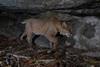
NewsFrom prey to predator: How carnivores spread beneficial fungi
New research reveals that carnivores play an important role in ecosystem function by providing a largely overlooked mechanism for long-distance dispersal of beneficial mycorrhizal fungi.
-
 Careers
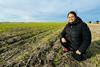
A day in the life of a soil microbial ecologist
Dr. Taniya RoyChowdhury, a soil microbial ecologist and biogeochemist at the Woodwell Climate Research Center, describes a typical day.