
All Ecology articles – Page 3
-
 News
NewsFrom spider silk to science: a new way to access hidden fungal diversity
A new study suggests that spider webs - particularly those incorporating environmental debris - can serve as natural, non-destructive collectors of fungal material in agricultural ecosystems. The findings show that viable fungi can be recovered from these structures, including lineages that may represent previously undocumented diversity.
-
 News
NewsOrganized microbial ‘workforces’ keep Earth’s underground biosphere running
By studying life deep inside a former gold mine, scientists uncovered evidence that Earth’s hidden biosphere operates less like a random collection of microbes and more like an organized workforce. From site to site, the ecosystems were incredibly different from one another but largely stable through time.
-
 News
NewsThe road to better health requires a map of the microbes in your mouth
Different parts of your mouth have entirely different bacterial communities, reveals a new microbial map. Researchers believe mapping these microbial niches will provide a census of the good bacteria present in the mouth and help to develop targeted therapies, such as probiotics, to maintain oral health and prevent disease.
-
 News
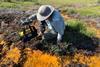
NewsNew study uncovers why the Arctic’s rivers are rusting
Scientists have identified the two biggest reasons that once-pristine rivers across the Arctic are growing cloudy with toxic orange iron particles that smother insects and suffocate fish. As the climate warms, a layer of Arctic soil that had been frozen for millennia has begun to thaw.
-
 News
NewsScientists map the ocean’s invisible workforce
A new study identifies a small set of “metabolic niches” — or functional roles — that help explain how marine microbes grow, compete for resources and recycle carbon around the globe. The microbes are incredibly diverse, but their behavior can be grouped into a manageable number of strategies.
-
 News
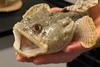
NewsNew study suggests fish gut microbe helps regulate ocean health
New research reveals a potential link between the gut microbes of a fish and global ocean processes, offering new insight into how marine ecosystems help regulate ocean chemistry and the marine carbon cycle.
-
 News
NewsArctic Ocean food chain disrupted as key tipping point passed
An irreversible shift in the chemical make-up of the Arctic Ocean driven by climate change is disrupting the region’s food chain, a study suggests. Widespread loss of Arctic sea ice has led to a sharp fall in levels of a key nutrient, affecting populations of plankton, fish, seabirds and marine mammals.
-
 News
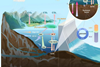
News The hidden carbon sponges: Karst reservoirs proven to be powerful climate allies
A new study provides a mechanistic explanation for why reservoirs in karst landscapes are exceptionally effective carbon sinks. The research demonstrates that these unique ecosystems not only capture vast amounts of carbon but also lock it away in a highly stable, long-lasting form.
-
 News
NewsInternational award honors microbiology researchers for diatom research
Two microbiology researchers from the University of Tennessee, Knoxville, are being honored with an international award that recognizes their insights into aquatic microbes that are vital to Earth’s ecosystems.
-
 News
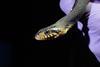
NewsRattlesnakes among most vulnerable to fungal disease and parasitic lung infection
Disease in snakes could pile up following a first infection, with some species in the US particularly affected by certain pathogens, a study of wild snakes shows.
-
 News
NewsScientists discover thriving hard-substrate fauna in Oceania’s deep sea
In the crushing darkness of the hadal zone—deep ocean trenches plunging 6,000 m to nearly 11,000 m—scientists have uncovered a hidden community. A study reports the discovery of a protist-dominated hard-substrate fauna across seven hadal regions in Oceania, highlighting an overlooked yet highly active carbon “hotspot.”
-
 News
NewsGenes without borders: coral babies can travel vast distances across the Pacific Ocean
The offspring of a common coral branching species set up a new home up to 100 kilometres or more from their parents in one of the longest dispersal distances ever measured.
-
 News
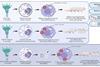
NewsA hypovirulent mycovirus alters stress response and virulence in Talaromyces marneffei
A new study identifies the mycovirus TmNV1 as the first narnavirus discovered in T. maneffei, functioning as a potent virulence attenuator. Coinfection with TmPV1 further amplifies these hypovirulent phenotypes.
-
 News
NewsThe novel effector CREP1 of endophytic Fusarium lateritium regulates host plant immunity through interaction with receptor protein NbEIX2
This study employed plant apoplastic proteomics and transcriptomics to identify effector proteins secreted by the endophytic fungus Fusarium lateritium, and elucidated at the molecular level a novel mechanism by which the pectinase-like effector CREP1 activates plant immunity.
-
 News
News‘Invasional mutualism’ between honey bees and myrtle rust pathogen
Newresearch has found that the Western honey bee - an introduced species to Australia - and the devastating, invasive plant fungus known as myrtle rust (Austropuccinia psidii) may have formed a mutually beneficial relationship known as an ’invasional mutualism’.
-
 News
NewsProtected areas that help wildlife often do little for the soil fungi that plants depend on
Scientists built the most comprehensive models ever of the ranges of 2,858 important fungal species and compared them with the world’s protected landscapes. More than half of these critical underground organisms are less protected than if conservation areas had been drawn at random.
-
 News
NewsThe impact of microplastics on ocean carbon uptake
Scientists who collected phytoplankton data from various climate zones around the world determined the extent to which growth is limited by microplastics. They have then used this data to calculate the average impact that a certain concentration of microplastics will have on algae in different regions or climate zones, as well as on a global scale.
-
 News
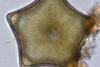
NewsRevealing the invisible: a new baseline for Salish sea diatoms answers a global call
Diatoms are powerful in driving roughly 20% of global photosynthesis and forming the very base of marine food webs. Scientists have published a new checklist of 924 diatom taxa alongside a curated dataset of 11,469 records, providing a long-needed foundation for environmental monitoring across the Salish Sea bioregion.
-
 News
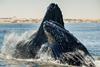
NewsTiny ocean life helps scientists estimate whale prevalence off the California coast
Using an innovative alternative method, researchers examined microbial “ecological habitats” as highly accurate predictors of how many filter-feeding whales were occupying the California coast between 2014 and 2020 from San Diego to Morro Bay.
-
 News
NewsHidden viruses reshape one of Earth’s largest carbon systems, study finds
Viruses play a far more active role in Earth’s carbon cycle than previously understood, according to new research that reveals how they infect and control microbes responsible for carbon production in some of the planet’s largest, darkest ecosystems.