
All Editorial articles – Page 124
-
 News
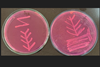
NewsStudy finds high rates of antibiotic-resistant bacteria in raw milk
Raw cow and sheep milk is frequently contaminated with antibiotic-resistant bacteria that could pose a threat to human and animal health, reports a new study.
-
 News
NewsSingle-dose malaria treatment combining four existing drugs as effective as more onerous multi-day, multi-dose regimen
Hundreds of malaria patients participating in a clinical trial in Gabon in West Africa were cured via a single dose of a treatment that utilizes four widely available malaria drugs, according to a new study.
-
 News
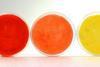
NewsBacteria spin and dye rainbow-colored, sustainable textiles
Researchers demonstrate that bacteria can both create fabric and dye it in every color of the rainbow—all in one pot. The approach offers a sustainable alternative to the chemical-heavy practices used in today’s textile industry.
-
 News
NewsAdvanced imaging reveals new fungus species in 407-million-year-old plant fossil from Scotland
Researchers have identified a new species of ancient symbiotic fungus preserved within a 407-million-year-old plant fossil from Scotland. The discovery provides unprecedented three-dimensional insight into one of the earliest known plant–fungus partnerships.
-
 News
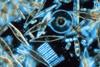
NewsTiny diatoms, big climate impact: How microscopic skeletons rapidly shape ocean chemistry
Researchers have found that diatoms’ intricate, silica-based skeletons transform into clay minerals in as little as 40 days. Until the 1990s, scientists believed that this enigmatic process took hundreds to thousands of years.
-
 News
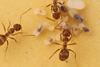
NewsDestroying crazy ant nest structure makes them vulnerable to pathogens
Scientists have devised a reliable way to introduce a natural pathogen in colonies, so that invasive tawny crazy ant populations collapse and other native species can recover.
-
 News
NewsStudy reveals that flu vaccine performance varies by age
New research comparing four different flu vaccines found that the ability of the vaccines to activate cells of the immune system that help to protect against infection varied greatly depending on the vaccine type and age of the patient.
-
 News
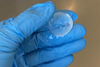
NewsBacterial spores offer promise of sustainable smart materials
By embedding Bacillus spores within engineered living materials, researchers have created living materials that not only endure harsh environments but can also be programmed to perform specific tasks. These materials may be a sustainable replacement for fossil-based materials.
-
 News
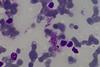
NewsCracking leishmaniasis: new DNA test to track infection
A new study offers an innovative way to track the spread of leishmaniasis, a parasitic disease affecting both animals and humans. Researchers developed a fast, reliable method to identify sand fly species, detect Leishmania parasites, and determine the source of their blood meals from a single sample.
-
 News
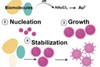
NewsScientists harness algae for a greener way to create functional gold nanoparticles
Researchers have pioneered a novel, sustainable method for synthesizing functionalized gold nanoparticles (AuNPs) using microalgae. This approach not only avoids the harsh chemicals used in conventional methods but also produces AuNPs that are more stable and less toxic to healthy cells.
-
 News
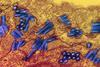
NewsMissing links for rabies in Peru highlights global threats of health inequity
Researchers found that efforts to track dog-related rabies in poorer areas of Peru’s second largest city were lacking even though more dogs were found to have the disease there than in wealthier neighborhoods.
-
 News
NewsWild grass offers new genetic clues to combat deadliest pathogen of wheat
A new study has identified Aegilops cylindrica, a wild grass closely related to wheat, as a powerful genetic reservoir for resistance against the devastating fungal pathogen Zymoseptoria tritici—the cause of Septoria tritici blotch (STB).
-
 News
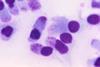
NewsEgypt becomes the seventh country in the Eastern Mediterranean Region to eliminate trachoma as a public health problem
The World Health Organization (WHO) today announced that Egypt has successfully eliminated trachoma as a public health problem, marking a historic public health milestone for the country and WHO’s Eastern Mediterranean Region (WHO EMR).
-
 News
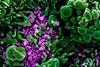
NewsHuman PARP gene could be novel target for viral diseases or immune-mediated disorders
Researchershave discovered a human gene, the protein PARP14, plays a role in regulating interferon, part of the body’s innate immune system. Their study could guide development of antiviral therapies for several groups of viral infection.
-
 News
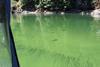
NewsMystery toxic algae regime change in Salem’s drinking water source
A long-term analysis shows that a major Oregon reservoir abruptly swapped one type of toxic algae for another midway through the 12-year study period, absent any obvious cause.
-
 News
NewsBlood-based immunological signatures for extrapulmonary tuberculosis decoded
Scientists have deciphered the immunological properties of extrapulmonary tuberculosis (EPTB) in the blood of affected patients. The results may help to develop new targeted treatments and tests for this important disease.
-
 News
NewsFlu vaccine providing important protection despite new subclade
Children and adults across England are receiving strong protection from this year’s flu vaccine, despite the emergence of a new subclade driving an unusually early flu season.
-
 News
NewsScientists reveal how cyanobacteria use ’sunscreen’ to adapt to climate
Using single particle spectroscopy, researchers revealed insights into how different types of photosynthetic bacteria can use a shared mechanism to protect themselves from too much sunlight.
-
 News
NewsHow life first got moving: nature’s motor from billions of years ago
Research has cast light on the evolutionary origins of one of nature’s first motors, which developed 3.5 billion to 4 billion years ago to propel bacteria. Scientists have created the most comprehensive picture yet of the evolution of bacterial stators.
-
 News
NewsScientists uncover global patterns and drivers of orchid mycorrhizal interactions
A global meta-analysis of orchid-fungal associations leads to a general conclusion: an orchid’s fungal community is driven more strongly by its ecophysiology and biogeography than by its phylogeny.