
All Editorial articles – Page 149
-
 News
NewsSigns of life on Mars? Not so fast, say geologists
Geologists have urged caution in claiming signs of life on Mars from speckled rock found by Perseverance Rover. The researchers believe that a non-biological origin of the speckled rock found on Mars by NASA’s Perseverance rover is just as compelling as a biological one.
-
 News
NewsResearch identifies immune response that controls Oropouche infection and prevents neurological damage
Research conducted on mice has identified that the rapid response of a specific type of defense cell is essential for controlling Oropouche virus infections and preventing serious neurological damage.
-
 News
NewsMost Americans favor MMR vaccine requirement for public school, survey finds
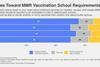
Research in April 2025 finds that 70% of the US public supports vaccine requirements for MMR (measles, mumps, and rubella) for children to attend public school, more than in 2023.
-
 News
NewsResearchers find a way to use antibodies to direct T cells to kill Cytomegalovirus-infected cells
Researchers have found a new way to prompt the immune system to kill cells infected with cytomegalovirus (CMV). They did this by engineering antibodies that direct the immune system’s T-cells to kill cells infected with the virus.
-
 News
NewsCholera kills more people for second consecutive year, while prevention and treatment available
The World Health Organization (WHO) has published its global cholera statistics for 2024, showing an increase in both the number of people who fell sick and died from the disease. Reported cholera cases rose by 5% and deaths by 50% in 2024 compared to 2023.
-
 News
NewsEurope’s only conference for minoritised life scientists heads to Edinburgh in 2026
Europe’s only conference for minoritised life scientists is heading to Scotland for spring 2026. The Minoritised Life Scientists Future Forum (MLSFF) will be held at Edinburgh International Conference Centre (EICC) from March 23 to 26.
-
 News
NewsMedications leave lasting mark on the gut microbiome, even years after use
Analysing stool samples and prescription records from over 2,500 Estonian Biobank participants, researchers found that the majority of drugs studied were linked to microbiome changes, with a substantial number of them also showing long-term effects detectable years after patients stopped taking them.
-
 News
NewsMicrobial allies: Bacteria help fight against cancer
An international team of scientists have discovered that microbes associated with tumours produce a molecule that can control cancer progression and boost the effectiveness of chemotherapy.
-
 News
NewsScientists probe how microbial communities and environmental factors impact cotton development
Soil microbial communities play a vital role in plant health, influencing root development, disease resistance, nutrient and soil water uptake and more.Scientists are investigating how these microbial communities impact cotton development and overall yield across diverse climates, agricultural practices and environmental stressors.
-
 News
NewsHow an immune cell receptor dampens the fight against fungal infection
People are constantly exposed to fungal spores, including those of Aspergillus fumigatus, but individuals with weakened immune systems may develop life-threatening infections. In a recent study, researchers clarified the mechanisms by which the dendritic cell immunoreceptor (Dcir) suppresses neutrophil activity during infection with A. fumigatus.
-
 News
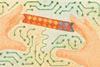
NewsAI uncovers hidden rules of some of nature’s toughest protein bonds
Scientists have shown how artificial intelligence can reveal the hidden rules of one of biology’s strangest phenomena: catch-bonds – molecular interactions that get stronger when pulled. Their findings shed light on how bacteria cling to surfaces, how tissues resist tearing, and how new biomaterials might be designed to harness force.
-
 News
NewsNew conservation committee led by Applied Microbiology International calls on science community to get on board with microbial conservation
The team behind a new world-leading conservation committee headed by Applied Microbiology International (AMI) is calling on global scientific and conservation communities to get on board to protect microbial life.
-
 News
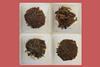
NewsMethod probing dark matter uncovers hundreds of new bacteria, and two potential antibiotics
A new approach to exploring untapped soil resources circumvents the need to grow bacteria in the lab by extracting very large DNA fragments directly from soil to piece together the genomes of previously hidden microbes, and then mines resulting genomes for bioactive molecules.
-
 News
NewsUS COVID-19 school closures were not cost-effective - but other non-pharmaceutical interventions were
School closures during the COVID-19 pandemic imposed enormous long-term costs while other measures delivered better health outcomes for far less money, according to new research analysing non-pharmaceutical interventions in the United States.
-
 News
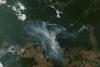
NewsAcross eight Amazon countries, forests on Indigenous lands reduce spread of 27 diseases
New research finds that municipalities in the Amazon region closest to healthy forests on Indigenous lands face less risk from rising cases of two categories of disease: cardiovascular and respiratory diseases due to forest fires and illnesses.
-
 News
NewsIt’s not hopeless: Scientists want to learn lessons from climate change communication to save our soil
Soil scientists have urged us all to play our part in protecting our soil and to heed the lessons learnt from those who have been championing actions to mitigate the effects of climate change.
-
 News
NewsMolecular Sustainable Solutions receives investment from BeAble Capital to boost disinfection and sterilization methods
Molecular Sustainable Solutions, a spin-off from the Universitat Jaume I of Castelló (UJI), secures €186,000 investment from BeAble Capital, a leading Science Equity fund specializing in disruptive scientific technologies.
-
 News
NewsSwitching disease on and off: How a gene switch could help against bacterial infections
Researchers show how bacteria actively switch off their disease-causing mechanisms at high cell density and evade the immune system – a potential key to fighting infections better.
-
 News
NewsAMI invites applications to become its next President
Applied Microbiology International (AMI) has kicked off the process that will result in the election of its next President. The new President will take up their position in July 2026 and will be appointed for a three-year term of office. The position is appointed by the Trustees and ratified by AMI’s members at the Annual General Meeting.
-
 News
NewsJames Hutton Limited awarded almost £39,000 to develop innovation campus
James Hutton Limited, the commercial wing of The James Hutton Institute, has been awarded £38,881 from the Scottish Government to progress a clima-tech and agri-tech innovation campus at its Invergowrie site.