
All Germany articles – Page 5
-
 News
NewsNew European toolkit launched by EU agencies to help eliminate viral hepatitis B and C in prisons
The European Union Drugs Agency (EUDA) and the European Centre for Disease Prevention and Control (ECDC) have jointly produced a European toolkit for the elimination of viral hepatitis in prisons.
-
 Opinion
Science and the humanities in the crosshairs
The German Research Foundation (DFG) President Professor Dr Katja Becker issued a stark warning about the “war on science” and the need for solidarity at the organisation’s annual meeting in July. The Microbiologist reports her speech in full.
-
 News
NewsHow the common fungus Candida albicans colonizes the gut
Researchers have discovered unexpected factors that help the fungus Candida albicans settle and persist in the gut. The findings expand our knowledge of the fungus-gut interactions and offer potential solutions to reduce colonization.
-
 News
NewsStudies confirm influence of country of origin on trust in COVID-19 vaccines
During the pandemic, a preference for domestic vaccines or those from countries such as the United States, Germany, and the United Kingdom was observed for the first time. This phenomenon is known in marketing as the country of origin effect.
-
 News
NewsTherapeutic vaccine for chronic hepatitis B enters first clinical trial in patients
TherVacB, a novel therapeutic vaccine for chronic hepatitis B, has entered its first clinical trial in patients. A successful phase 1a trial in healthy volunteers saw the vaccine demonstrate a favorable safety profile and trigger the desired immune responses.
-
 News
NewsScientists call for urgent policy reform to accelerate cross-border coral restoration efforts
An international team of coral scientists is calling for urgent regulatory reform to support assisted gene flow (AGF)—a powerful tool to boost coral resilience—before climate change causes further reef decline and irreversible damage to coral ecosystems.
-
 News
NewsNew study brings vaccine hopes for deadly Nipah virus
Researchers have tested experimental Nipah vaccines in pigs, aiming to cut off the virus at one of its key transmission routes. The study describes the development of three vaccine candidates using different viral surface proteins.
-
 News
NewsA gut microbiota metabolite linked to atherosclerosis could revolutionize diagnosis and treatment
A new study has identified a gut microbiota–derived metabolite, imidazole propionate (ImP), that appears in the blood during the early stages of active atherosclerosis, showing promise as a new diagnostic tool and opening the door to personalized treatment strategies.
-
 News
NewsSwiss genome of the 1918 influenza virus reconstructed
Researchers have decoded the genome of the virus responsible for the 1918–1920 influenza pandemic in Switzerland, revealing that it had already developed key adaptations to humans at the outset of the deadliest influenza pandemic in history.
-
 News
NewsProtecting the most vulnerable: ECDC recommendations to address ongoing local transmission of diphtheria
A new ECDC Rapid Risk Assessment highlights how ongoing circulation of diphtheria caused by Corynebacterium diphtheriae may affect some populations who are more vulnerable to infection and issues recommendations to protect those most at risk.
-
 News
NewsScientists target ‘molecular machine’ in the war against antimicrobial resistance
The ‘molecular machine’ flagellum is essential for bacteria to cause infection, allowing bacteria to ‘swim’ around the bloodstream until finding something to infect. But it could also be a target for antibiotics.
-
 News
NewsScientists strive to place tens of thousands of previously unknown fungi in the evolution tree
Scientists have received a grant to systematise and describe members of the 95% majority of previously unclassified microscopic fungi, and other eukaryotic organisms not yet included in the current tree of life system.
-
 News
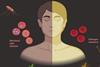
NewsStudy highlights role of jaundice-associated pigment in protecting against malaria
New research suggests that a pigment that causes yellowing of the skin, or jaundice, may help protect people from the most severe consequences of malaria.
-
 News
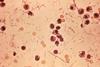
NewsCultured mini-organs reveal the weapons of aggressive Shigella bacteria
Thanks to lab-grown miniature intestines, researchers have successfully mapped how aggressive Shigella bacteria infect the human gut. The study opens the door to using cultured human mini-organs to investigate a wide range of other serious infections.
-
 News
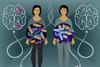
NewsTwin study detects gut bacteria that play a role in development of multiple sclerosis
Researchers examined stool samples from 81 pairs of twins, and compared their composition between siblings. They identified 51 taxa—groups of microorganisms—that differed in abundance between twins with and without MS symptoms.
-
 News
NewsComputer-identified antiviral drug candidates confirmed by lab experiments
An interdisciplinary research team has identified two antiviral drug candidates effective against a wide range of viruses. The study demonstrates how combining computer-aided modeling with laboratory validation can speed up the development of new antiviral drugs.
-
 News
NewsNitrogen loss on sandy shores: The big impact of tiny anoxic pockets
Denitrification in tiny anoxic pockets on sand grains could account for up to one-third of total nitrogen loss in silicate shelf sands, a new study reveals.
-
 News
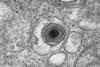
NewsAfrican swine fever not recently imported to Europe, has been around for years
A new study finds that the African Swine Fever virus, currently circulating in Europe, is not the result of a recent introduction. Instead, the virus has been present in the region since 2007.
-
 News
NewsNew microscope harnesses bioluminescence to bring glowing cells into focus
Researchers have developed a new microscope that significantly improves how bioluminescent signals in living cells can be observed. The system, known as QIScope, is built around a highly sensitive camera technology capable of detecting extremely low levels of light.
-
 News
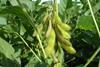
NewsBacterial species join forces to boost production in soybean - without disrupting soil microbiome
Combining a bacterial isolate with rhizobia can boost soybean production without disrupting the natural soil microbiome, a new study reveals.
- Previous Page
- Page1
- Page2
- Page3
- Page4
- Page5
- Next Page