
The nominations for the Horizon Awards are in - and the judges are making their decisions. While we await the big announcement, we’ve been catching up with the superstars who won in 2025.
The Horizon Awards are awarded by the learned society Applied Microbiology International (AMI) to celebrate the brightest minds in the field and promote the research, groups, projects, products, and individuals who continue to help shape the future of applied microbiology.
Last year, seven Horizon Awards were presented to people and organisations who excelled across various domains of applied microbiology. Each award reflects a unique aspect of the field and its relevance to global challenges.
We caught up with some of the winners to find out what they’ve been doing, how they spent the prize money - and what’s next.
Rachel Carson Environmental Conservation Excellence Award
British ecologist Professor Thomas Crowther was named as the winner of the Rachel Carson Environmental Conservation Excellence Award, which is designed for professionals, researchers, and innovators who have made significant contributions to the conservation of marine and terrestrial ecosystems and the preservation of biodiversity.

He is the founder of the Crowther Lab, an international network of research groups exploring the role of biodiversity in regulating the Earth’s climate and human wellbeing.
In 2020 he founded Restor.eco, an online platform that supports hundreds of thousands of community-led restoration projects around the world. By democratising access to data and financing, this platform facilitates local biodiversity protection initiatives to enhance the wellbeing of local people.
How has winning the award made a difference to you?
It has attracted more local farmers to the Restor platform, and brought visibility to what we do.
How did you spend the prize money?
I gave it to Restor to support outreach across our network of 35,000 Land Stewards, and create content for a fundraising campaign that will take place during summer 2026 to raise donations for 68 vetted organisations across the Restor network that are often excluded from financing mechanisms.
Any big landmark moments in the past year?
My first book was published by Penguin and Harper, Nature’s Echo, in June. It has been an amazing experience after years of writing it.
Have you been involved in any Applied Microbiology International outputs since winning the award?
I was involved in the amazing efforts of Soil Stars at Heligan Gardens and Anthropy.
What’s your next goal?
As well as continuing to progress Restor, I am quantifying the links between nature and human life quality, and working on a TV series on the importance of nature in securing livelihoods.
Dorothy Jones Diversity & Inclusion Achievement Award 2025 - individual winner
Max Fisher, a leading Disability & LGBTQIA+ Advocate, and Senior Research Associate at ViaNautis Bio, was named as individual winner of the Dorothy Jones Diversity & Inclusion Achievement Award 2025, which honours Dorothy Jones’ commitment to promoting diversity and inclusion within STEM.

Max Fisher is an activist and an advocate for disability and LGBTQIA+ rights, in particular, advocating for the inclusion of disabled and queer people in STEM.
How has winning the award made a difference to you?
The award has made a difference to me by demonstrating the value of diversity in STEM. It shows that my work promoting disability and LGBTQIA+ inclusion in STEM is important, and is making a difference to the scientific community. Since the award, I have had many conversations with scientists from minoritised groups, who have now seen my work, and have felt inspired by my journey.
How did you spend the prize money?
Travel costs to outreach and EDI events, professional membership fees, and courses. I’ve been learning Arabic for a couple of years to support outreach into communities that have less access to science because of stigma, and I have been able to take my learning to the next step with books and tutors. I have also enrolled in a statistics course to support my career journey, and my ability to judge posters.
Any big landmark moments in the past year?
My biggest landmark in the last year has been the launch of my book! I wrote ‘Quiet Practice: A DeafBlind Druid’s Guide To Practice Without Speech’ about speech and accessibility in druid and pagan spaces, because it is my firm belief that disabled people belong in faith spaces. Another highlight was attending a primary school for British Science Week, and teaching pupils about transcription and translation by using British Sign Language, code sheets, and a fun game of bingo.
Have you been involved in any Applied Microbiology International outputs since winning the award?
I ran a workshop at the Minoritised Life Scientists Future Forum about Faith in STEM!
What’s your next goal?
I want to tackle the assumptions about disabled people’s relationship with employment. The big dream is to go to parliament and speak about my own journey, and show that disabled people want to work; all we need is an open mind. Something that really frustrates me is the catch-22 between people telling disabled people to “just get a job” while also not being willing to hire us. Both things can’t be true. But I don’t know how to get there from where I am now. Watch this space!
John Snow Public Health Innovation Prize
Dr José Luis Balcázar, Senior researcher at the Catalan Institute for Water Research (ICRA-CERCA), Spain, was the winner of the John Snow Public Health Innovation Prize, which recognises and supports excellence in applied microbiology, specifically targeting those whose work significantly improves public health and environmental sustainability.
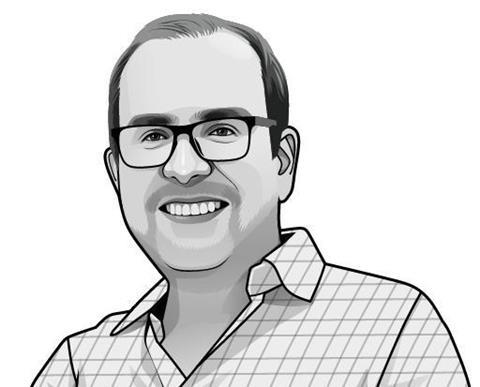
Dr. Balcázar is a multifaceted microbiologist whose work focuses on the mechanisms that drive the spread of antimicrobial resistance at the One Health interface.
His research has revealed the crucial role of bacteriophages in horizontal gene transfer and resistance dissemination, and has shown that phages in polluted environments may carry auxiliary metabolic genes that support the degradation of pollutants. These findings open new avenues for bioremediation strategies while also generating actionable knowledge to improve water safety and strengthen public health surveillance.
How has winning the award made a difference to you?
Winning the John Snow Public Health Innovation Prize has been a great honour and a valuable source of encouragement for my research. It has increased the visibility of my work on antimicrobial resistance and environmental microbiology, opened new opportunities for collaboration, and reinforced my commitment to advancing One Health research.
How did you spend the prize money?
I used the prize money primarily to support conference attendance, which enabled me to present my research, engage with the scientific community, and strengthen international collaborations.
Any big landmark moments in the past year?
The past year has been particularly exciting. I have continued to advance research on antimicrobial resistance, bacteriophages, and environmental microbiology while strengthening international collaborations. I have also been developing new international research projects and authoring invited review and perspective articles that address emerging challenges at the interface of microbiology and One Health.
Have you been involved in any Applied Microbiology International outputs since winning the award?
Not yet. Over the past year, I have been focused on advancing my research and strengthening international collaborations. However, I would be delighted to contribute to Applied Microbiology International activities in the near future, whether through publications, events, or other initiatives.
What’s your next goal?
My next goal is to further expand my international collaborations while broadening the impact of my research through work at the interface of environmental microbiology, antimicrobial resistance, and bacteriophage biology. I also hope to contribute to evidence-based solutions and policies that help address the global challenge of antimicrobial resistance within a One Health framework.
Dorothy Jones Diversity & Inclusion Achievement Award - team winner
The Microbes and Social Equity Working Group (MSE) has been named as the team winner of the Dorothy Jones Diversity & Inclusion Achievement Award.
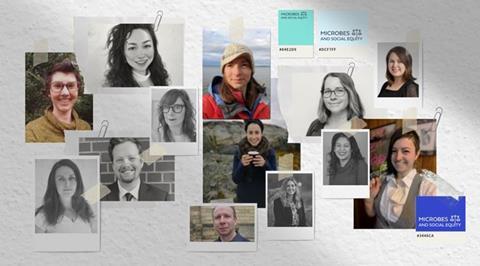
Microbial exposures across ecosystems, settlements, cultures, and individuals are sociopolitical, and the mission of the Microbes and Social Equity Working Group is to connect microbiology with social equity research, education, policy, and practice to understand the interplay of microorganisms, individuals, societies, and ecosystems.
Dr Sue Ishaq, Associate Professor of Microbiomes, University of Maine, represents the MSE Board of Directors.
How has winning the award made a difference to you?
The award has been a wonderful encouragement within MSE, and has gotten us extra (positive) attention on social media which has helped us increase our network. Even better, the award has demonstrated the ongoing commitment of many institutions to inclusion, and this has bolstered the resolve of our members to continue to do good in their communities.
How did you spend the prize money?
We are using it to support the MSE speaker series in 2026!
Any big landmark moments in the past year?
In the past year, the MSE Board enacted our first set of Bylaws, and approved a formal partnership with AMI. The Microbiome Stewardship research group also had a successful workshop in December.
Have you been involved in any Applied Microbiology International outputs since winning the award?
Yes, in fact, I just received word that a paper on microbiome stewardship was accepted, which means MSE will be opening a special collection at a journal soon! This new paper will join another recently published paper on stewardship.
What’s your next goal?
We are aiming bigger, and have started looking for financial support to help MSE add administrative staff, create more infrastructure for supporting members, and financially planning to get us to sustainable funding.
Find out more about the Horizon Awards.


No comments yet