
All Infection Prevention & Control articles – Page 25
-
 News
NewsModular Clean Air strengthens position as part of Total Clean AIr
Modular Clean Air (MCA) is now wholly owned by Total Clean Air (TCA), marking the next phase in its development following its successful launch as a joint venture in 2025.
-
 News
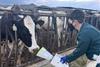
NewsDairy farms in California may transmit H5N1 virus through multiple sources
A new study suggests that avian influenza (H5N1) is transmitted through multiple, previously unknown sources on dairy farms and that some H5N1 positive cows do not show clinical signs of infection.
-
 News
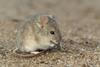
NewsClimate change increases spillover risk of rodent-borne arenaviruses
Climate change is likely to drive rodent-borne arenaviruses into parts of South America that have never faced these diseases, according to an early risk projection model that incorporated climate projections, shifting rodent populations and the risks of human infection.
-
 News
NewsNew study shows cranberry juice may boost UTI antibiotics
Researchers recently exposed lab-grown strains of pathogenic Escherichia coli to cranberry juice. Preliminary findings suggest that compounds in the juice re-sensitize resistant strains to antibiotic treatment.
-
 News
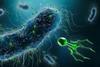
NewsResearchers advance phage therapy in fight against antimicrobial resistance
Scientists have uncovered how Mycobacterium abscessus can evade bacteriophage therapy, and demonstrated a combination strategy to overcome this resistance, offering a pathway towards more effective and durable treatments.
-
 News
NewsWhy feeling sick may be important for surviving infection
In a new perspective, scientists propose a different way of thinking about sickness symptoms: what if these behaviors are part of an integrated immune strategy that operates across scales — from individual cells to tissues and organs, to the whole organism — and helps promote survival?
-
 News
NewsProviding food baskets to people with tuberculosis is cost-effective and could avert over 100,000 deaths annually in India
Undernutrition is the single greatest modifiable risk factor for tuberculosis (TB). Researchers found that providing food baskets to people with TB and their households may save tens of thousands of lives annually in India if implemented at scale.
-
 News
NewsAI speeds chemists’ search for better disinfectants
Scientists published their computational-experimental framework for developing quaternary ammonium compounds, or QACs, to kill bacteria. The method yielded 11 new QACs that show activity against antimicrobial-resistant bacteria.
-
 News
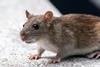
NewsHantavirus cluster linked to cruise ship highlights ongoing zoonotic risk and the need for vigilance
Experts emphasized caution while underscoring the importance of environmental controls, early detection, and clear communication in travel settings.
-
 News
NewsCan new research findings help overcome challenges to malaria treatment?
A new study may help overcome challenges to the treatment of malaria. The research is based on a strategy that targets an enzyme specific to the parasite, Falcipain-2 (FP2), which is essential for parasite survival and growth within the host.
-
 News
NewsGut microbes actively support immunity in people living with HIV
A new study shows that gut microbes help bolster immunity in people living with HIV – and that, one day, these microbes may be harnessed to protect this population from infections driven by immune deficiency.
-
 News
NewsResearchers identify natural compound that disarms drug-resistant bacteria
Scientists studying MRSA discovered that geranylgeranoic acid (GGA) – a naturally occurring fatty acid found in plants like ginger and turmeric – interferes with the bacteria’s virulence, its ability to infect, spread, defend itself, and cause disease.
-
 News
NewsMalaria’s mRNA: Messages that mess with the immune system
A new study uncovers the malaria parasite’s RNA strategies – mechanisms that could inspire unexpected applications for RNA-based tools in multiple areas of medicine.
-
 News
NewsStudy finds four of the CDC’s seven measles elimination status indicators missed
After public health experts declared measles eliminated in the U.S. in 2000, the U.S. CDC established seven indicators of measles elimination status to ensure that the country remained on track. Now researchers find that the U.S. missed four of the seven criteria, with the others at risk.
-
 News
NewsIn mice, viruses gain virulence in some individuals, depending on genetics and sex
New research demonstrates that some hosts appear to serve as “evolutionary accelerators” that could enable viruses to gain virulence more quickly.
-
 News
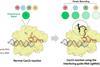
NewsStudy identifies multiple viruses and variants simultaneously by controlling the “speed” of CRISPR gene scissors
Scientists have developed a new diagnostic technology that simultaneously identifies various viruses and variants by controlling the “speed” of gene scissors.
-
 News
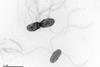
NewsWhy antibiotics may soon fail to curb the plague bacterium - and where we can find new strategies
A new review shows that while most infections caused by the Yersinia plague bacterium can currently be treated with antibiotics, concerns about rising antimicrobial resistance mean that we need to come up with new ways to disarm the bacteria instead of killing them.
-
 News
NewsStudy confirms effectiveness of medicinal plant against SARS-CoV-2 virus
A study has revealed that galloylquinic acids extracted from the leaves of Copaifera lucens Dwyer, a tree endemic to Brazil primarily found in the Atlantic Forest, have a multi-targeted effect against SARS-CoV-2, the virus that causes COVID-19.
-
 News
NewsPet cats that roam outdoors carry similar disease risk as feral cats, global study finds
A new study has found that pet cats allowed to roam outside unsupervised carry infectious diseases at rates comparable to feral cats, even when they receive veterinary care, regular meals and shelter.
-
 News
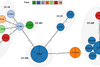
NewsSouth American camelids: Potential carriers of the zoonotic pathogen Campylobacter
A comprehensive investigation has identified a previously underappreciated source of thermotolerant Campylobacter spp. in South American camelids (SACs)—alpacas and llamas kept in Germany. The findings underscore the importance of expanding epidemiological surveillance beyond traditional livestock.