
Scientists from A*STAR Infectious Diseases Labs (A*STAR IDL), Nanyang Technological University, Singapore’s Lee Kong Chian School of Medicine (LKCMedicine), the National University of Singapore (NUS), and international collaborators have uncovered how Mycobacterium abscessus – a bacterium that causes serious lung infections – can evade bacteriophage therapy, and demonstrated a combination strategy to overcome this resistance, offering a pathway towards more effective and durable treatments. The study was published in the Proceedings of the National Academy of Sciences.
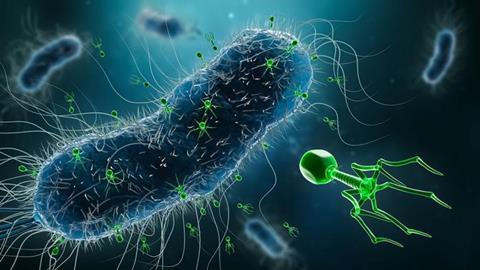
Antimicrobial resistance (AMR) is an escalating health challenge that is expected to place growing strain on healthcare systems worldwide. As AMR continues to erode the effectiveness of existing antibiotics – with one in six bacterial infections worldwide now resistant to antibiotics – scientists are accelerating efforts to develop new countermeasures such as phage therapy, which uses viruses to target bacteria. These efforts are important for strengthening global health and infectious disease preparedness.
M. abscessus infections are challenging to treat due to their intrinsic resistance to many antibiotics and are increasingly recognised as a significant public health threat.
The researchers found that “smooth” strains of M. abscessus, which are more commonly observed in Asia, respond to phage therapy by switching to a “rough” form, both in the laboratory and pre-clinical models. This transition is linked to mutations in genes responsible for producing glycopeptidolipids, which shape the bacteria’s outer surface.
In other cases, the bacteria resisted phage attack without changing form, instead developing mutations in different surface‑related genes, revealing multiple pathways to resistance.
Resistance mechanism
The team uncovered this resistance mechanism while generating phage‑resistant bacterial mutants to investigate phage‑bacteria interactions.
“These findings reveal an important challenge in developing phage‑based therapies. Although phages can effectively eliminate bacteria, they may also inadvertently make infections more difficult to treat, as seen in the ‘rough’ form,” explained Professor Pablo Bifani, senior author and scientist at LKCMedicine.
To address this, the team developed a combination therapy targeting both the original “smooth” bacteria and the emerging “rough” variants. This two‑pronged approach proved more effective than a single-phage treatment, pointing toward more robust and longer‑lasting phage therapies for patients.
“What started as a straightforward goal: finding phages that can target M. abscessus smooth strains, led us to the discovery of a clinically relevant resistance mechanism,” said Dr Liew Jun Hao, first author and scientist at A*STAR IDL.
Escape states
“Phage therapy holds great promise as an alternative treatment for AMR infections, and our findings show that how these treatments are designed is critical. By identifying these ‘escape states’, our study underscores the need for the field to systematically account for bacterial adaptation, so that strategies to counter phage resistance can be built into therapies from the outset, as the threat of AMR continues to grow.”
Associate Professor Albert Yick Hou Lim, Senior Consultant in Respiratory and Critical Care Medicine, Tan Tock Seng Hospital, who was not part of the study team, said: “In clinical settings, infections caused by M. abscessus are challenging to treat due to limited effective therapeutic options. These findings highlight the importance of anticipating how bacteria may respond to treatment. Strategies that account for such adaptive responses, including combination phage therapies, may enhance treatment durability, improve patient outcomes, and better inform clinical management of these complex infections.”
Advancing novel therapeutics and diagnostics against AMR
By revealing how phage resistance happens, and how it can be mitigated, this study strengthens the ongoing efforts to develop novel therapeutics against AMR.
The findings may also inform future diagnostic and monitoring approaches, such as tracking bacterial form changes and resistance-associated mutations. This could help clinicians tailor treatments and adjust therapeutic strategies more responsively.
Beyond immediate clinical applications, understanding how bacteria evolve under therapeutic pressure is important for infectious disease preparedness. Such insights can inform the design of new therapies that remain effective even as pathogens adapt.
The study contributes to Singapore’s efforts to strengthen capabilities in infectious diseases research and develop solutions to address emerging global health challenges.
Topics
- A*STAR Infectious Diseases Labs
- Albert Yick Hou Lim
- Antimicrobial Resistance
- Asia & Oceania
- Bacteria
- Bacteriophages
- glycopeptidolipids
- Infection Prevention & Control
- Infectious Disease
- Lee Kong Chian School of Medicine
- Liew Jun Hao
- Mycobacterium abscessus
- Nanyang Technological University Singapore
- National University of Singapore
- Non-tuberculous mycobacterium
- One Health
- Pablo Bifani
- Phage Therapy
- Research News
- smooth strains
- surface‑related genes
- Viruses






No comments yet