
All Infection Prevention & Control articles – Page 60
-
 News
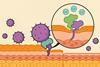
NewsThe cling of doom: How staph bacteria latch onto human skin
Scientists have discovered the strongest natural protein bond ever recorded, explaining how Staphylococcus aureus clings so tightly to human skin and pointing to new ways to fight antibiotic resistance.
-
 News
NewsClinical study shows that nasal spray containing azelastine reduces risk of coronavirus infection by two-thirds
In addition to showing a marked reduction in coronavirus infections, the azelastine group also displayed fewer symptomatic SARS-CoV-2 infections, a lower overall number of confirmed respiratory infections, and, unexpectedly, a reduced incidence of rhinovirus infections, another major cause of respiratory illness.
-
 News
NewsUnlocking how bacteria bounce back after antibiotics
A groundbreaking study has uncovered how Escherichia coli (E. coli) persister bacteria survive antibiotics by protecting their genetic instructions. The work offers new hope for tackling chronic, recurring infections.
-
 News
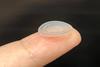
NewsNew pimple patches deliver a powerful remedy to unwanted zits
Researchers have designed a two-stage pimple patch set with an array of tiny spikes that grabs onto the pimple and delivers antibacterial or anti-inflammatory compounds. Human clinical trials confirmed that the pimples disappeared after seven days of treatment.
-
 News
NewsChronic wound infection model is much closer to real life - and cuts back on animal testing
Thousands of lab animals are used every year to test wound treatments. But one lab in Wales is pointing the way towards a more humane model of research, with the work it is carrying out on in vitro/animal replacement models.
-
 News
NewsCARB-X backs neonatal sepsis diagnostic platform by Quantamatrix
CARB-X has awarded QuantaMatrix Inc. US$2.85M to execute a workplan to develop its rapid diagnostic platform to detect sepsis, especially in vulnerable neonates. The test aims to deliver results within just 6 hours from very small blood samples of 1 to 2 milliliters.
-
 News
NewsNew sepsis diagnostic could reduce critical time to save patients
A new diagnostic method would confirm sepsis infections earlier, cutting critical hours in the “race against time” to save patients’ lives. The process uses a centrifuge to separate bacteria from blood cells, and automatic microscopy for detection.
-
 News
NewsNew ‘cough simulator’ mimics TB transmission with unprecedented accuracy
Researchers have developed a new experimental system called Transmission Simulation System (TSS) that replicates the airborne transmission of TB – by simulating the human cough – with unparalleled realism and never-before-seen precision.
-
 News
NewsGuideline on respiratory infections in leukemia revised
People with leukemia have a weakened immune system due to the disease itself and treatment, which leads to an increased susceptibility to infections. In a revised guideline, experts summarize the findings of the past ten years on all viruses that cause respiratory infections.
-
 News
NewsMERIT grant awarded to study cure for HIV
A scientific team has received an NIH MERIT Award to provide long-term grant support to study a handful of people who have managed to clear HIV after a stem cell transplant and those who did not.
-
 News
NewsPertussis resurgence in Tuscany outlines importance of timely vaccination in Italy
Research analysing 2016-2024 data from all pertussis-related hospitalisations in Tuscany, Italy, finds a ninefold increase in pertussis cases in 2024 among children and adolescents.
-
 News
NewsNext-generation ‘molecular scissors’ may offer hope for chronic hepatitis B sufferers
Researchers have developed engineered precision ’molecular scissors’ that can permanently disable the genetic blueprint of the hepatitis B virus (HBV). The approach directly targets covalently closed circular DNA (cccDNA), the stubborn viral reservoir.
-
 News
NewsMyocardial infarction may be an infectious disease
A pioneering study has demonstrated for the first time that myocardial infarction may be an infectious disease. This discovery challenges the conventional understanding of the pathogenesis of myocardial infarction and opens new avenues for treatment.
-
 News
NewsNew research makes first broad-spectrum antiviral
A new study offers a promising path toward the development of the world’s first broad-spectrum antiviral (BSA), which could be deployed against a wide range of deadly viruses, including future pandemic threats.
-
 News
NewsKiss goodbye to deadly disease – new research finds ‘Pac-Man’ antibodies for killer parasite
Researchers have successfully produced antibodies that kill the parasite carried by the ‘kissing bug’ that causes the potentially deadly Chagas disease. The research is a vital step towards the development of the first effective vaccine.
-
 News
NewsResearchers create faster way to trace how diseases spread indoors
Researchers have developed a new method of monitoring and tracking how disease-causing particles, or pathogens, spread from one place to another. The tool could help contain future outbreaks of diseases like COVID-19.
-
 News
NewsScientists identify three potent human antibodies against mpox, paving the way for new protective therapies
Researchers have discovered three powerful monoclonal antibodies from a person who had previously been infected with mpox (formerly known as monkeypox).
-
 News
NewsNew AI tool reveals how drugs kill tuberculosis
A new study offers a powerful AI-assisted method for uncovering exactly how TB drugs kill the bacteria, opening the door to smarter treatment combinations that could work faster.
-
 News
NewsResearchers use generative AI to design compounds that can kill drug-resistant bacteria
With help from artificial intelligence, researchers have designed novel antibiotics that can combat two hard-to-treat infections: drug-resistant Neisseria gonorrhoeae and multi-drug-resistant Staphylococcus aureus (MRSA).
-
 News
News‘Essentiality’ scan reveals microbe’s ‘must-have’ list
Researchers have spent years taking apart one of the world’s simplest microbes, Mycoplasma pneumoniae, piece by piece, and created a detailed list of what molecular parts the living cell can and cannot do without.