
All Infectious Disease articles – Page 35
-
 News
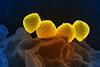
NewsResearch cracks genetic code of growing bacterial threat
Scientists have discovered that a fast‑rising strep bacterium comes in more forms than expected, including ones that may lead to life-threatening infections. Streptococcus dysgalactiae subspecies equisimilis (SDSE) was originally considered rare and was believed to mostly infect people who already had other health issues.
-
 News
NewsA natural molecule present in the human body protects against the flu
A research team has demonstrated that dermcidin, an antimicrobial peptide produced constitutively by the human body, also exhibits antiviral activity against the influenza virus. People who do not develop flu-like symptoms have higher baseline levels of this molecule.
-
 News
NewsCopper-loaded starch nanoparticles can target bacteria in microbial communities
Researchers have developed copper-loaded starch nanoparticles that can be broken down by specific bacteria to release antibacterial copper molecules. They hope that these nanoparticles can be used to target biofilms, which account for 50-70% of healthcare-associated infections.
-
 News
NewsHow bacteria outsmart the immune system: Two-pronged strategy revealed
A team has uncovered how a common bacterial pathogen uses a single protein to quietly undermine the human immune system, by both shutting down key warning signals and blocking the cell’s ability to restore them.
-
 News
NewsScientists solve 40-year-old biological mystery behind sleeping sickness
Scientists have cracked a 40-year-old biological cold case by revealing how the parasite that causes sleeping sickness stays one step ahead of the human immune system.
-
 News
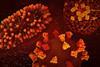
NewsNew vaccine strategy could help extend immunity against evolving viruses
Researchers have identified a possible way to make longer lasting vaccines for respiratory viruses like influenza and the coronavirus that causes COVID-19.
-
 News
NewsResearchers move closer to preventing pandemics
Researchers have developed an AI tool that can help determine whether unfamiliar bacteria carry genetic features linked to disease. By enabling the detection of harmful bacteria before they infect humans, this could transform pandemic preparedness.
-
 News
NewsStudy reveals how a live bacterial therapy reshapes the vaginal microbiome and identifies predictors of treatment success
A new study provides the most detailed picture yet of how a promising bacterial therapy works to prevent recurrent bacterial vaginosis (BV) and why it works better for some women than others.
-
 News
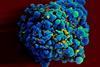
NewsSpecific patterns of CD39 expression on T-cells of HIV/HCV coinfected patients receiving antiretroviral therapy
Researchers demonstrated that CD4+ T-cells act as the main regulators of purinergic signals in HIV/HCV coinfected and healthy individuals. At the same time, the proportion of CD4+ T-cells involved in the control of purinergic signaling was increased in HIV/HCV coinfected patients compared with healthy subjects.
-
 News
NewsScientists studying bird flu in the air to protect people and agricultural operations
New research will investigate how nonthermal plasmas can render aerosols containing the virus that causes bird flu incapable of infecting humans and livestock. The approach exposes air to strong electric fields, temporarily creating free electrical charges that damage viruses.
-
 News
NewsAging lung cells could be why COVID and flu are so dangerous to the elderly
Older adults are much more likely to become seriously ill from flu or COVID because aging lung cells can drive excessive immune responses, according to a new study led by researchers.
-
 News
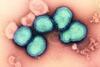
NewsNew flu drug discovery could help fight future pandemics
Scientists say that new laboratory tests have revealed a new way to stop flu viruses, which could lead to better treatments and improved pandemic preparedness. The international team has developed experimental compounds that appear to block the virus more effectively than current medicines.
-
 News
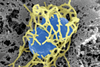
NewsOver 250,000 deaths from meningitis globally in 2023; over one third in children under five
In 2023, globally 259,000 people died from meningitis and 2.5 million people were infected with the disease, suggests a study. Although death and infection rates have declined significantly since 1990, progress is insufficient to meet the WHO targets.
-
 News
NewsScientists identify new Fusarium species behind wheat disease outbreak in Ethiopia
New research provides new insights into the severe 2022 outbreak of Fusarium head blight in Ethiopia and identifies emerging fungal pathogens that could have broader implications for global wheat production.
-
 News
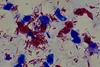
NewsMedieval DNA reveals trans-Saharan connections, rapid genetic mixing, and leprosy in Islamic Ibiza
An international research team has revealed that the population of medieval Ibiza was remarkably diverse. One individual was found to be infected with Mycobacterium leprae, the bacterium responsible for leprosy, marking the first genetically confirmed case from medieval Islamic Iberia.
-
 News
NewsFirst Chagas disease conference on US soil highlights a turning point in national awareness
For the first time, a conference dedicated to Chagas disease research will be held on U.S. soil, marking a significant and symbolic moment for researchers, clinicians and public health leaders working to boost awareness of the disease in this country.
-
 News
NewsWhy is vaccination for target populations plummeting in the UK? Share your insights!
As a group of leading UK health experts launches a new Commission on Access to Vaccines to understand why access levels are falling across the UK, Applied Microbiology International is calling on members to share their insights on childhood vaccinations.
-
 News
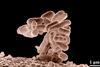
NewsTracking bacteria’s protective armor could help find targeted vaccine targets
The first large-scale genetic study of E. coli’s protective armour has identified the five capsule types that are responsible for 70 per cent of all multidrug-resistant bloodstream infections in Europe.
-
 News
NewsGenetic breakthrough uncovers evolutionary limits of the COVID-19 virus
A new paper indicates that while the COVID-19 virus has developed rapidly since 2019, it has done so within limited genetic channels. These genetic limits have remained unchanged.
-
 News
NewsHPV vaccination uptake in adults shaped by knowledge and medical advice
A nationwide survey of HPV uptake in Switzerland found just over 27% of the approximately 3,850 adults aged 18 to 45 surveyed had received at least one dose of the vaccine. While nearly 59% of those aged 18 to 26 are vaccinated, the rate drops to around 16% among those aged 27 to 45.