
All Innovation News articles – Page 19
-
 News
NewsResearchers develop UV and machine learning-aided method to detect microbial contamination in cell cultures
This is the first novel technology that utilises machine learning to analyse unique ultraviolet light “fingerprints” on cell cultures to quickly identify the presence of contamination.
-
 News
NewsEngineered bacteria emit signals that can be spotted from a distance
Engineers have found a way to read out bacterial signals from as far as 90 meters away. This work could lead to the development of bacterial sensors for agricultural and other applications, which could be monitored by drones or satellites.
-
 News
NewsNew platform leverages AI and quantum computing to predict salmonella antimicrobial resistance
A recent study presents a novel approach to predict Salmonella antimicrobial resistance, a growing concern for public health. The research combines large language models (LLMs) and quantum computing to develop a predictive platform.
-
 News
NewsA new tool for parsing the ‘metabolic dialogue’ between microorganisms
Scientists have developed an innovative system – called MetaFlowTrain – that allows the study of metabolic exchange and interactions within microbial communities under different environmental conditions.
-
 News
NewsScientists develop special agar for isolation of Escherichia albertii and its evaluation with food samples
Scientists have developed a novel E. albertii selective differential medium, XRM-MacConkey medium containing cefixime, tellurite, phosphate, and soy peptone, which differentiates E. albertii (colorless) from E. coli (red) by colony color.
-
 News
NewsNovel breath test shows promise for diagnosing and monitoring bacterial infections
A new, non-invasive breath test has emerged as a potential breakthrough for rapidly diagnosing bacterial infections and tracking treatment effectiveness.
-
 News
NewsA new smartphone-sized device can test for tuberculosis - here’s why that matters for children
Scientists have designed the first-of-its-kind portable device to deliver fast, low-cost TB results — no lab required — to fight the world’s deadliest infectious disease.
-
 News
NewsBreakthrough gene therapy offers hope for rare, deadly heart disease in young men
Researchers have designed a gene-therapy strategy that could transform the treatment of arrhythmogenic right ventricular cardiomyopathy type 5 (ARVC5), a rare and deadly heritable disease that particularly affects young men.
-
 News
NewsScientists develop nasal spray H5N1 avian influenza vaccine
Scientists have pioneered an influenza virus vector-based nasal spray vaccine platform and developed a nasal spray H5N1 avian influenza vaccine.
-
 News
NewsSpinning into the future: fidget spinner revolutionizes bacterial detection
The plasmonic fidget spinner (P-FS) integrates nanoplasmonic technology with surface-enhanced Raman spectroscopy (SERS) to provide ultra-fast and precise bacterial identification.
-
 News
NewsBacteria-enhanced graphene oxide nanoparticles for triple-action tumor eradication
Researchers developed graphene oxide nanoparticles that combine chemotherapy, immune activation, and photothermal heating to effectively destroy tumors. The novel GO nanocomposite is enhanced with bacterial components.
-
 News
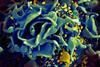
NewsNovel point-of-care technology delivers accurate HIV results in minutes
Scientists have developed new technology that could lead to the creation of a rapid point-of-care test for HIV infection competitive with traditional lab-based HIV testing in a fraction of the time and without the need for a stressful wait.
-
 News
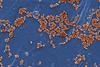
NewsResearchers use AI to improve diagnosis of drug-resistant infections
Scientists have developed a new AI-based method that more accurately detects genetic markers of antibiotic resistance in Mycobacterium tuberculosis and Staphylococcus aureus — potentially leading to faster and more effective treatments.
-
 News
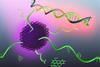
NewsA leap in viral research: More sensitive viral RNA detection
Researchers have unveiled an innovative, label-free ratiometric fluorosensor designed for the selective and sensitive detection of enteroviral RNA. The research promises to deliver even more advanced and effective detection methods.
-
 News
NewsAn intelligent device for detecting infections using the temperature of the skin
Based on a flexible, self-sustaining thermoelectric system, scientists created an intelligent temperature-sensing device to detect inflammations and infections, which can assist clinical decisions upon monitoring wounds and lesions.
-
 News
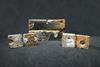
NewsBacteria deployed to fix cracks in space bricks
Researchers have developed a bacteria-based technique to repair bricks that can be used to build lunar habitats, if they get damaged in the moon’s harsh environment.
-
 News
NewsMicroalgae and bacteria team up to convert CO2 into useful products
Most methods of genetically modifying the bacterium Escherichia coli and other microbes to convert carbon dioxide into useful biological products require additional carbon sources. A new study overcomes this limitation by combining the photosynthetic finesse of a single-celled algae with the production capabilities of the bacteria E. coli.
-
 News
NewsFAU secures $1.3 million NIH grant for breakthrough in HIV self-test technology
To address the urgent need for a reliable, rapid and affordable self-test for early HIV detection, researchers have been awarded phase-II of a five-year, $1.3 million grant which will support the development of an innovative disposable microchip technology designed for HIV-1 self-testing during the first two weeks post-infection.
-
 News
NewsAI learns to ‘speak’ genetic ‘dialect’ for future SARS-CoV-2 mutation prediction
Researchers have developed a new method to predict mutations in virus protein sequences called Deep Novel Mutation Search (DNMS), a type of artificial intelligence model that uses deep neural networks.
-
 News
NewsResearchers develop new DNA test for personalized treatment of bacterial vaginosis
Researchers have developed a simple DNA PCR-based lab test — built on a more detailed genetic analysis of the main group of bacterial organisms that cause bacterial vaginosis — to help clinicians prescribe the right medicine for each patient.