
All articles by Linda Stewart – Page 272
-
 News
NewsMicrobe and prebiotic team up to work against food allergies
New research reveals a mutually beneficial relationship between an unassuming microbial species and the prebiotic lactulose – together, they encourage the production of an important metabolite known for its positive influence on gut health.
-
 News
NewsResearchers develop novel AI algorithm for analyzing microfossils
Microfossil analysis allows us to map the subsurface and understand past geological times. In research labs all over the world geologists spend countless hours looking through the microscope identifying and counting microfossils extracted from sedimentary rock below the seabed. Source: ZooFari Photo of an unidentified 10 million year ...
-
 News
NewsCannabis use tied to increased risk of severe COVID-19
Researchers have found that people who reported using any form of cannabis at least once in the year before developing COVID-19 were significantly more likely to need hospitalization and intensive care than were people with no such history.
-
 News
NewsBreakthrough in nanoscale force measurement opens doors to unprecedented biological insights
Groundbreaking research has revealed a new way to measure incredibly minute forces at the nanoscale in watery solutions, pushing the boundaries of what scientists know about the microscopic world.
-
 News
NewsHighly pathogenic avian influenza A(H5N1) outbreak in Finnish fur farms
Highly pathogenic avian influenza (HPAI) A(H5N1) has been detected in animals on 27 fur farms in Finland. The outbreak, traced to wild birds, revealed significant virus adaptation to mammals and caused severe inflammation in the lungs, brains and livers.
-
 News
NewsPaper-based biosensor offers fast, easy detection of fecal contamination on produce farms
Researchers are introducing a new biosensor technology to farms inspired by advances during the pandemic. The system delivered 100% accurate results within an hour of in-field sample collection on a commercial fresh produce farm.
-
 News
NewsSimple test for flu could improve diagnosis and surveillance
A low-cost CRISPR-based paper strip test distinguishes between influenza types and can be reprogrammed to recognize different viruses including the H5N1 bird flu virus.
-
 News
NewsCold climate wheat varieties could provide answers to blast threat
New research unexpectedly reveals that wheat varieties with resistance to another pathogen, powdery mildew, also confer protection against wheat blast.
-
 News
NewsMetformin and AGIs show potential for improved outcomes in COVID-19 patients with type 2 diabetes
A new study has found a significant association between metformin and AGI use and reduced all-cause mortality in COVID-19 patients with Type 2 diabetes. Conversely, insulin use was linked to an increased risk of death.
-
 News
NewsNew approach to measuring ‘healthy microbiomes’ in nature and the gut
Focusing on four common diseases – diabetes, heart disease, depression and bowel cancer – new research provides insights into the importance of a healthy microbiome balance in the human gut and in the environment.
-
 News
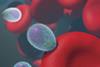
NewsLow birth weight linked to placental malaria in first-time mothers
A new study aimed to determine the prevalence of placental malaria infection, risk factors, types of Plasmodium causing malaria during pregnancy, and its relationship with neonatal birth weight among primigravidae.
-
 News
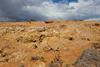
NewsOverlooked pathway could be game-changer for ecosystem climate services
The potential for permanent carbon storage in ecosystems that use the oxalate-carbonate pathway (OCP) could be greater than previously estimated, according to a new study.
-
 News
NewsResilience shaped by activity in the gut microbiome and brain
Resilient people exhibit neural activity in the brain regions associated with improved cognition and regulating of emotions, and are more mindful and better at describing their feelings - but also exhibit gut microbiome activity linked to a healthy gut.
-
 News
NewsWild chimpanzees seek out medicinal plants to treat illness and injuries
The study combined behavioral observations of wild chimpanzees (Pan troglodytes) with pharmacological testing of the potentially medicinal plants they eat.
-
 News
NewsWild yeasts from Patagonia could yield new flavors of lagers
New strains of yeast for brewing lager beers, created by hybridizing wild strains of yeast from Patagonia with brewer’s yeast, can yield novel flavors and aromas, a new study reports.
-
 News
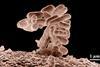
NewsE. coli sends out SOS when antibiotics attack, sparking emergency mode
Antibiotics damage E. coli DNA, including by causing formation of single strands of incomplete DNA inside the cell. When that happens, it’s like lighting a match under a smoke detector, according to a new study.
-
 News
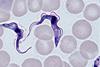
NewsChad eliminates human African trypanosomiasis as a public health problem
Chad is the 51st country to be recognized by WHO for eliminating a neglected tropical disease, surpassing the halfway mark towards the 100-country target set for 2030.
-
 News
NewsFewer good gut bacteria increase the risk of serious infection
Researchers followed more than 10,000 people for 6 years. More than 600 people who had less healthy intestinal flora developed a serious infection, with this leading in some cases to death.
-
 News
NewsSKAN Research Trust and Quadram Institute Bioscience to develop novel microbial therapies
SKAN Research Trust and Quadram Institute Bioscience will apply the TraDIS-Xpress platform to study the action of traditional medical compounds on bacteria, aiding in the reformulation and development of novel antibacterial regimens.
-
 News
NewsMicrobial agricultural inoculants market set to grow by $243.73 million from 2024-2028
The global microbial agricultural inoculants market size is estimated to grow by USD 243.73 million from 2024-2028, according to Technavio, with rising concerns over use of chemical fertilizers and pesticides in agriculture.