
All Marine Science articles
-
 News
NewsNew insights into coral reproductivity could help protect our reefs
Scientists have uncovered an important missing piece in the puzzle of how some coral reefs can recover from climate events, providing critical information that could help guide future conservation and restoration efforts.
-
 News
NewsCurrents in an Arctic sea accelerate the sinking of carbon-carrying phytoplankton
Documenting the seasonal fate of these tiny marine organisms is a step toward understanding how ecosystems in the world’s fastest-warming region may change as ice recedes.
-
 News
NewsNew form of plastic pollution discovered on the shores of vulnerable coral reefs
‘Plasticorals’, coral rubble fused with plastic, are long-lasting reminders of human activity and highlight a potential threat to critical marine environments. a new study shows.
-
 News
NewsNovel database reveals hidden diversity and potential of deep-sea microbes
Scientists have spearheaded Global Ocean Reference Genomes Dark (GORG-Dark), the first global atlas of single-cell microbes living in the aphotic ocean. It contains more than 9,600 genomes from individual microbial cells collected across a broad range of depths and locations, including the Mariana Trench and the Antarctic.
-
 News
NewsThat sinking feeling: Testing for ocean health and carbon storage
Our oceans are in trouble and new research shows how changes in diatoms could further undermine the foundation of aquatic life’s food webs – as well as vital deep-sea carbon capture or sequestration.
-
 News
NewsUnder pressure: How a deep-sea protein adapts to an extreme environment
Researchers have uncovered a molecular strategy that enables a deep-sea protein to remain stable under extreme pressure. As pressure increases, the protein assembles into groups of three, called a trimeric structure, and stabilizes itself through a process known as oligomerization-mediated structural stabilization.
-
 News
NewsFertilizers and extreme heat are damaging coral reefs in the Gulf of Mexico
Scientists analyzing nitrogen isotopes in the calcareous skeletons of corals have discovered that the high levels of nitrogen in the northern Gulf originate from the Mississippi River and are attributable to the use of fertilizers.
-
 News
NewsApplied Microbiology International announces new president, Professor Raquel Peixoto
Applied Microbiology International is delighted to announce that Professor Raquel Peixoto will be taking over the reins from Professor Jack Gilbert as President.
-
 News
NewsArchaea as “flexitarians”: Ammonia-oxidizing microbes also feed on amino acids
Symbiotic ammonia-oxidizing archaea in marine sponges are not strict specialists, but true “flexitarians”. Research has shown that these microbes dine not only on ammonia but also on amino acids - and presumably do that to communicate with their animal host.
-
 News
NewsProbiotic and postbiotic treatments revive heat-stressed corals
Researchers have established that both live probiotic and inactivated postbiotic treatments improve coral health—while the animals are under thermal stress during a natural marine heatwave.
-
 News
NewsWhere do dissimilatory iodate-reducing microorganisms live in the ocean?
Scientists have discovered that dissimilatory iodate-producing microorganisms do not live above marine oxygen minimum zones (OMZs) as long predicted - instead thriving within the OMZs, converting iodate into iodide and promoting the release of marine iodine into the atmosphere.
-
 News
NewsLoss of kelp forests reverberates down to microbial level
As one moves north, Maine’s kelp forests are being overtaken by dense mats of carpet-like turf algae. The steady decline of kelp, and transition into this new state, is altering the ecosystem all the way down to the microbial level, according to a new study.
-
 News
NewsHeat-tolerant corals may be more vulnerable to disease, study finds
Corals that partner with heat-tolerant algae may be better equipped to survive warming oceans but that resilience comes with an unexpected trade-off. Such corals keep their stress response system in a heightened state - and that can backfire.
-
 News
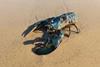
NewsTiny ocean plankton holds clues to the future of Maine lobster
Researchers have discovered that planktonic baby lobsters, or larvae, preferentially feed on Calanus finmarchicus, a tiny, calorie-rich zooplankton species, during one of the most vulnerable stages of their lives.
-
 News
NewsAdding iron to the ocean can remove CO2 – but at what cost to nature?
Adding iron to the ocean can cause plankton to absorb more CO2 from the atmosphere. However, the effect depends on where in the world the method is used, and it can have far-reaching consequences for marine ecosystems and food chains.
-
 News
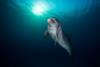
NewsDolphin blow may reveal the health status of these marine mammals
An international team of researchers has developed a new methodology to identify potential pathogens in dolphin blow.
-
 News
NewsScientists reconstruct past ocean temperatures from red algae
Researchers have found a new way to reconstruct daily seawater temperatures over a four-month period. The key lies in rhodoliths: nodule-like calcareous structures formed by red algae that occur in oceans worldwide.
-
 News
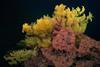
NewsTolkien-inspired coral among the stars: New species discovered on Costa Rica’s deep-sea seamounts
Scientists exploring seamounts off the coast of Costa Rica have discovered a new coral so genetically and morphologically distinct that it required the creation of an entirely new family for its classification.
-
 News
NewsMarine heatwaves pose hidden threat to human health
Prolonged periods of unusually high ocean temperatures can trigger a cascade of effects that ultimately affect human health, from worsening extreme weather events and reducing seafood supplies to increasing mental health challenges.
-
 News
NewsAntibiotic-resistant seafood bacterium found in Vietnam fish farming waters near popular island destination
A multi-drug resistant bacterium linked to seafood-related illness has been detected in fish-farming waters near Cat Ba Island, Vietnam.