
All Marine Science articles – Page 3
-
 News
NewsArctic Ocean food chain disrupted as key tipping point passed
An irreversible shift in the chemical make-up of the Arctic Ocean driven by climate change is disrupting the region’s food chain, a study suggests. Widespread loss of Arctic sea ice has led to a sharp fall in levels of a key nutrient, affecting populations of plankton, fish, seabirds and marine mammals.
-
 News
NewsPioneering research sheds new light on what shaped extinction pattern of prehistoric marine life – and size clearly mattered
Scientists have shown conclusively for the first time that tiny marine organisms in polar oceans survived the mass extinction event that wiped out prehistoric dinosaurs because they needed less energy and were more tolerant to darkness.
-
 News
NewsScientists discover thriving hard-substrate fauna in Oceania’s deep sea
In the crushing darkness of the hadal zone—deep ocean trenches plunging 6,000 m to nearly 11,000 m—scientists have uncovered a hidden community. A study reports the discovery of a protist-dominated hard-substrate fauna across seven hadal regions in Oceania, highlighting an overlooked yet highly active carbon “hotspot.”
-
 News
NewsThe ocean’s pharmacy: scientists chart a new path for marine peptide drug discovery
A review surveys how new extraction, chromatography, and bioinformatics tools are accelerating the discovery of bioactive peptides from the sea. Researchers provide an integrated overview of how marine bioactive peptides are produced, purified, and evaluated, and how bioinformatics is reshaping the discovery pipeline.
-
 News
NewsGenes without borders: coral babies can travel vast distances across the Pacific Ocean
The offspring of a common coral branching species set up a new home up to 100 kilometres or more from their parents in one of the longest dispersal distances ever measured.
-
 News
NewsWarming oceans can disrupt coral oxygen supply and trigger coral death
A new study shows that marine heatwaves can disrupt microscopic moving structures on the surface of reef-building corals that support their oxygen uptake.
-
 News
NewsThe impact of microplastics on ocean carbon uptake
Scientists who collected phytoplankton data from various climate zones around the world determined the extent to which growth is limited by microplastics. They have then used this data to calculate the average impact that a certain concentration of microplastics will have on algae in different regions or climate zones, as well as on a global scale.
-
 News
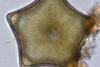
NewsRevealing the invisible: a new baseline for Salish sea diatoms answers a global call
Diatoms are powerful in driving roughly 20% of global photosynthesis and forming the very base of marine food webs. Scientists have published a new checklist of 924 diatom taxa alongside a curated dataset of 11,469 records, providing a long-needed foundation for environmental monitoring across the Salish Sea bioregion.
-
 News
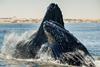
NewsTiny ocean life helps scientists estimate whale prevalence off the California coast
Using an innovative alternative method, researchers examined microbial “ecological habitats” as highly accurate predictors of how many filter-feeding whales were occupying the California coast between 2014 and 2020 from San Diego to Morro Bay.
-
 News
NewsHidden viruses reshape one of Earth’s largest carbon systems, study finds
Viruses play a far more active role in Earth’s carbon cycle than previously understood, according to new research that reveals how they infect and control microbes responsible for carbon production in some of the planet’s largest, darkest ecosystems.
-
 News
NewsStudy provides detailed assessment of shifts in toxin producing phytoplankton abundance
Researchers in the UK have shown how the distributions of two phytoplankton groups – known to produce natural toxins that can halt shellfish harvesting – have changed in the North East Atlantic over the last six decades.
-
 News
NewsFrom ocean to gut: The bacteria that shape both human health and marine carbon cycling
A group of researchers has discovered that Akkermansia bacteria are not unique to our guts, but can also be found in the ocean. In both habitats they use similar skills to ensure their survival and success. They seem to carry an old and widespread survival toolkit.
-
 News
NewsAlgal bloom crisis shows climate risks need evaluative governance
Identifying and analysing climate risks is a necessary function of governments, but researchers argue such processes will not lead to effective action without taking additional steps to understand which risks are considered unacceptable by the community and prioritising responses accordingly.
-
 News
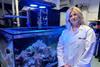
News Researchers unveil new AI-driven system set to transform coral reef restoration
Researchers have developed a first-of-its-kind bespoke AI system designed to assess coral health and detect early stress. BlueBiome is reimagining coral reef care by applying the same principles of preventive, precision health commonly used in human gut health.
-
 News
News‘Not just hot water’: marine heatwaves can create toxic relationship between seagrasses and microbes
Heat stress from marine heatwaves can create a toxic relationship between seagrasses and a hidden ecosystem of bacteria, transforming a previously beneficial co-existence between marine plants and microbes into a harmful one, a study has found.
-
 News
NewsNutrient imbalance may drive coral disease more than heat stress, new study suggests
New research shows that an imbalance of nutrients in seawater can cause coral disease – possibly to a greater extent than that from heat stress of warming oceans. Disruption of the delicate nutrient balance of the sea can destabilise microbial communities that live in harmony with corals.
-
 News
NewsCrab shell by-products could help regulate the marine lifetime of biodegradable plastics
Researchers show that crab shell by-products can reduce the breakdown rate of biodegradable plastics in seawater by altering the microbial communities that colonize their surfaces, known as the plastisphere.
-
 News
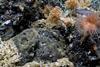
NewsLost millennium of Galápagos deep-sea corals linked to major Pacific climate shift
Scientists have discovered that deep-water corals in the Galápagos region vanished for more than 1,000 years before eventually recovering. The findings reveal that deep-water coral ecosystems may be more susceptible to climate change than previously thought.
-
 News
NewsResearchers come up with novel strategies for coral restoration
Scientists have discovered a new way to help lab-grown baby corals survive through the early life stage. If young mountainous star corals are grown on cement tiles formulated with sodium carbonate, which raises the alkalinity of the water, they survive much better than the average lab-grown corals.
-
 News
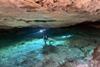
NewsHow tiny cave shrimps grazing on microbes power the underworld of the Yucatan
Because they convert microbial growth in sinkholes beneath the Yucatan Peninsula into animal biomass, Typhlatya shrimps act as “keystone species”, introducing essential nutrients into the cave’s food web. They serve as a crucial initial link that larger subterranean predators feed on.