
All Marine Science articles – Page 5
-
 News
NewsOysters play unexpected role in protecting blue crabs from disease
Oysters famously filter their surrounding water, but it turns out they are removing more than algae and excess nutrients. New research shows they can also reduce the spread of disease in nearby marine species, including Chesapeake Bay’s prized blue crabs.
-
 News
NewsSediment core yields evidence of an unexpected climate feedback in Antarctica
Researchers have concluded that global warming may lead to reduced uptake of carbon dioxide than at present in the Pacific sector of the Southern Ocean if the West Antarctic Ice Sheet, which is considered unstable, continues to shrink.
-
 News
NewsCorals sleep like us, but their symbiosis does not rest
A study has revealed that corals also sleep, despite not having a nervous system, while their microbiome remains awake. For the first time, a biological day-night pattern that transcends the individual and helps sustain a symbiotic relationship has been identified in situ.
-
 News
NewsScientists solve 66 million-year-old mystery of how Earth’s greenhouse age ended
Experts studying foraminifera fossils have discovered that concentrations of calcium in the sea dropped by more than half across the last 66 million years, which likely caused Earth’s massive drop in temperature.
-
 News
NewsPositive interactions dominate among marine microbes, six-year study reveals
Researchers have found that marine microbes interact in ways that benefit one another more often than they eat each other or compete. Periods of elevated ocean temperatures, usually times of stress for these microbes because of a dearth of nutrients, resulted in even more of these positive interactions.
-
 News
NewsSeawater microbes offer new, non-invasive way to detect coral disease, study finds
Researchers have discovered that microorganisms in seawater surrounding corals provide a powerful indicator of coral disease, potentially transforming how reef health is monitored worldwide.
-
 News
News£3.7 million project aims to provide unprecedented analysis of mesophotic coral reefs
Scientists are to carry out an unprecedented assessment of the response and resilience of mesophotic coral ecosystems – coral reef communities found at depths of between 30m and 150m in tropical regions – to the temperature shifts predicted under future climate change.
-
 News
NewsCorday Selden selected for the Oceanography Society Early Career Award
The Oceanography Society (TOS) has selected Dr. Corday Selden, an Assistant Professor at Rutgers University, as a recipient of the TOS Early Career Award, recognizing her outstanding early-career research contributions, leadership in ocean sciences, and exceptional promise for future impact in oceanography.
-
 News
NewsJeremy Horowitz selected for The Oceanography Society Early Career Award
The Oceanography Society (TOS) has selected Dr. Jeremy Horowitz as a recipient of the TOS Early Career Award, recognizing his outstanding early-career research contributions, impact, and promise for continued achievement in oceanography, along with his strong record of mentorship, outreach, and collaborative science.
-
 News
NewsTeam shows how viral lysis of blue-green algae enhances ecosystem-scale productivity
Newly published interdisciplinary research shows viral infection of blue-green algae in the ocean stimulates productivity in the ecosystem and contributes to a rich band of oxygen in the water.
-
 News
NewsAntibiotics in sediments may quietly boost greenhouse gas emissions
A study shows that pharmaceutical pollution alters nitrogen cycling and greenhouse gas emissions in coastal sediments. Even environmentally relevant antibiotic concentrations increased N₂O release, suggesting that widespread contamination may enhance estuarine climate forcing.
-
 News
NewsBacteria resisting viral infection can still sink carbon to ocean floor
Researchers exploring the mechanisms of phage resistance and its effects on the ecological jobs done by ocean bacteria found that some of the mutations studied don’t interfere with the bacteria’s ability to carry out their job of capturing and sinking carbon to the ocean floor.
-
 News
NewsStudy reveals how ocean’s most abundant bacteria diversify
New research has found that SAR11 marine bacteria are not a single, uniform population as often thought. Instead, they are organized into stable, ecologically distinct groups, essentially specialized “teams” adapted to specific environments, such as the coast versus the open ocean.
-
 News
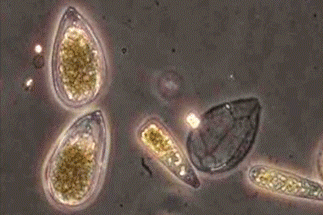
NewsScientists discover fungus that kills toxic algae threatening human health
A team of researchers have discovered a previously unknown species of marine fungus that can kill harmful, bloom-forming algae. The new species, Algophthora mediterranea, is a form of microscopic chytrid fungus that can occupy a broad range of hosts.
-
 News
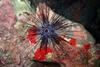
NewsPandemic ‘beneath the surface’ has been quietly wiping out sea urchins around the world
Over the last four years, an unrecognized pandemic that has been wiping out sea urchins around the world has hit the Canary Islands. The consequences on marine ecosystems aren’t yet fully known, but likely profound.
-
 News
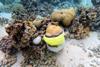
NewsClimate extremes triggered rare coral disease and mass mortality on the Great Barrier Reef
Marine biologists have identified a devastating combination of coral bleaching and a rare necrotic wasting disease that wiped out large, long-lived corals on the Great Barrier Reef during the record 2024 marine heatwave.
-
 News
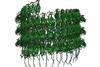
NewsDeep sea microbes yield up their engineering secrets
A biomatrix of tiny tubes of protein, known as cannulae, link cells of the thermal vent-dwelling archaeon Pyrodictium abyssi together into a highly stable microbial community. A study reveals new details about the elegant design of the cannulae and their method of construction.
-
 News
NewsIsland-wide field surveys illuminate land-sea connections in Mo‘orea
A multi-year scientific expedition determined that land use on tropical islands can shape water quality in lagoons and rainfall can be an important mediator for connections between land and lagoon waters.
-
 News
NewsOceanographers present new conceptual framework to answer age-old question: What happens to carbon as it sinks through the ocean?
New research spanning multiple ocean regions has found upper ocean ecosystem conditions, such as nutrient availability and microbial interactions, play a major role in shaping the composition of carbon-rich particles sinking into the deep ocean.
-
 News
NewsMarine viruses use ‘hijacked’ genes to take over bacteria and exploit their energy systems
Marine viruses deploy a sophisticated Trojan horse maneuver that enables them to dismantle the energy systems of ocean bacteria and use the breakdown products for self-replication, according to a new study.