
All Marine Science articles – Page 2
-
 News
NewsSouth Australian algal bloom species the world’s most toxic harmful microalga yet recorded
The marine microalgae responsible for the most devastating effects of the South Australian harmful algal bloom (HAB) has now been shown to be the most toxic species of its kind ever studied.
-
 News
NewsWith microbial help, sponges use photosynthesis, boosting productivity of tropical coral reefs
In marine environments, sponges tend to eat other organisms to get their nutrients. A new study demonstrates how sponges may also use photosynthesis, with the help of symbiotic microbes, and suggests sponge-rich ecosystems should be added to assessments of carbon sequestration.
-
 News
NewsCommon COVID-19 drugs may pose hidden risks to marine life, study finds
A new study suggests that several drugs widely used during the COVID-19 pandemic can be toxic to marine organisms, even at relatively low concentrations. Five pharmaceuticals were tested on nauplii of the brine shrimp Artemia salina.
-
 News
NewsBreakthrough for aquaculture: Oral vaccine protects fish from fatal nervous necrosis virus
A novel oral vaccine, that can be mixed into fish feed, provides an effective, practical and cost-effective method to protect fish from the highly deadly nervous necrosis virus.
-
 News
NewsEmissions from plankton help in forming cloud seeds over the world’s oceans
For nearly fifty years, scientists have suspected that microscopic marine plankton play a role in cloud formation over the oceans. Now, an experiment has suggested that it may be more important than previously thought.
-
 News
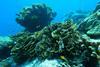
NewsCorals show climate change is reshaping the rules of survival
Which species benefit from climate change, and which are coming under pressure? Using corals as an example, researchers demonstrated that even seemingly successful life strategies can lose their advantage when environmental conditions change.
-
 News
NewsDecline in plankton across North East Atlantic sends stark warning for ocean health
A new study has used more than six decades of data to show that plankton abundance is declining across vast swathes of the North East Atlantic – a region covering the Atlantic Ocean from Portugal to Norway, and the entirety of the North Sea.
-
 News
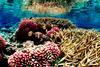
NewsGlobal assessment of ocean warming impacts on marine ecosystems
New study reveals that year‑round ocean heating by 1.5°C drives over 200 documented marine ecosystem disruptions.
-
 News
NewsHow sea-ice microbes survive the Southern Ocean’s harsh winter, and the implications for climate change
New study reinforces the importance of the Southern Ocean marginal ice zone as a critical hotspot for global sulfur cycling where biogeochemical processes for climate regulation are enhanced.
-
 News
NewsBiologist dives beneath Antarctica sea ice to study the impact of climate change
One biologist is studying the genetic diversity of red algae to see how this vital part of Antarctica’s underwater ecosystem is affected by climate change. Answering that question is becoming increasingly important as Earth’s warming climate causes Antarctica’s sea ice to recede farther with every passing year.
-
 News
NewsResearcher efforts to reproduce corals shared with TV cameras
Scientists at Nova Southeastern University are sharing a rare look at a marine mission that aims to pump life back into coral reefs. Researchers waiting for coral-spawning hope the project will be a game-changer in the South Florida ecosystem.
-
 News
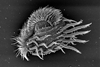
NewsResearcher discovers single-celled organism that transforms into cannibalistic supergiant
Researchers have discovered a microscopic organism that can transform into a cannibalistic ’supergiant’ that drastically changes size, shape, and behavior, and abandons filter-feeding to hunt and consume their genetically identical relatives.
-
 News
NewsScientists map the microbes behind a climate-regulating gas in India’s busiest estuary — a first
When bacteria in the water and sediment break dimethylsulfoniopropionate down, they release dimethylsulfide (DMS), a gas that drifts into the atmosphere and helps form clouds by seeding cloud condensation nuclei. A new paper reports the first-ever study of DMSP concentrations and the bacteria that degrade it along the entire length of the Cochin Estuary.
-
 News
NewsNew climate-based tool predicts coral bleaching months in advance
Researchers found that coral bleaching on a Caribbean island occurs when three major climate patterns in the Pacific and Atlantic Oceans align in specific ways that intensify ocean warming. They created a new, early-warning tool called the Bleaching Event Early Predictor (BEEP).
-
 News
NewsScientists map the ocean’s invisible workforce
A new study identifies a small set of “metabolic niches” — or functional roles — that help explain how marine microbes grow, compete for resources and recycle carbon around the globe. The microbes are incredibly diverse, but their behavior can be grouped into a manageable number of strategies.
-
 News
NewsStarvation triggers reversible epigenetic changes in fish pathogen
What happens to a bacterial pathogen when food runs out—for several months? A new study reveals that Flavobacterium columnare, a deadly aquatic pathogen responsible for columnaris disease in fish, does not change its DNA sequence during prolonged starvation. Instead, it remodels its epigenetic landscape.
-
 News
NewsArctic Ocean food chain disrupted as key tipping point passed
An irreversible shift in the chemical make-up of the Arctic Ocean driven by climate change is disrupting the region’s food chain, a study suggests. Widespread loss of Arctic sea ice has led to a sharp fall in levels of a key nutrient, affecting populations of plankton, fish, seabirds and marine mammals.
-
 News
NewsPioneering research sheds new light on what shaped extinction pattern of prehistoric marine life – and size clearly mattered
Scientists have shown conclusively for the first time that tiny marine organisms in polar oceans survived the mass extinction event that wiped out prehistoric dinosaurs because they needed less energy and were more tolerant to darkness.
-
 News
NewsScientists discover thriving hard-substrate fauna in Oceania’s deep sea
In the crushing darkness of the hadal zone—deep ocean trenches plunging 6,000 m to nearly 11,000 m—scientists have uncovered a hidden community. A study reports the discovery of a protist-dominated hard-substrate fauna across seven hadal regions in Oceania, highlighting an overlooked yet highly active carbon “hotspot.”
-
 News
NewsThe ocean’s pharmacy: scientists chart a new path for marine peptide drug discovery
A review surveys how new extraction, chromatography, and bioinformatics tools are accelerating the discovery of bioactive peptides from the sea. Researchers provide an integrated overview of how marine bioactive peptides are produced, purified, and evaluated, and how bioinformatics is reshaping the discovery pipeline.