
A team of researchers from Yokohama National University, Japan, have discovered a previously unknown species of marine fungus that can kill harmful, bloom-forming algae.
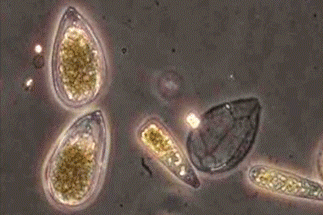
The new species, Algophthora mediterranea, is a form of microscopic chytrid fungus that can occupy a broad range of hosts, suggesting that chytrid fungi – a diverse group of aquatic fungi – may play a greater role in marine ecosystems than previously thought.
Critically, the fungus was identified as a destructive parasite in a species of algae, Ostreopsis cf. ovata, known to cause toxic blooms that have adverse health effects on humans. The findings are published online in Mycologia on December 15, 2025 .
Toxic algae
Algal blooms are a growing problem in oceans, rivers, and lakes. The rapid, excessive growth of algae is generally caused by an overload of nutrients and warm temperatures, and can affect water quality and wreak havoc on ecosystems. Blooms can also produce toxins that affect humans and animals alike.
Huge blooms of Ostreopsis cf. ovata have been increasingly reported in the Mediterranean in the past few decades. The alga produces a toxin called ovatoxin (OVTX), which can cause major issues in humans including a runny nose, cough, breathlessness, conjunctivitis, itching, and dermatitis.
Algae-killer
Algophthora mediterranea was discovered in Spanish seawater in 2021 by the team from the Institut de Ciències del Mar (ICM) in Spain, led by Dr. E. Garcés and Dr. A. Reñé, and it has now been described by Professor Maiko Kagami and PhD student Núria Pou-Solà, both from Yokohama National University.
DNA analysis confirmed the fungus represents not only a new species but also a new genus. The team have named the new genus Algophthora, combining ‘alga’ and the Greek word ‘phthora’, meaning ‘destruction’.
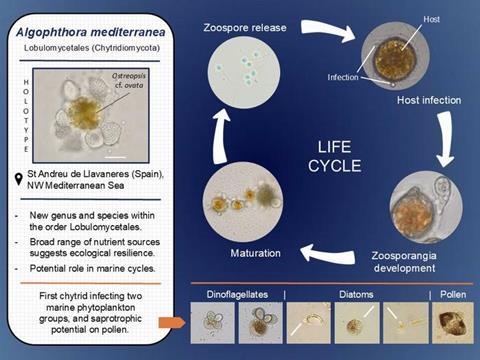
The fungus was found as a parasite in cells of O. cf. ovata, which it kills within days. Further analysis showed it can also infect several other species of algae and can even feed off pollen grains.
“Although previous DNA-based surveys have revealed a wide diversity of marine fungi, only a handful of parasitic species have ever been isolated, and their ecology has remained largely unknown,” said Pou-Solà. “Our newly described species stands out for its unusually broad host range and distinctive feeding strategy, demonstrating that some chytrid fungi possess remarkable ecological resilience.”
Time lapse photography
The researchers isolated the fungus and took time-lapse photos every ten minutes for four days. Samples of the fungus were also analyzed using scanning electron microscopy (SEM), where a focused beam of electrons scans the surface of a sample, creating a high-resolution image. The fungus was then sampled for DNA.
“The next step is to investigate how such versatile parasites operate within complex marine communities,” said Kagami. “Ultimately, our goal is to understand how parasitic fungi contribute to — and potentially shape — the ocean’s biogeochemical cycles, an ecosystem role that has been largely overlooked until now.”
“In the future we aim to build the necessary knowledge to improve our predictive capacity and support the management of harmful algal blooms,” adds Pou-Solà.






No comments yet